
Livraison le jour même ou le lendemain

Qualité garantie

Débloquez vos offres de bienvenue: Livraison GRATUITE | Jusqu'à -80 % | 30 jours d'essai gratuits à JoyPlus
Téléchargez l'application
A well-organised home isn’t just about how much furniture you have. The dimensions, materials and accessibility of different compartments directly affect your everyday comfort. Yet some home storage solutions focus more on looks than on real practicality.
Before buying a box, basket or storage unit, it’s worth checking a few concrete criteria.
A box can look very spacious in a photo, yet its internal dimensions may seriously limit what you can actually store in it. For clothes, toys or linen, compare the external measurements with the space available on your shelf or inside your cabinet. In a drawer, also check the height: an organiser that’s too deep may stop the drawer from closing.
Woven paper and certain decorative finishes fit perfectly in dry rooms, but they don’t cope well with splashes and persistent humidity. Conversely, a bathroom storage unit needs to be designed for a damp environment and offer sufficient protection against repeated splashes. Care instructions matter just as much as the material itself.
Fixed compartments, an opening that’s too narrow, or a lack of handles can quickly make a product awkward to use. For jewellery storage, hooks, drawers and a soft interior lining help prevent tangles and scratches. In the kitchen, the number of compartments should match the cutlery you actually use, not an idealised display.
Measure the alcove, drawer or worktop before placing your order. For a piece of furniture, note the width, depth and height, allowing enough space to open the doors. On a tall or heavily loaded unit, an anti-tip device can be essential.
For boxes and baskets, also consider the rigidity of the structure. A metal frame, like those found on some woven paper baskets, helps the container keep its shape despite repeated handling. If the container needs to be moved often, a lightweight design is a real advantage.
Plastic, MDF, metal, glass and woven paper each come with different considerations:
A drawer organiser should separate the categories you use every day: knives, forks, spoons and serving utensils. For accessories, removable trays and side hooks make it easier to find what you need. In the bathroom, adjustable shelves allow you to store both small bottles and taller containers.
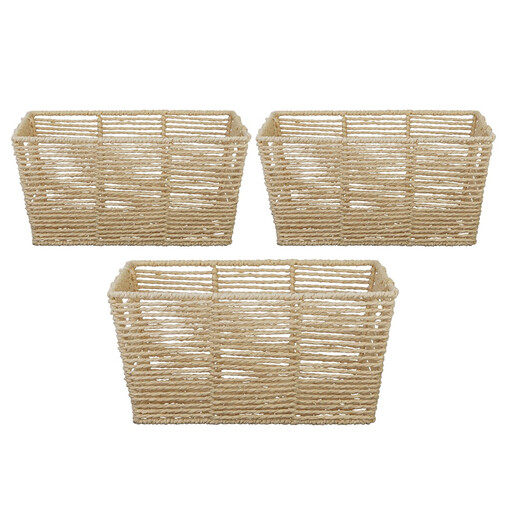
Why this suits this profile: This set offers a simple way to start organising shelves, a wardrobe or a desk. No assembly is needed, and the three containers are colour-matched.
The metal frame helps the basket keep its shape, unlike a soft container that might sag. Clean with a dry cloth and keep away from moisture.
A woven paper and metal structure, lightweight, no assembly required, and versatile for everyday items.
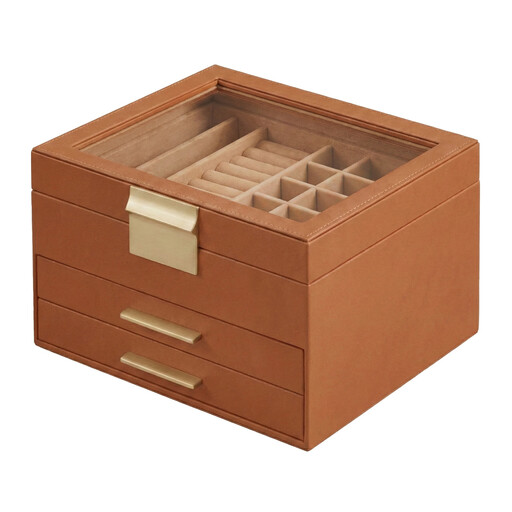
Why this suits this profile: This jewellery box is designed for those who want to display their accessories on a dresser while keeping small pieces separate from larger items.
The glass lid lets you see the contents without opening each compartment. This reduces unnecessary handling and exposure to dust.
Three levels, two drawers, a velvet lining and dimensions of 20.3 × 23.1 × 13.5 cm.
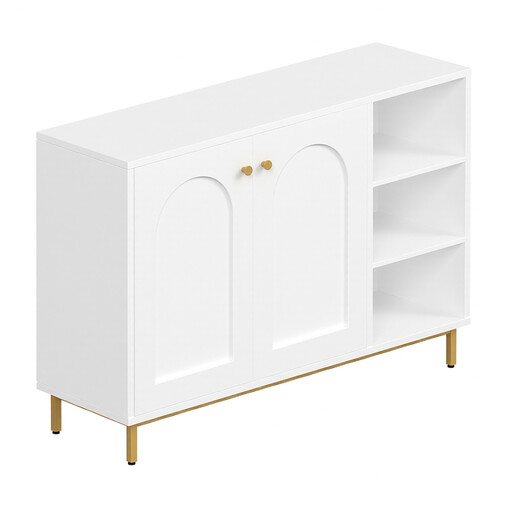
Why this suits this profile: This bathroom cabinet with doors is ideal for households that need to store towels, toiletries and accessories in a room regularly exposed to humidity.
The adjustable shelves let you adapt the space to different bottles. The cabinet is raised 12.5 cm off the floor and has an anti-tip device. However, direct splashes and standing water should still be avoided.
Two doors, three open spaces, three adjustable shelf heights and dimensions of 35.5 × 100.5 × 75.5 cm.
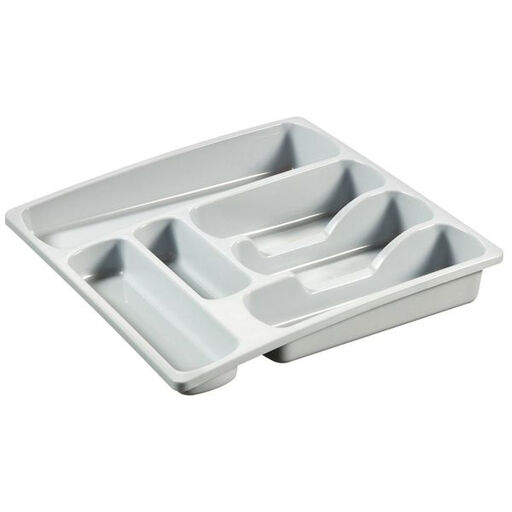
Why this suits this profile: This organiser meets the needs of a family kitchen that wants to separate cutlery and speed up tidying after meals.
Its dimensions of 39 × 38 × 6.5 cm should be compared with those of your drawer. The stated maximum load is 2.5 kg, to be distributed evenly.
Easy-to-clean polypropylene, four compartments and tool-free installation. Hand washing followed by thorough drying is recommended.
We’ve put together a comprehensive, real-time updated selection of products that meet these demanding criteria and European safety standards.
Start with the products you use every day. Place bottles within easy reach on an open shelf and keep the cupboard space for towels, backups and items you use less often. Measure the available depth so you can still move around the cabinet comfortably.
It depends on the room and the use. Plastic works well for drawers and areas that need frequent cleaning. Metal offers a stable structure. Woven paper is best used in dry spaces and should be cleaned without water. For a jewellery box, a velvet lining helps protect accessories from hard surfaces.
First, check that its dimensions match those of your drawer. Distribute items evenly without exceeding the stated maximum load, and avoid placing heavy items in a narrow compartment. Regular cleaning also helps prevent dust build-up, which can interfere with opening and closing.