
Livraison le jour même ou le lendemain

Qualité garantie

Débloquez vos offres de bienvenue: Livraison GRATUITE | Jusqu'à -80 % | 30 jours d'essai gratuits à JoyPlus
Téléchargez l'application
A cluttered hallway, shoes lying around or blankets piled up in the living room can be enough to create a sense of disarray. Yet buying the first piece of furniture you come across isn't always a good idea – some storage solutions reveal their limitations after just a few weeks of use.
A piece of furniture may look compact in a photo, only to block a door from opening or narrow a corridor once it's in place. Before ordering, measure the width, depth and height of the intended spot. Also consider the space needed to open doors, pull out a drawer or lift a lid.
The number of pairs or the volume stated doesn't always account for the size of the items you need to store. Boots, bulky trainers or laundry boxes take up more room than slimmer items. Check the internal dimensions where available, and avoid filling a unit beyond its intended use.
A tall piece of furniture must sit on a stable surface and, if necessary, be fixed to the wall in line with the manufacturer's instructions. For shoes, poor ventilation can encourage moisture retention. With a storage bench, the weight it can support depends on the structure, the closing mechanism and how the load is distributed. The details on the product page remain your best reference.
In a small hallway, stackable shoe boxes let you make use of height without taking up too much floor width. For a family, a closed shoe cabinet is often more practical, especially for hiding pairs away and using the top as a decorative surface.
In the living room or bedroom, a storage bench and an ottoman with storage pull double duty: they hold blankets, cushions or books while also serving as seating or a footrest. Do measure the space available at the foot of the bed or in front of the sofa, though.
Lightweight and easy to clean, polypropylene plastic works well for modular boxes placed in a wardrobe or hallway. Composite wood and MDF panels offer a more rigid structure for a cabinet or chest, but their weight and assembly requirements need to be taken into account.
Don't rely solely on a feeling of sturdiness. Look for a clearly stated maximum load, check for reinforcements and follow the assembly instructions. A stated maximum load doesn't mean the product can be used as a seat in every situation.
Effective storage should suit how often you use the items. A box with a front-opening door makes it easier to reach stacked shoes. A chest is better suited to items you take out less often, such as bedding or throws.
For a shoe collection, transparent doors and ventilation openings make it easier to identify pairs and allow air to circulate. For keys and small accessories, a wall-mounted hallway organiser saves you from dedicating an entire console table to just a few items.
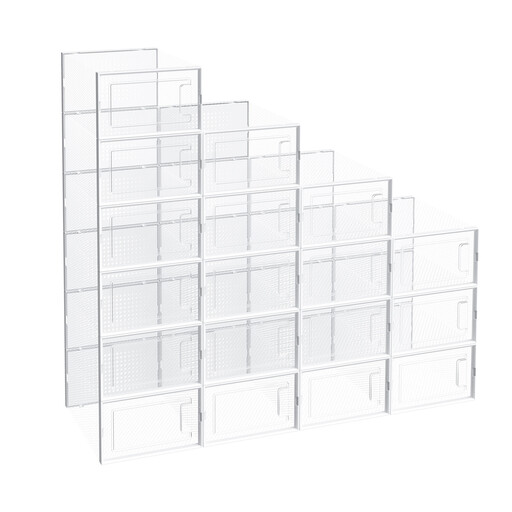
Why this choice suits this profile: This solution is ideal for tenants and households who want to organise a shoe collection without immediately installing a bulky piece of furniture. The boxes fit neatly into a dressing room, hallway or wardrobe.
Each box measures 35 × 25.2 × 19 cm and the stackable design saves space by using height. Still, compare these dimensions with your shoes before buying.
18 PP boxes, transparent doors, front opening and ventilation holes. The product page states compatibility up to UK size 11 – do check against the shape of your shoes.
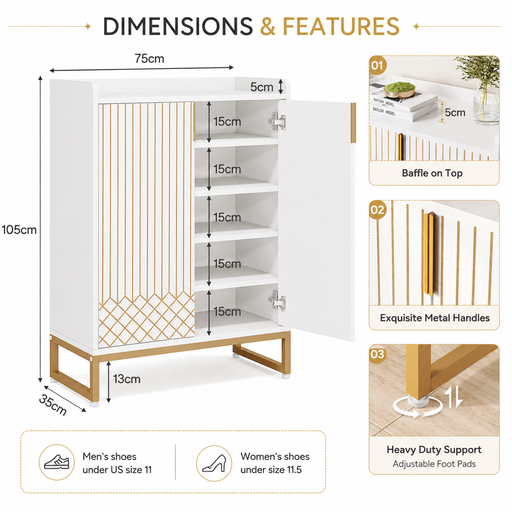
Why this choice suits this profile: Its white finish, clean lines and decorative details blend easily into a hallway or living room where aesthetics matter as much as storage capacity.
The doors conceal shoes and protect them from dust. The stated capacity of 22 to 25 pairs should, however, be weighed against the size and type of shoes you own.
Wooden structure, five tiers, doors, open bottom shelf and a top surface for a plant or decorative item.
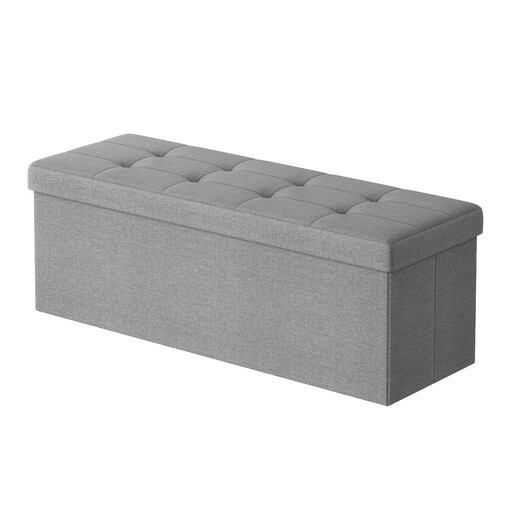
Why this choice suits this profile: This chest is aimed at families and people who regularly store duvets, pillows, throws or books in the living room, bedroom or hallway.
Its dimensions of 38 × 110 × 38 cm and stated volume of 131 litres let you quickly assess the space needed. The lid must be fully closed before using it as a seat.
MDF panels, metal corner protectors, stated maximum load of 300 kg and a foldable design for temporary storage under a bed or in a wardrobe.
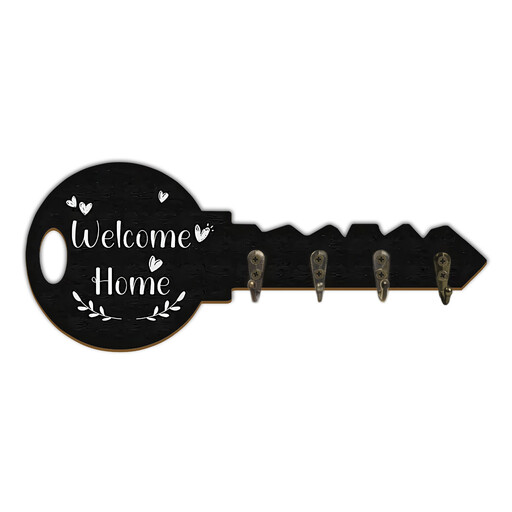
Why this choice suits this profile: In a flat where every centimetre counts, a wall can hold keys, small bags and accessories near the door without taking up any floor space.
The four hooks are clearly stated. Proper wall fixing and a sensible load are still essential to prevent pulling away or overloading.
Wood and metal construction, compact wall-mounted format, four hooks and a key-shaped design for the hallway, corridor or kitchen.
Start by measuring the walkway, then favour vertical or wall-mounted solutions. A wall-mounted key holder takes up very little depth. For shoes, compare the available width with that of the cabinet or stackable boxes, without forgetting the space needed for doors to open.
It's best suited to items you use occasionally, such as blankets or cushions. Check the assembly system, the available volume and the weight capacity. If the chest also serves as seating, follow the instructions regarding lid closure and weight distribution.
Avoid placing very damp shoes directly into a closed compartment. Let them dry out, don't overload the boxes and, where the model allows, choose ones with ventilation openings. Regular surface cleaning also helps keep your storage clean and pleasant.