
Livraison le jour même ou le lendemain

Qualité garantie

Débloquez vos offres de bienvenue: Livraison GRATUITE | Jusqu'à -80 % | 30 jours d'essai gratuits à JoyPlus
Téléchargez l'application
A well-organised home isn’t just about how many pieces of furniture you have. The wrong depth, a flimsy frame or a size that doesn’t suit the room can quickly turn a practical purchase into an awkward piece of furniture. Whether you’re organising a bedroom, hallway, wardrobe or small flat, home storage solutions should be chosen to suit the space you actually have and the items you need to store.
Before buying a fabric wardrobe, a cube storage box or an under-bed storage bag, watch out for these three common pitfalls.
A storage unit may have a generous stated capacity, yet compartments that are too narrow for coats, shoes or duvets. Check the internal dimensions, not just the external ones. For clothes storage, the height of the hanging rail and the depth of the shelves are especially important.
A box full of books puts a different strain on its structure from one holding lightweight laundry. A clearly stated maximum load helps prevent sagging shelves, torn handles and stuck fastenings. Always stick to the manufacturer’s stated static load capacity and distribute the weight evenly.
Textiles stored in a closed container should be clean and completely dry. A duvet storage bag or under-bed cover protects against dust, but it doesn’t replace good ventilation. For fabric or plastic products, also check the cleaning instructions and keep them away from heat sources.
Measure the available width, height and depth, taking skirting boards, doors and electrical sockets into account. A 30 × 30 × 30 cm cube storage box will generally fit a cubby measuring at least 30.5 cm, but it’s still essential to measure carefully.
Under a bed, measure the clearance along its full length. An extra-flat bag 15 cm high may fit into a tight space, while a 30 cm duvet storage bag needs more clearance.
For a clothes rail or a tall wardrobe, stability matters just as much as the available storage space. Distribute clothes along the rail, avoid overloading a single shelf and use the anti-tip kit if one is supplied. In a hallway, a coat stand should remain stable even when several coats and bags are hanging from it.
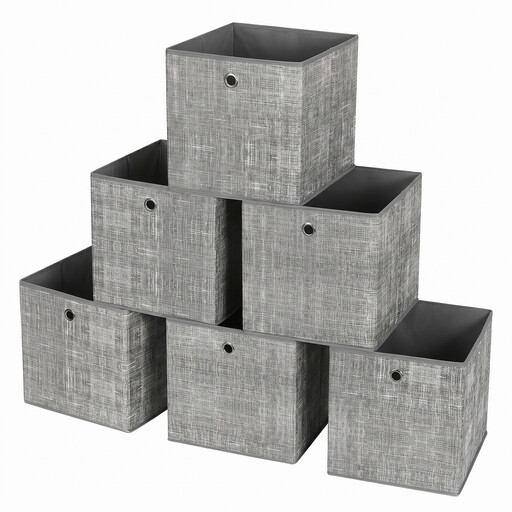
Why this is a good fit: This set of six boxes is a simple way to start organising a bedroom, studio flat or cube storage unit without having to buy multiple sizes.
The stated size of 30 × 30 × 30 cm and maximum static load of 5 kg per box make it easy to check whether they’ll fit your furniture.
80 g/m² non-woven fabric, cardboard panels, eyelet handles and a foldable design for easy storage when not in use.
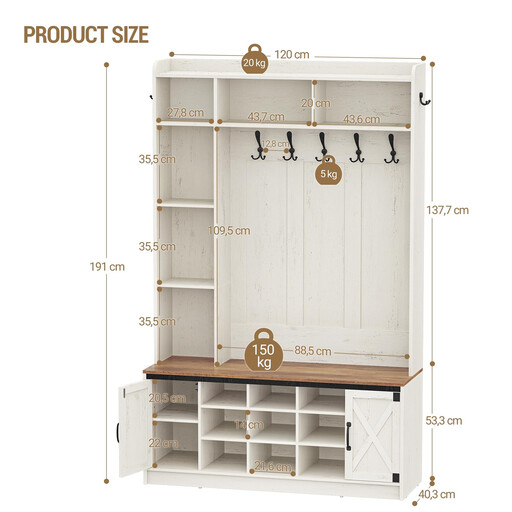
Why this is a good fit: This hallway storage unit combines a seat, hooks, shelves and enclosed storage in one vertical frame.
Check its dimensions of 40.8 × 120.5 × 191.5 cm before buying, so you can be sure you’ve allowed enough floor space and height.
15 open compartments, 7 hooks, adjustable-colour lighting and a bench with a stated maximum load of 150 kg.
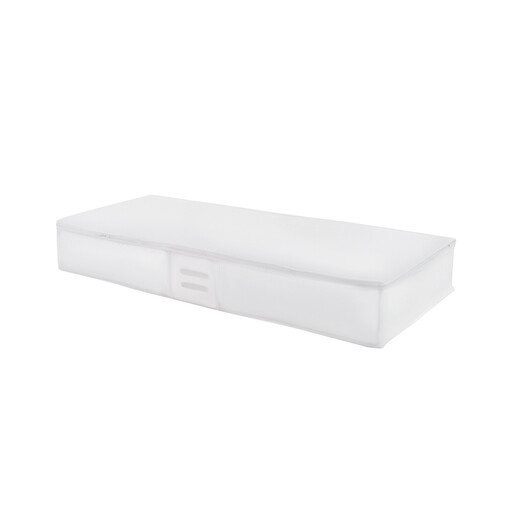
Why this is a good fit: Its extra-flat shape is ideal for storing duvets, blankets and bulky textiles under a bed or on a shelf between seasons.
Its height of 15 cm is clearly stated, along with its dimensions of 100 × 48 cm, so you can compare them with the space under your bed.
0.1 mm PEVA, dust protection, a fastening and easy cleaning with a damp cloth.
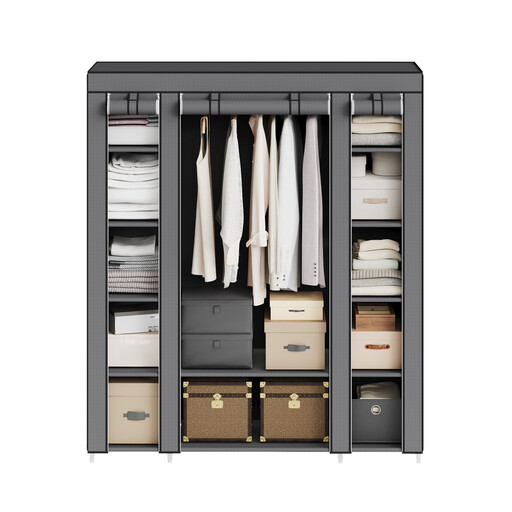
Why this is a good fit: This fabric wardrobe has several compartments to keep clothes, shoes, accessories and household linen separate.
The 150 × 45 × 175 cm frame and stated load limits of 5 kg per shelf and 15 kg for the rail make it easier to organise your belongings properly.
12 compartments, 16 mm metal tubes, a 120 g/m² non-woven fabric cover and numbered parts for assembly.
We’ve put together a comprehensive list, updated in real time, of products that meet these strict selection criteria as well as European safety regulations.
Choose foldable storage boxes, vertical storage and under-bed bags. They make use of unused space and can be moved or folded away when you move house.
Wash and dry it completely before putting it away. Choose a duvet storage bag that’s large enough to avoid compressing the filling too much, then store it somewhere dry and at a moderate temperature.
Its lifespan depends on the material, the load it carries and how often it’s handled. A correctly assembled structure that isn’t overloaded and is kept away from moisture will generally hold its shape better. Check the fastenings, seams, connectors and anchor points regularly.