
Livraison le jour même ou le lendemain

Qualité garantie

Débloquez vos offres de bienvenue: Livraison GRATUITE | Jusqu'à -80 % | 30 jours d'essai gratuits à JoyPlus
Téléchargez l'application
A well-organised home isn’t just about how much furniture you have. A flimsy box, a shelf that’s the wrong size, or a unit that can’t handle moisture can quickly turn a good idea into a purchase you regret. To choose home storage solutions that are genuinely practical for everyday life, it’s worth looking at usable capacity, materials and the layout of the room.
An 84 L storage box might look very spacious on paper. But its external dimensions, shape and opening mechanism determine how useful it really is. Before ordering, measure the depth of a shelf, the height available under the bed, or the clear width inside a wardrobe.
Also think about what you’re storing. Clothes and toys are generally fine in soft boxes, while tools, cleaning products or bulky appliances need a more rigid structure.
Foldable storage boxes and fabric storage baskets are easy to move and take up hardly any space when not in use. However, they aren’t designed to bear the same loads as a cabinet or a metal shelf. A sagging base or over-stretched handles can quickly shorten their lifespan.
Check for reinforced handles, the rigidity of the panels and the care instructions. Avoid filling a fabric container with heavy, sharp or angular items.
A woven paper basket or a chipboard cabinet shouldn’t be placed in a damp room without care. In a bathroom, choose materials that resist moisture and a base that’s raised high enough. In a garage, a metal frame and an anti-tip system are top priorities.
Start by measuring the available space, leaving a few centimetres of margin for ventilation, opening doors and reaching in. A wardrobe organiser should be removable without having to move the whole pile.
Storage bins with handles make it easier to carry things between the bedroom, utility room and living room. For seasonal items, go for closed or stackable containers. For things you use every day, open baskets and easily accessible shelves save you from repeated handling.
Always distinguish between the maximum load per shelf and the total load the unit can support. The stated capacities for a shelf should be checked against the assembly, weight distribution and floor stability. The heaviest items should stay on the lower shelves.
A metal garage shelf is suitable for tools, boxes and bulky equipment, as long as you stick to the manufacturer’s stated load. A storage unit with adjustable shelves lets you adapt the height for bottles, boxes or appliances.
Modular storage becomes especially useful when your needs change. Adjustable shelves or separate components let you reconfigure the layout without replacing the whole unit.
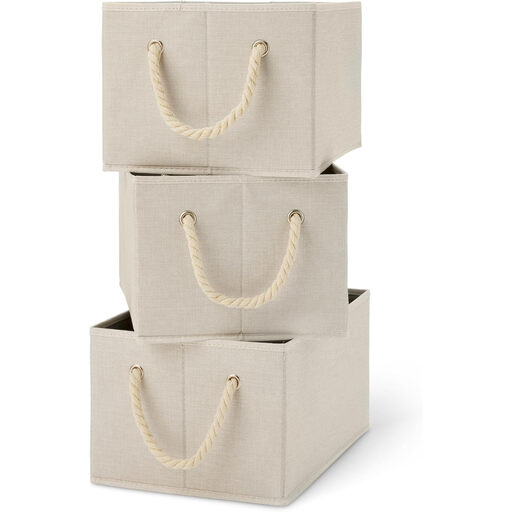
Why this choice suits this profile: This set of three containers is ideal for starting to organise a wardrobe, a shelf or the space under a bed. It can hold toys, accessories or supplies.
Each box measures 37.5 × 26 × 20.3 cm, so you can easily check it will fit before buying. When folded, it takes up very little space when not in use.
A pack of three boxes, rope handles and easy cleaning with a damp cloth. Best to avoid heavy or sharp objects.
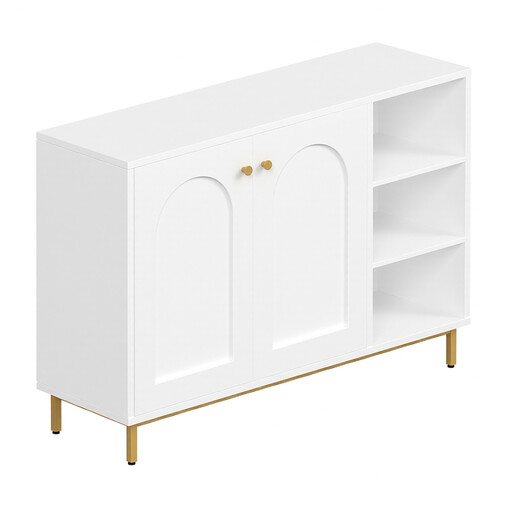
Why this choice suits this profile: This bathroom storage unit combines doors, open niches and adjustable shelves to organise a room where everything stays visible day to day.
Its raised base of 12.5 cm and materials stated as moisture-resistant meet the usual demands of a bathroom. Still, check the dimensions before installation.
A size of 35.5 × 100.5 × 75.5 cm, three adjustable shelf heights and an anti-tip device included.
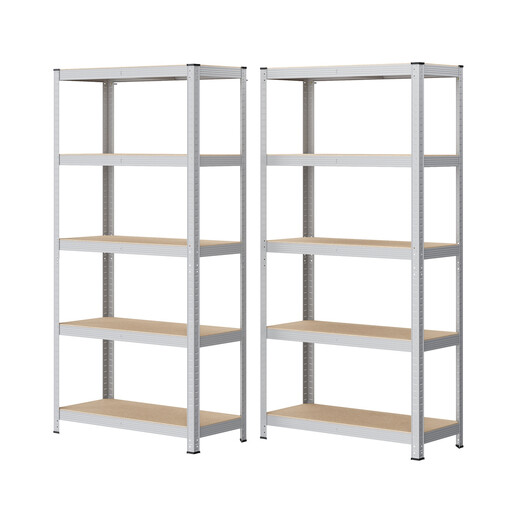
Why this choice suits this profile: This set is built for garages, workshops, cellars and sheds where boxes, tools and equipment need a sturdier structure than a simple fabric basket.
The stated static load reaches 175 kg per shelf and 875 kg total, provided assembly is correct and weight is well distributed. The anti-tip kit must be fixed to the wall.
Two units of 40 × 90 × 180 cm, adjustable levels and the option to separate the set into two individual structures.
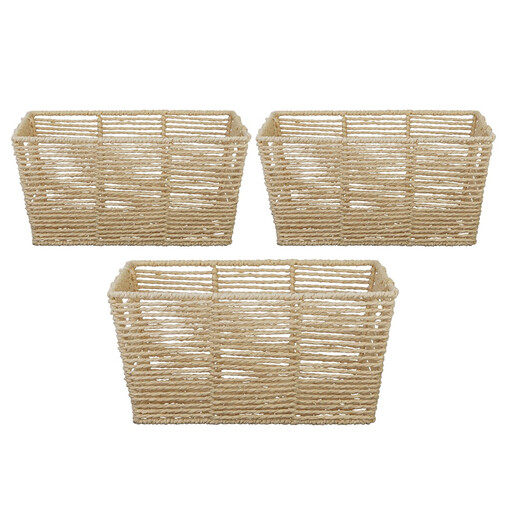
Why this choice suits this profile: These woven baskets fit easily into a living room, study or bedroom when looks matter as much as storing accessories.
The inner metal frame gives a firmer hold than a soft basket. However, the woven paper should be kept away from moisture, harsh products and very heavy loads.
A pack of three baskets, no assembly needed and a size suitable for everyday items.
We’ve put together a complete, real-time selection of products that meet these exacting criteria, while also taking European safety regulations into account.
To keep your storage practical, group items by how often you use them. Things you use every day should be at eye or hand level, while seasonal items can go on the highest shelves.
When assembling a shelving unit, check it’s level, tighten the fixings properly and follow the instructions. For a tall or heavily loaded shelf, fit the anti-tip device supplied. In a bathroom, let air circulate around the unit and wipe off any splashes quickly.
Start by measuring the actual width, depth and height available. Use boxes that fit the dimensions, baskets with handles and vertical dividers. A modular system lets you rearrange the levels as the contents change.
It depends on the material, the weight stored, how often it’s handled and the environment. A fabric box can last several years for clothes or accessories if it isn’t overloaded. Rigid containers are better for heavy items, but they too must be used within their weight limits.
Choose surfaces that are easy to wipe clean and avoid sensitive materials in damp rooms. Dust woven baskets regularly with a dry cloth, clean fabric boxes with a barely damp cloth, and check the fixings on furniture and shelves from time to time.