
Livraison le jour même ou le lendemain

Qualité garantie

Débloquez vos offres de bienvenue: Livraison GRATUITE | Jusqu'à -80 % | 30 jours d'essai gratuits à JoyPlus
Téléchargez l'application
A well-organised home is not simply about how many pieces of furniture it contains. A poorly chosen solution that is difficult to clean or too fragile can quickly become another problem. Before placing your order, it is therefore worth considering how you will use the product, its dimensions and installation requirements, rather than relying solely on photos or promises made in the product description.
A large storage box may seem capable of holding everything that is lying around. In practice, its shape, opening and access to the contents matter just as much as the stated volume. An 84-litre box is better suited to storing out-of-season clothing, laundry or items used occasionally than belongings you use every day.
In a bedroom or dressing room, also check that the container can fit under the bed, inside a wardrobe or on a shelf. Just a few centimetres too many can turn a good idea into unusable storage.
A wall shelf, narrow bookcase or hanging wardrobe shelf should not be chosen for its appearance alone. You need to consider the maximum weight capacity, the type of wall and the fixings supplied.
A decorative shelf designed for a few accessories is not made to hold a stack of novels. For a tall piece of furniture, an anti-tip kit may be essential, particularly in a family room or a busy passageway.
Textiles, baskets and wardrobe organisers easily collect dust and can be affected by damp. A washable material or one that can be cleaned with a simple wipe using a damp cloth makes maintenance much easier. A foldable storage box is also useful when its contents are only needed at certain times of the year: it folds away when empty, provided you follow the manufacturer's recommendations.
Measure the available width, depth and height, allowing enough clearance to open a door, pull out a drawer or remove a basket. In a small home, space-saving storage often means making use of vertical space: hanging shelves, storage behind a door or a narrow bookcase.
For a wardrobe, compare the internal height of the cupboard with that of the organiser. A hanging unit that is too long may obstruct the clothes stored beneath it.
Non-woven fabric and linen are lightweight and flexible, but are mainly suitable for light items or moderate loads. MDF, steel and iron frames provide different levels of support and generally require stricter installation precautions.
Check for reinforced stitching, handles, adjustable feet and support bars. These details make a real difference in everyday use. However, the stated load limits remain the key reference: never exceed the advertised capacity of a compartment or shelf.
To avoid emptying several boxes before finding what you need, group your belongings according to how they are used:
Foldable designs are particularly useful for temporary storage. Wall-mounted solutions free up floor space, but require fixings suitable for the wall or surface.
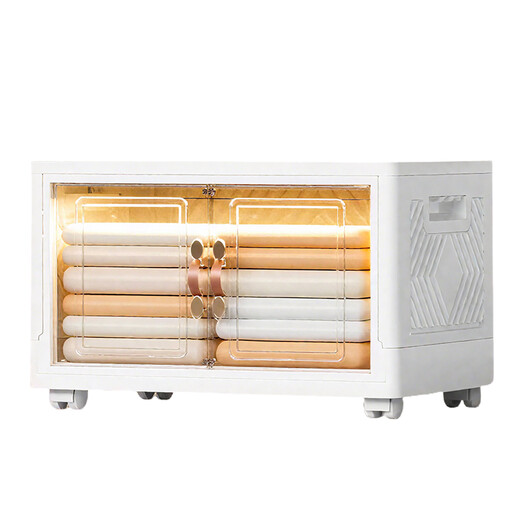
Why it suits this profile : with its 84 L capacity, this storage solution lets you keep laundry, out-of-season clothing or accessories together in one container.
Its foldable design reduces clutter when the box is not in use. However, remember to measure the available space before filling it.
A stated capacity of 84 L and a foldable design. Sold individually.
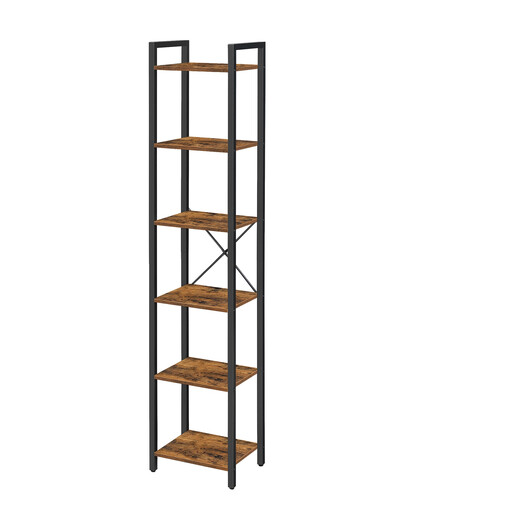
Why it suits this profile : its dimensions of 30 × 40 × 187.5 cm make use of the available height in an office, living room or bedroom.
The product description mentions adjustable feet, X-shaped support bars and an anti-tip kit. Wall fixing must still be adapted to the type of wall.
Six tiers and a steel and particleboard structure, with a stated maximum load of 50 kg.
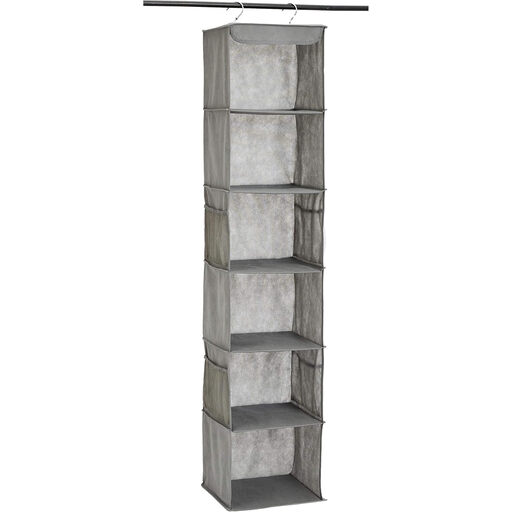
Why it suits this profile : its six compartments and side pockets make it easy to sort folded clothes, shoes, accessories or toiletries.
Its vertical design makes use of the wardrobe's height. However, check the available depth and distribute the weight between the different compartments.
Six tiers, side pockets and a reinforced structure as stated in the product description.
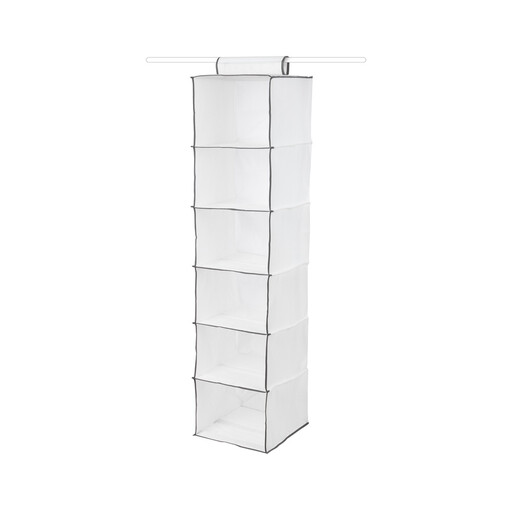
Why it suits this profile : this 30 × 30 × 128 cm storage unit attaches to a wardrobe rail with hook-and-loop fasteners, without tools.
Tool-free assembly avoids DIY work and complicated handling. However, the product description recommends observing the maximum load for each compartment and keeping the product away from flames.
Six compartments, non-woven polypropylene fabric and a foldable design.
We've brought together a complete, real-time-updated selection of products that meet these demanding criteria as well as European safety requirements.
Before installing wall shelves, identify the type of wall and choose suitable wall plugs. Tighten the fixings without overtightening, then check them regularly. For a tall bookcase, always use the anti-tip device provided for this purpose.
Textile baskets and storage bins with handles can generally be cleaned with a slightly damp cloth. Avoid filling them beyond their capacity and do not store sharp objects in them. Metal frames should be kept away from damp to help reduce the risk of corrosion.
Choose vertical furniture, narrow bookcases, hanging storage and foldable boxes. Measure each space before buying and leave enough room to walk in front of doors and windows.
A hanging wardrobe organiser, a few baskets and soft storage bins let you create several levels without drilling. Check that the rail is sturdy and place the heaviest items in the lower compartments.
It depends on the load, how often it is used, humidity and maintenance. Observing the stated capacity, avoiding sharp objects and storing the product in a dry place when folded will help preserve its shape and stitching.