
Livraison le jour même ou le lendemain

Qualité garantie

Débloquez vos offres de bienvenue: Livraison GRATUITE | Jusqu'à -80 % | 30 jours d'essai gratuits à JoyPlus
Téléchargez l'application
We all know it: a tidy home helps you think more clearly. However, choosing the right home storage solution can quickly become an uphill battle. Between marketing promises and real-world use, it's easy to make a mistake and invest in a piece of furniture that turns out to be impractical or flimsy. As the Head of Product Selection at Joybuy, my mission is to guide you through this jungle. Let's break down the common mistakes to avoid and the criteria that truly matter for a successful purchase.
Before you pull out your credit card, watch out for these three classic traps that too often turn a great deal into a major headache.
A storage unit that looks stunning in photos can turn into a nightmare if it's not suited for its environment. The classic rookie mistake: installing a standard MDF (medium-density fibreboard) unit in a bathroom. Without a water-repellent treatment, it will soak up moisture, swell, and warp in just a few months. The same goes for low-quality plastic that yellows in the sun or cracks under the weight of your products.
When it comes to space optimisation, dimensions are everything. That famous under-sink cabinet with its "standard"?cutout for the P-trap? Chances are, it won't be compatible with your plumbing. The same applies to that gorgeous wall shelf that comes with fixings for a concrete wall—completely useless and even dangerous on your drywall if you don't have the right anchors. The golden rule: measure everything down to the last millimetre and double-check compatibility. It's non-negotiable.
Your needs today aren't the same as your needs tomorrow. Nothing is more frustrating than a unit with fixed shelves when you want to store slightly taller items. Choosing a rigid system means you risk having to replace everything at the slightest reorganisation. Prioritise adjustable, stackable, or expandable solutions: they will evolve with you.
To ensure you make the right choice, keep these three essential criteria in mind.
The choice of material should be dictated by the room it's intended for.
Good space optimisation goes hand in hand with flexibility. Look for features like:
For anything mounted on the wall, like a wall shelf, two points are crucial:
Instead of an endless catalogue, here are our top picks for specific needs.
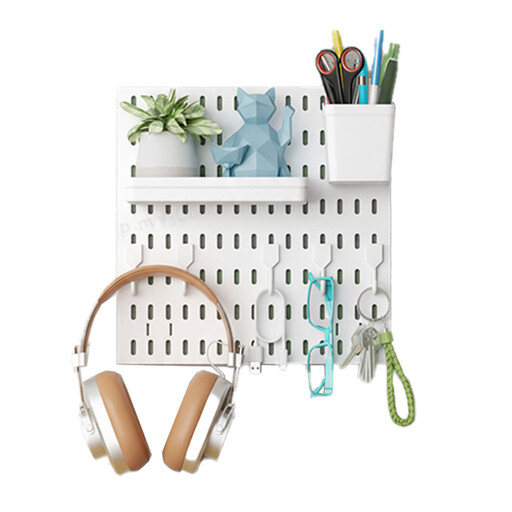
Why we love it: The dream solution for students and renters. This pegboard mounts without a single hole, allowing you to organise vertically and free up precious space on a desk or worktop.
It says goodbye to unsuitable fixings and the dread of drilling. Fully modular, it doesn't fall into the trap of rigid, non-scalable storage.
Maximum flexibility: the hooks, shelves, and bins can be moved at will to perfectly fit your items.
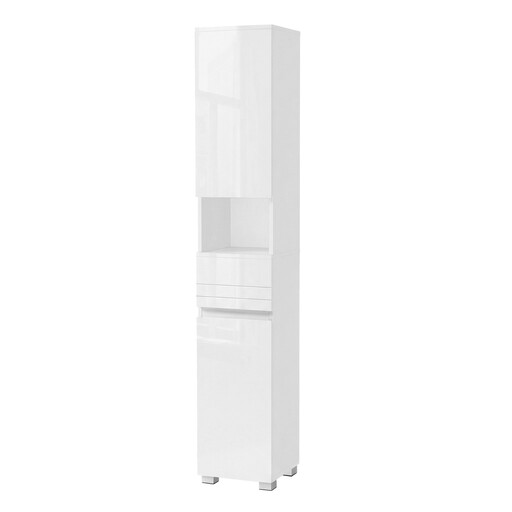
Why we love it: This slim tower is a champion of vertical storage, perfect for family bathrooms where every square centimetre counts. It combines cupboards, drawers, and open shelves so that everything has its place.
Its treated MDF and anti-tip kit check the boxes for durability and safety. Inside, the adjustable shelves avoid the trap of fixed storage.
Maximum storage with a minimal footprint (30x30 cm). Bonus: the reversible doors adapt to your room's layout.
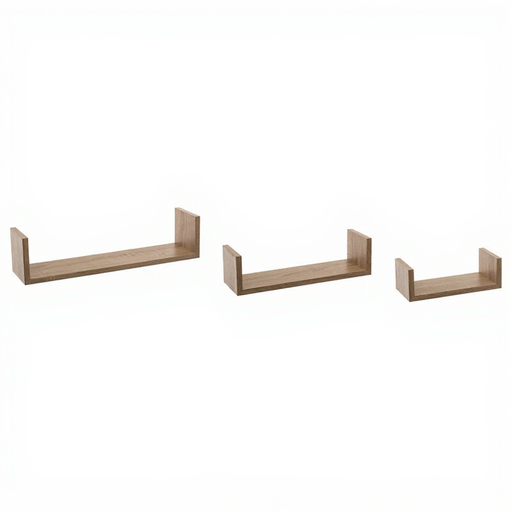
Why we love them: For those who believe storage should also be stylish. This set of three shelves in different sizes, with their invisible fixings, allows you to create a clean, graphic wall display to showcase plants, coffee table books, and treasured items.
The invisible mounting system ensures a flawless look, without unsightly brackets. The 3 kg maximum load per shelf is clearly specified, preventing any nasty surprises.
The trio of different sizes offers complete creative freedom to liven up a wall. Its natural wood finish blends effortlessly into almost any decor style.
The material is your number one priority. Opt for bamboo, high-quality plastics (PP/ABS), anti-corrosion treated metal, or solid wood suitable for damp rooms. For an MDF unit, look for the "water-repellent"?or "bathroom-specific"?label. And don't forget: good ventilation in the room is crucial for the longevity of your furniture.
It's all in the anchor that secures the screw in the wall.
There's no shortage of "no-drill" solutions: