
Livraison le jour même ou le lendemain

Qualité garantie

Débloquez vos offres de bienvenue: Livraison GRATUITE | Jusqu'à -80 % | 30 jours d'essai gratuits à JoyPlus
Téléchargez l'application
It's a well-known fact: a tidy home leads to a clearer mind. But in practice, the equation is far from simple. Between marketing promises and reality, finding the right home storage solution can feel like an uphill battle. We quickly end up with stacks of boxes that won't close, misshapen baskets, or organisers that, paradoxically, create more clutter than they solve.
To prevent your investment from turning into a headache, it's essential to avoid the most common pitfalls.
To avoid these disappointments, it's best to rely on objective criteria that guarantee the functionality and durability of your future storage solutions.
Looks aren't everything. For truly effective day-to-day storage, there are three criteria to watch closely.
The choice of material is crucial: it determines not only the product's lifespan but also its safety in use.
A good storage solution should adapt to your space, not the other way around. Stackability is a non-negotiable feature for optimising vertical space. Look for stackable boxes with flat, reinforced lids or interlocking rims that fit together securely. A square or rectangular design is often wiser to avoid wasting any precious square inches in a cupboard or on a shelf.
Good storage is, above all, specialised storage. A weekly pill organiser needs to be compact and secure for travel, while a garden storage box must be treated to resist UV rays and frost. In the kitchen, a kitchen organiser should provide easy access to utensils or spices, and a food container must guarantee optimal preservation. Keeping the end use in mind is the key to selecting the product with the most relevant features.
To illustrate how to apply these criteria in practice, here are a few typical user profiles and the solutions tailored to them.

Why it's our pick: Ideal for preparing and storing meals for the week. Grade 316 stainless steel is a benchmark for food contact, ensuring hygiene and durability. The set of three different sizes (600 ml, 1100 ml, 2200 ml) provides excellent versatility.
This set avoids the pitfall of containers that stain and retain odours. Unlike plastic, 316 stainless steel is inert, easy to clean, and won't degrade when in contact with acidic or fatty foods.
The 316 stainless steel construction offers superior corrosion resistance and enhanced food safety. The containers are freezer and dishwasher-safe.
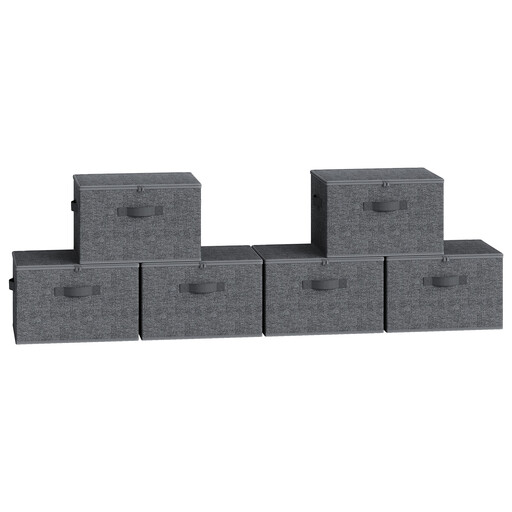
Why it's our pick: Perfect for organising clothes, linens, or accessories in a wardrobe. The large 30L capacity per box and reinforced structure allow you to easily store sweaters, trousers, or even toys.
This model sidesteps the fragility trap. Its structure is made of 2 mm thick cardboard and non-woven fabric, offering much better support than simple cardboard boxes. The zipped lid protects the contents from dust.
Their foldable design allows them to be stored flat when not in use. The front and side handles make them easy to grab from shelves or during a move.
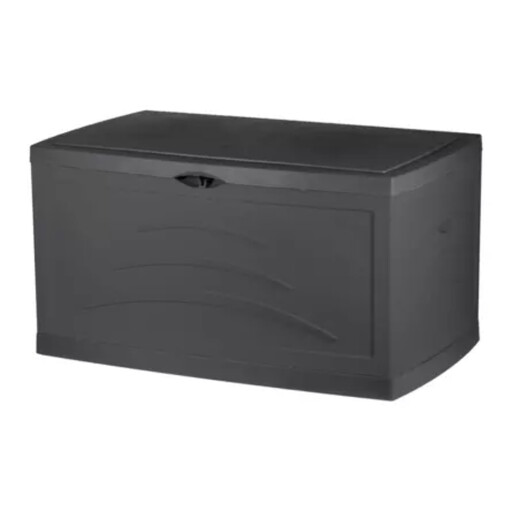
Why it's our pick: A robust solution for storing garden tools, outdoor furniture cushions, or kids' toys. Its large 310-litre capacity and weather-resistant design make it ideal for use on a patio, balcony, or in a garage.
This box is designed for the outdoors. Made from UV and frost-resistant polypropylene, it won't fade or become brittle after a season outside, unlike a simple, untreated plastic box.
It is equipped with wheels for easy moving, a lockable clasp (padlock not included), and features anti-pinch and anti-suffocation safety measures.
We've compiled a complete list of products that meet these strict selection criteria and current safety standards.
Each material has its pros. Plastic (BPA-free) is lightweight, often inexpensive, and impact-resistant. Glass is very hygienic, doesn't retain odours, and lets you see the contents, but it's heavier and fragile. Stainless steel is extremely durable, lightweight, and hygienic, making it an excellent choice for a lunch box or a stainless steel bento box, although it is not usually microwave-safe.
Check the design of the lid and base. Genuinely stackable boxes have flat, sturdy lids, often with a rim or groove that interlocks with the base of the box above it. This creates a stable stack that won't slip or collapse. A reinforced structure on the sides is also a good indicator of sturdiness.
Maintenance depends on the material. Glass and stainless steel containers are generally dishwasher-safe. For plastic, hand washing is sometimes better to prevent warping from heat. Fabric or woven paper baskets can be cleaned with a dry or slightly damp cloth. For a garden storage box, a simple rinse with a hose or a wipe-down with a sponge is sufficient. Always avoid abrasive cleaners that could scratch the surfaces.