
Livraison le jour même ou le lendemain

Qualité garantie

Débloquez vos offres de bienvenue: Livraison GRATUITE | Jusqu'à -80 % | 30 jours d'essai gratuits à JoyPlus
Téléchargez l'application
A cluttered home cannot be organised simply by adding more containers. The size, material and opening mechanism all make a decisive difference in everyday use. In a busy family living room, a narrow dressing area or a humid bathroom, the wrong basket can quickly become difficult to move, clean or stack.
This 2026 selection brings together home storage baskets, boxes and bins suited to a range of uses. The goal is to compare practical features rather than be swayed by a polished image or a marketing promise.
A storage box that claims a generous capacity may prove impractical if its opening is narrow or its walls reduce the available interior space. For clothes, toys or household linen, measure the available width, depth and height inside the furniture before making your choice.
Also consider the external dimensions, including the lid, handles and stacking system. Just a few extra centimetres can prevent a box from fitting on a shelf or sliding beneath a bed.
A basket woven from paper or natural fibres adds warmth and character, but it is not necessarily suitable for areas exposed to splashes. In a bathroom, basement or garage, a washable plastic storage box will generally be easier to maintain.
Conversely, transparent plastic is practical but does not suit every interior. In a living room or bedroom, a decorative storage basket can conceal clutter while keeping belongings within easy reach.
Handles, stitching, metal frames and lids are not all designed to support the same weight. Always check the maximum load specified by the manufacturer. A basket is not a seat, step stool or support for a child.
For stackable baskets, stability also depends on the floor surface and how the contents are distributed. Place heavier items at the bottom and reserve the upper levels for lighter belongings.
Start by deciding what you want to store:
Also measure the space genuinely available inside the furniture. On cube shelving, rectangular baskets should have a little clearance so they can be removed without forcing them.
Polypropylene can be wiped clean with a damp cloth and is suitable for spaces requiring frequent maintenance. Transparent models make it easy to identify their contents, particularly in a garage, dressing room or child’s bedroom.
Fabric and woven paper are lightweight and valued for their decorative appeal. However, they should be kept away from prolonged exposure to moisture. Natural fibres, such as those used in a water hyacinth basket, should be cleaned with a dry or barely damp cloth and never immersed in water.
Baskets with handles are especially convenient for moving items from one room to another. In a dressing room, a hanging basket makes use of available vertical space without requiring another piece of furniture. To maximise space, check that the containers are genuinely stackable and that their bases will not slide.
A lid protects the contents but adds an extra step each time the basket is used. For toys or everyday laundry, an open bin will often be quicker. For Christmas decorations, out-of-season clothing or paperwork, a closed box provides better protection against dust.
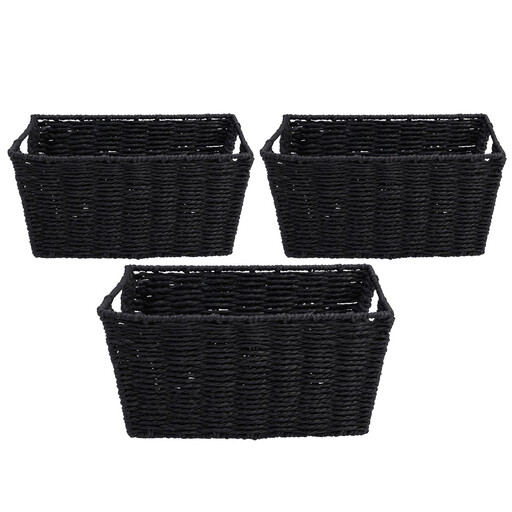
Why this choice suits this profile: This set makes it easy to distribute socks, scarves, books and accessories across several rooms, with no installation required.
The metal frame keeps the basket in shape, while its rectangular design fits neatly on shelves and in cube storage units.
Set of three baskets, steel frame, woven paper covering and care with a dry or slightly damp cloth.
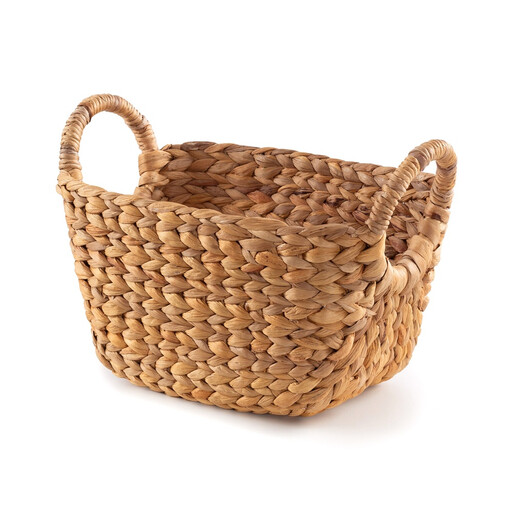
Why this choice suits this profile: Its woven texture and natural tone blend effortlessly into a living room, bedroom, hallway or child’s bedroom.
With advertised dimensions of 40 × 23 × 26 cm, you can check whether it will fit before buying. However, it should not be exposed to moisture for extended periods.
Handwoven construction, M size, no installation required and care with a dry or slightly damp cloth.
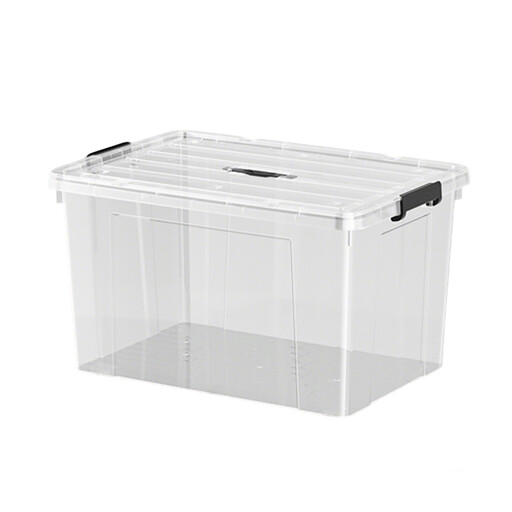
Why this choice suits this profile: This format is suitable for seasonal clothing, toys, supplies, garage items and travel accessories.
The contents remain visible without opening the box, while the clip-on lid helps limit dust exposure. However, observe the maximum load and avoid high temperatures.
Polypropylene, advertised 2.5 mm walls, integrated handles, non-slip base and stackable design thanks to the flat lid.
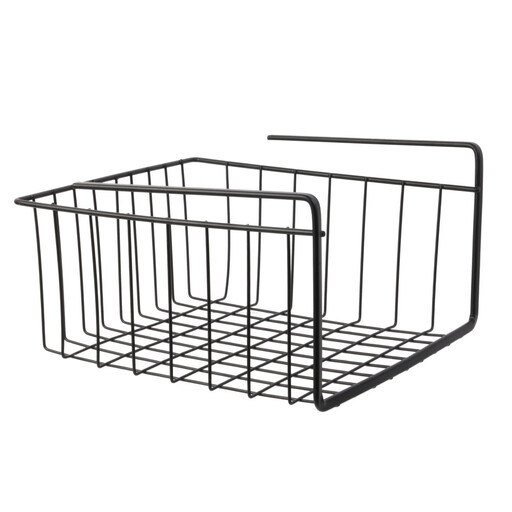
Why this choice suits this profile: Its suspended design makes use of vertical space that is often left unused in a wardrobe or dressing room.
It attaches without drilling, but the rail must be able to support the total weight. Always observe the stated maximum load.
Open structure for easy identification of accessories, suspended installation and a format suited to scarves, belts, bags or household linen.
We have brought together an up-to-date selection of products suited to different home storage and organisation needs.
In the living room, place open baskets near the sofa for remote controls, magazines and throws. In the bedroom, reserve lidded boxes for out-of-season clothing and use baskets with handles for everyday laundry.
For toys, a lightweight open bin allows children to take part in tidying up without encouraging them to climb inside. In the home office, stackable boxes can group cables, stationery and documents by category.
In the kitchen, keep containers intended for food separate from boxes designed for household items. The three-tier Alpina jar, made from transparent glass, is designed for dry foods and includes three stackable elements with a lid. Glass can break if dropped and, according to the supplied instructions, should not be used to store liquids or moist foods.
Start by measuring the inside of the furniture, then compare those measurements with the basket’s external dimensions. Leave a little clearance so the container can be removed easily. For bulky clothing, allow enough height; for small accessories, a shallow bin will prevent items from getting lost at the bottom.
They can be used to store dry items, textiles or accessories, provided you follow the manufacturer’s recommendations. Avoid prolonged direct sunlight, heat sources and overloading. For items stored for several months, good ventilation remains preferable.
Regularly remove dust with a soft brush or dry cloth. If necessary, wipe it with a slightly damp cloth, then allow the basket to dry completely. Do not immerse it in water or leave it in a damp environment, as this could damage the fibres and distort its structure.