
Livraison le jour même ou le lendemain

Qualité garantie

Débloquez vos offres de bienvenue: Livraison GRATUITE | Jusqu'à -80 % | 30 jours d'essai gratuits à JoyPlus
Téléchargez l'application
A cluttered bathroom, a hard-to-reach kitchen cupboard, or cosmetics scattered across the vanity unit can quickly make daily life more complicated. Home storage accessories offer a simple solution – provided you choose a model suited to the room, the surface and the items you need to organise.
However, some commercial claims deserve a closer look.
A no-drill shower shelf or a suction-cup shower caddy is primarily designed for smooth, clean, non-porous surfaces: glass, smooth tiles, metal or acrylic. Grout lines, uneven tiles, painted walls, wallpaper and porous surfaces can all reduce adhesion.
Before ordering, check the type of wall you have and make sure you have a 90° corner if you’re choosing a corner model.
The maximum load stated by the manufacturer doesn’t guarantee the same stability on every surface. Weight distribution, humidity, vibrations and the quality of installation all play a part.
A caddy filled with large shampoo bottles faces different stresses than a wall-mounted soap dish. It’s better to keep a safety margin and check the fixings regularly.
In the bathroom, a closed, poorly ventilated storage unit can trap moisture. For toiletries, choose items with drainage holes, a removable structure and easy-to-clean materials. In the kitchen, be wary of baskets that are too deep, as they make items at the back difficult to reach.
Measure the available width, depth and height before you buy. This step is essential for:
In a narrow cabinet, a sliding or vertical model can make products easier to access without having to reorganise the whole cupboard.
Suction cups are removable and can be useful for tenants, but they require a smooth, perfectly degreased surface. A no-drill installation using rails or a sliding support can work for some cupboards, provided you stick to the stated dimensions.
For adhesive fixings, check compatibility with the surface as well as the recommended setting time. Don’t place heavy items on them immediately if the instructions advise a waiting period.
ABS and TPE are commonly used for lightweight, removable shower storage. Steel with an enamel coating can work well for a kitchen basket, while foldable felt is better suited to laundry, toys or firewood.
Also consider:
A cotton-bud box, a cosmetic storage box or a pill organiser doesn’t need fixing. Their usefulness depends mainly on their size, closure and ease of access.
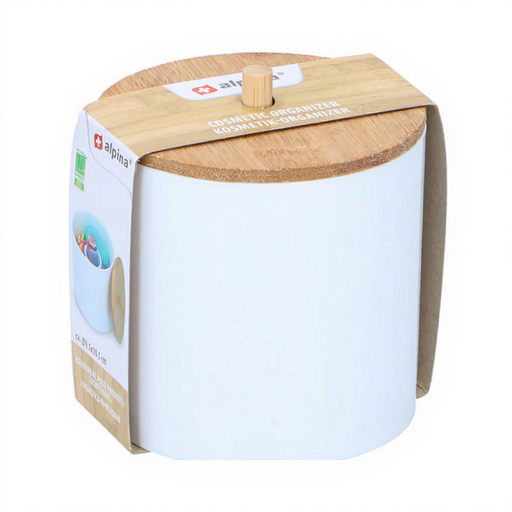
Why this choice suits this profile: Its compact size sits on a dressing table, a vanity unit or in a drawer to group small cosmetics together, with no installation required.
This storage unit doesn’t rely on a suction cup or adhesive. You just need to check its dimensions before placing it.
Stated dimensions of 9.5 × 10.5 cm; described as dust-resistant and water-resistant, with regular cleaning recommended.
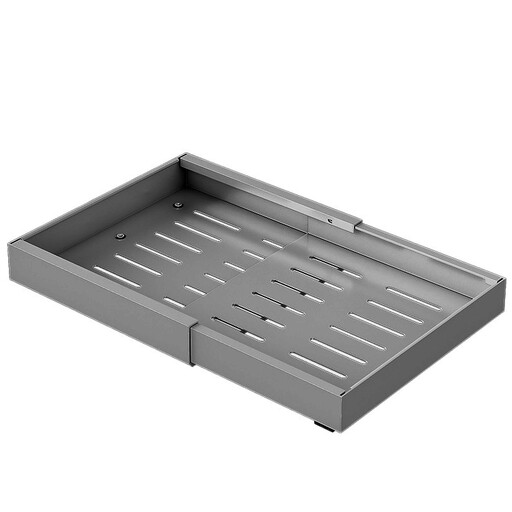
Why this choice suits this profile: Its adjustable width from 42 to 68 cm is ideal for people who want to make the most of the available space in a kitchen cupboard.
The width is adjusted before fitting and the installation is described as drill-free. You still need to measure the cupboard and distribute the weight evenly.
Carbon steel structure with enamel coating; stated load capacity up to 15 kg, subject to correct installation.
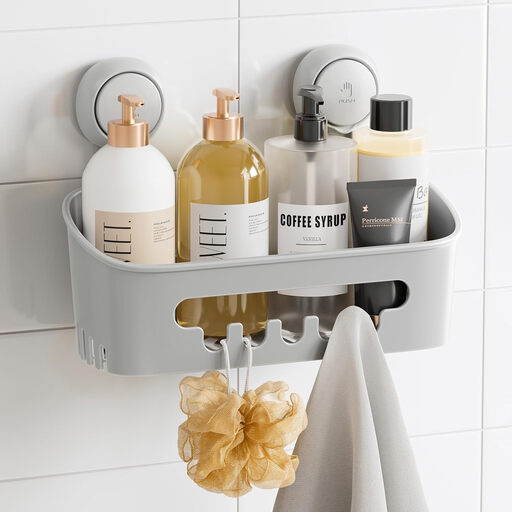
Why this choice suits this profile: Its two removable baskets let you separate shampoos, shower gels and accessories in a family bathroom.
The instructions specify compatible surfaces and a stated maximum load of 10 kg. The drainage holes limit water pooling.
ABS baskets and TPE suction cups; can be removed and repositioned on a smooth surface, clean with water and mild soap.
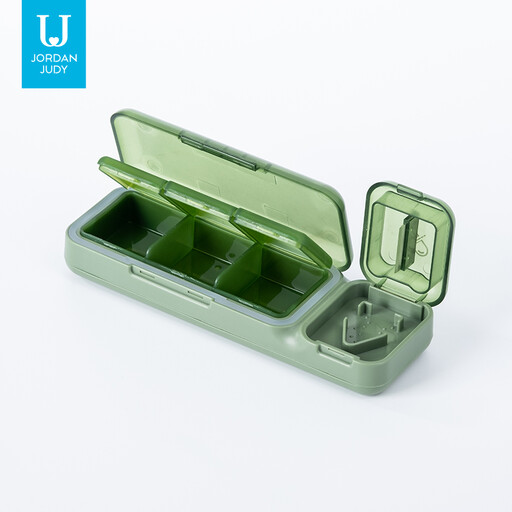
Why this choice suits this profile: Its size of 13.8 × 4.5 × 2.4 cm slips into a bag or travel case to organise daily doses.
The press-on lid limits accidental opening. The built-in blade should be handled with care and does not replace the advice of a healthcare professional.
Daily compartments and built-in pill cutter; hand washing recommended, not dishwasher safe.
We’ve put together a comprehensive, real-time updated list of products that fully meet these strict selection criteria and European safety regulations.
No. It works best on a smooth, dry, non-porous surface. Avoid grout lines, textured tiles, painted walls and porous materials. Clean the surface, dry it, then check the fixing before loading the caddy.
Regularly remove soap residue, rinse the baskets and let them dry. With a suction cup, check the adhesion periodically and reposition it if needed. Always respect the stated load capacity.
A sliding basket for a kitchen cupboard works well when its width is compatible with the cabinet. For bottles, a bottle rack placed on a stable surface can hold up to six containers, depending on the model. Foldable baskets remain practical when the storage needs to be removed or stored between uses.