
Livraison le jour même ou le lendemain

Qualité garantie

Débloquez vos offres de bienvenue: Livraison GRATUITE | Jusqu'à -80 % | 30 jours d'essai gratuits à JoyPlus
Téléchargez l'application
A home security system involves far more than installing a camera and a siren. Depending on your property, whether you rent or own, and whether you have a garage, courtyard or combustion appliances, your needs can vary considerably.
The main risk is buying equipment that looks appealing on paper but is incompatible with other devices, demanding to maintain or limited by recurring fees. Here are the key criteria to consider before choosing a wireless home alarm, detector or connected camera.
A radio range of 80 metres is generally measured in an unobstructed area. In a typical French home, concrete walls, floors, thick partitions and certain electrical devices can significantly reduce the effective distance.
For a wireless motion detector or a door and window alarm, check the following:
Some sensors do not operate independently. The KYF-ALARM-009 additional motion detector, for example, requires the KYF-ALARM-009 alarm system control unit, sold separately. It communicates wirelessly and runs on a CR2450 battery, but cannot send notifications without the compatible control unit.
The same caution applies to an opening sensor, siren or any other KYF-ALARM-009 alarm accessory. Before ordering, note the exact reference of the control unit and check which protocol it uses.
A 2K indoor camera or a high-resolution outdoor security camera does not, by itself, guarantee usable footage in every situation. Lighting, viewing angle, video compression, night vision and storage options also play a decisive role.
A 2K camera installed behind glass may be affected by reflections. Outdoors, it must also withstand rain and be positioned to minimise blind spots.
In a rented apartment, choose solutions that do not require drilling or feature reversible mounting, provided they are permitted by your landlord and building regulations. A self-adhesive magnetic sensor may be suitable for a door, window or patio door. A wired camera, however, requires an accessible power outlet and carefully managed cable routing.
Also examine the stated battery life. A smart video doorbell may run on battery power, mains electricity or either option. The WOOX model featured below claims a 5,200 mAh battery and four to five months of battery life, based on five activations per day. In practice, this figure depends on detection frequency, temperature and Wi-Fi quality.
For a connected smoke detector, look for the EN 14604 reference when it appears in the product specification. The Heiman 2SA model cites this standard, offers an 85 dB audible alarm and wireless interconnection, and is advertised with a ten-year battery life.
A carbon monoxide detector deserves the same level of scrutiny. The Heiman WS-725ES states compliance with EN 50291, an advertised ten-year service life and compatibility with the Tuya and Smart Life apps. This does not, of course, remove the need to maintain combustion appliances, ventilate regularly and follow local safety guidance.
Smartphone alerts are invaluable when you are away, but they depend on your Wi-Fi connection, the app and, in some cases, a paid online service. Before buying, check:
In France, a camera must not film public areas or neighbouring property without complying with the applicable rules. Aim cameras only at areas that genuinely require monitoring.
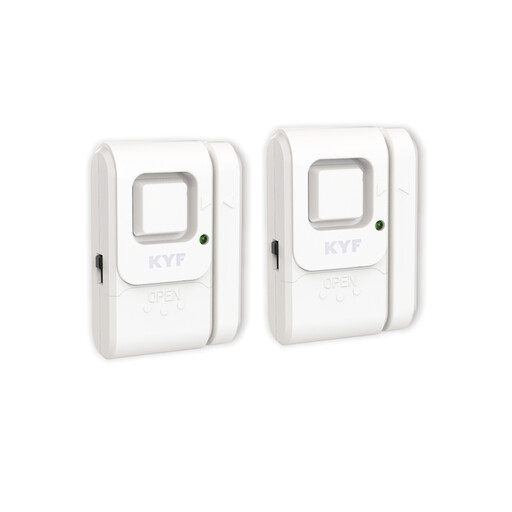
Why this is a good fit: this standalone format is ideal for renters and anyone looking to secure two indoor access points quickly, without wiring.
The product works without a control unit and attaches with adhesive. However, it is intended for indoor use only, and the LR44 batteries should be tested regularly.
Two units, an advertised 105 dB siren, alarm or chime mode, and approximately one year of advertised battery life.
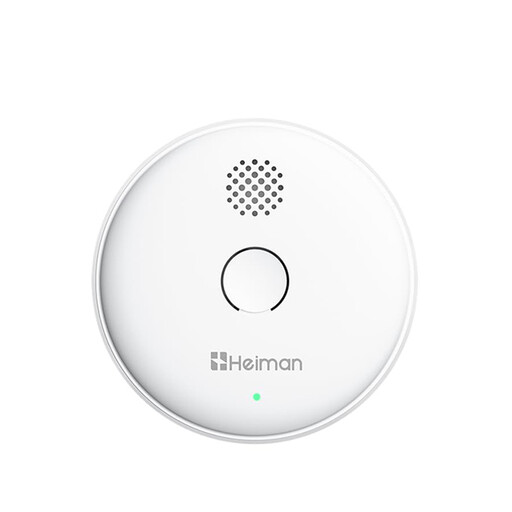
Why this is a good fit: its wireless network can be particularly useful in a multi-room home or a small premises where several detectors need to be linked.
The product details recommend ceiling installation, regular checks and compatibility with up to 40 interconnected alarms.
EN 14604 standard cited, 85 dB alarm, mute button and an advertised ten-year battery life.
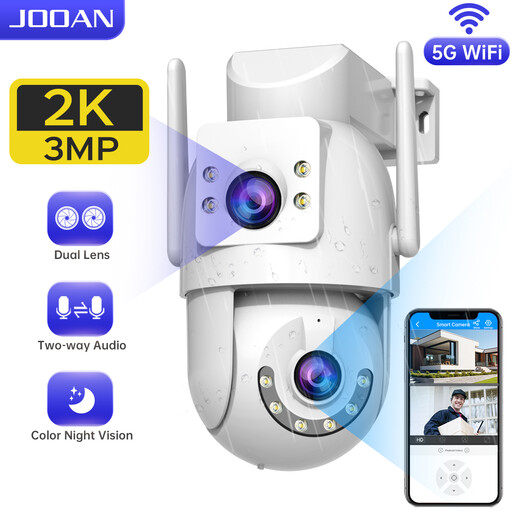
Why this is a good fit: it is designed for monitoring an entrance, courtyard, shop or relatively large outdoor area.
The advertised IP66 rating covers resistance to water and dust. The power supply and mounting must nevertheless remain protected and securely fastened.
2K resolution, advertised 330° horizontal and 90° vertical rotation, 2.4 GHz and 5 GHz Wi-Fi, and support for cards up to 256 GB.
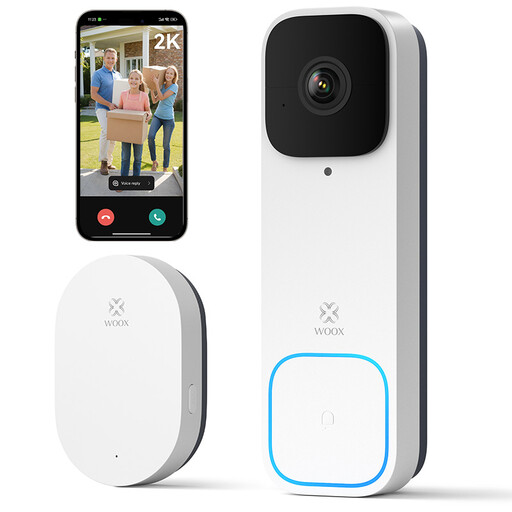
Why this is a good fit: it combines entrance monitoring, two-way audio and mobile notifications, making it suitable for both homes and small premises.
Recording is event-triggered rather than continuous. The 128 GB maximum microSD card is sold separately.
1,536 × 2,048 video, an advertised 170° viewing angle, night vision up to 5 m, IP65 rating and a wireless chime included.
We have brought together a selection of products to help you compare home security equipment, detectors, alarms and cameras according to your needs.
It depends on how many access points and areas you need to protect. One or two mini alarms may be enough to get started. An installation with a control unit, detectors, camera and storage will require a more substantial budget. Remember to factor in the cost of batteries, a microSD card and any potential cloud-storage subscription.
Always follow the manufacturer’s instructions and local regulations. A smoke detector is generally installed on the ceiling. A carbon monoxide detector should be placed in the areas recommended in its instructions, particularly near combustion appliances, without being directly exposed to heat or steam.
Most remote notification features require an internet connection. However, some models can record locally to a microSD card. Check the product’s exact operating requirements before buying and choose a storage capacity suited to your needs.