
Livraison le jour même ou le lendemain

Qualité garantie

Débloquez vos offres de bienvenue: Livraison GRATUITE | Jusqu'à -80 % | 30 jours d'essai gratuits à JoyPlus
Téléchargez l'application
Protecting your home is a top priority. The problem? The home security market is a jungle of marketing promises and technical jargon. Between overpriced gadgets and needlessly complex systems, it's easy to make the wrong choice. As product experts, our mission is to cut through the noise for you. Let's break down the mistakes to avoid and the criteria that truly matter to find a solution that meets your needs—without breaking the bank.
Before you pull out your credit card, keep an eye out for these costly rookie mistakes, in terms of both time and money.
To make the right choice, focus on these three criteria. The reliability and effectiveness of your future system depend on them.
A wireless alarm system juggles two types of connections:
Your needs today won't necessarily be your needs tomorrow. A good home alarm kit must be able to grow with you. Before you buy, ask the right questions: what is the maximum number of accessories the hub can manage? Can you easily add a motion detector, a smoke detector, or even a smart lock later on? A modular system gives you the freedom to start with a simple setup and expand it over time, without having to start from scratch.
What happens during a power outage? It's a classic tactic: cutting the circuit breaker before a break-in. A security system worth its salt must include a backup battery in its hub. This battery takes over to keep the alarm operational and communicating with its sensors for several hours. Protection never stops.
You won't find an endless list of products here. Instead, we've selected a few solutions and matched them with clear user profiles to help you find the one that's truly right for you.
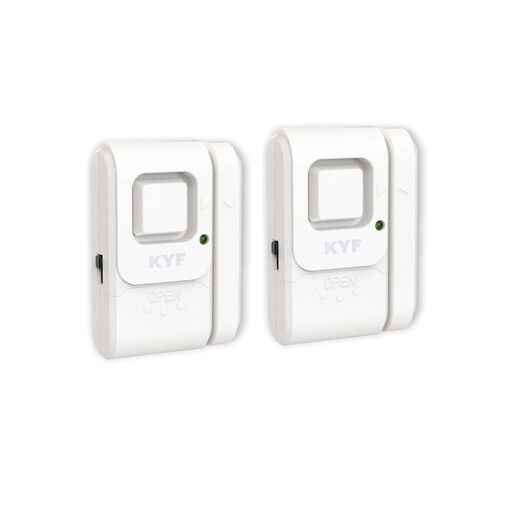
Editor's Take: Perfect for renters or for securing a specific entry point (front door, patio door, garden shed) without committing to a full system installation. An ultra-affordable and incredibly effective deterrent.
This is the antithesis of a complex kit. It's completely standalone, with no hub, no Wi-Fi to configure, and no compatibility to worry about. It does one thing, and it does it perfectly.
Installs in seconds with its adhesive backing. Powerful 105 dB siren for a guaranteed surprise effect. Its convenient "Ding Dong" chime mode can also be used to announce when someone enters.
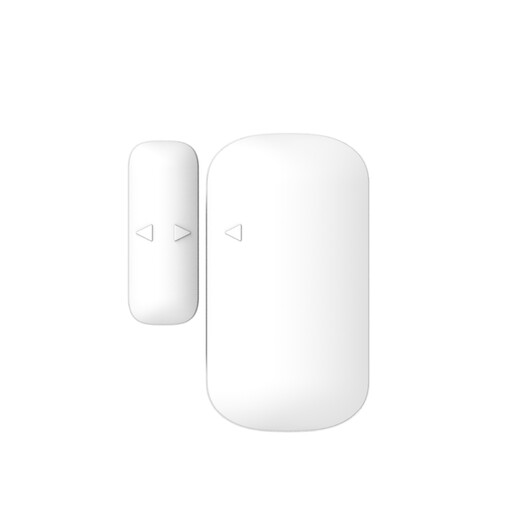
Editor's Take: The perfect solution for homeowners who want a solid, connected foundation. This home alarm kit offers complete control from a smartphone and can be expanded almost infinitely.
It intelligently combines a 2.4 GHz Wi-Fi connection for smartphone notifications with a dedicated 868 MHz radio frequency, which is much more reliable for sensor communication. Its scalability is a real asset: it can manage up to 30 accessories.
A truly complete starter kit (hub, 2 door sensors, 1 motion detector, 2 remote controls). Integrated backup battery so you're never caught off guard. Everything is controlled via the TuyaSmart app.
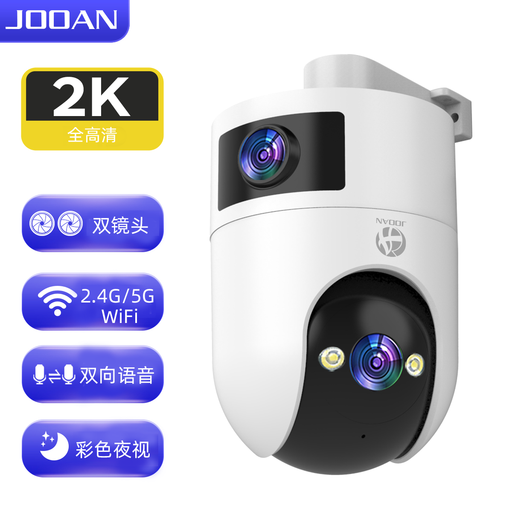
Editor's Take: For those who not only want to be alerted but also see what's happening live, day or night. IP66-certified, this Wi-Fi security camera is resistant to both rain and dust and can be installed indoors or outdoors.
Its dual-band Wi-Fi (2.4 GHz and 5 GHz) connectivity ensures a more stable and high-performance connection. Its dual lens is a major plus, allowing for both wide and detailed surveillance—a rare feature on entry-level models.
360° panoramic view, automatic motion tracking, colour night vision, and two-way audio to speak or deter intruders. Store footage locally on an SD card or in the cloud (subscription required).
Discover our complete selection of security systems that meet all our criteria for reliability and performance.
Yes, provided you choose quality equipment. Modern systems that use a dedicated radio frequency (like 868?MHz) are extremely reliable and designed to resist jamming. Their main advantage remains the ease of installation: no need to drill through walls or run cables everywhere.
It all depends on the model. Many systems, like the ones we feature, work perfectly without a subscription for essential functions (smartphone notifications, remote control, etc.). However, optional services like cloud video storage or professional monitoring are almost always subscription-based. Be sure to read the fine print before you check out!
It varies depending on the sensor and its usage, but you can generally expect between 1 and 2 years of battery life. Rest assured, most modern systems will send you a notification on your smartphone well in advance when a battery is running low, giving you plenty of time to replace it.