
Livraison le jour même ou le lendemain

Qualité garantie

Débloquez vos offres de bienvenue: Livraison GRATUITE | Jusqu'à -80 % | 30 jours d'essai gratuits à JoyPlus
Téléchargez l'application
Drafts under the door, blackened seals in the shower, a visible gap between two floor coverings… These small sealing defects compromise comfort and can accelerate the deterioration of finishes. However, the first product stamped "universal" is not necessarily the right one.
This selection of home sealing and insulation solutions helps you sort through products intended for bathrooms, old windows, or floor junctions. The principle is simple: choose the right material and dimensions, then verify that the installation is suitable for the surface.
A sanitary silicone sealant is primarily used to create a flexible water barrier around a sink, bathtub, or shower. It does not replace a door or window seal designed to limit air infiltration.
Conversely, a sealant intended for joinery can improve airtightness, water resistance, or soundproofing, but it will not necessarily be suitable for areas exposed to repeated splashes and cleaning products.
A strip that is too thin will not compensate for a significant gap. Conversely, foam that is too thick can prevent a door from closing properly. Indications such as 1 to 3 mm, 2 to 6 mm, or 2 to 15 mm must therefore be compared to the actual width of the gap to be filled.
Measure several points on the frame or floor: in an older home, the gaps often vary from one area to another.
Even a good quality adhesive insulating strip will quickly lose its adhesion on a dusty, greasy, or damp surface. For a durable installation, clean, degrease if necessary, let dry completely, then apply the strip without stretching it.
With a sealant, remove the old crumbly seal and work on a clean, dry surface. Also respect the drying time indicated on the packaging before putting the area back into service.
For regrouting tiles, a grout pen can restore a clean appearance to stained white cement grout. However, it is not suitable for repairing a missing or deeply cracked joint.
In a wet room, opt for a flexible, moisture-resistant silicone. The Rubson Bath & Kitchen Intense Black, for example, is presented as an acetic silicone containing fungicidal agents, intended for connections around sinks, basins, showers, and bathtubs. Its datasheet specifies that it adheres to earthenware, stoneware, glass, and porcelain, but is not suitable for plexiglass or certain synthetic materials.
The choice of a weatherstrip directly depends on the width of the gap to be treated:
Also check the total length. A 6 m roll may be delivered as a single strip or in two 3 m lengths, which changes how it is cut and installed.
Between a laminate floor, tiles, and carpet, a floor transition strip can mask a gap and provide a cleaner finish. Self-adhesive PVC models are generally cut with scissors and installed by applying simple pressure.
The color also matters: a brown wood effect will be discreet on a dark floor, while a light grey or off-white finish will better suit a contemporary interior. This solution masks a visible gap but does not correct a significant height difference or an unstable floor.
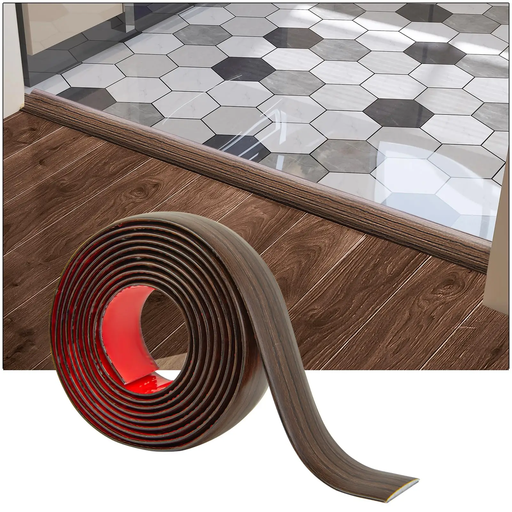
Why this choice fits this profile: it is suitable for small finishes between tiles, laminate, or carpet, without additional glue or special tools.
Its width and thickness are clearly indicated, which avoids choosing a strip that is too bulky for a narrow gap.
Flexible PVC, self-adhesive backing, easy to cut, and cleans with a damp cloth.
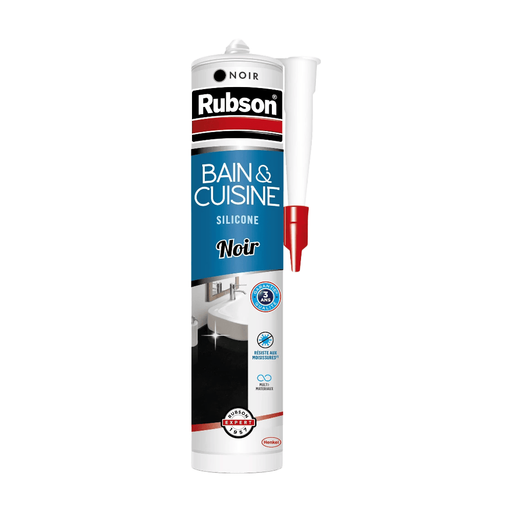
Why this choice fits this profile: its black color allows the seal to match a contemporary decor around a sink, shower, or basin.
The datasheet specifies compatible surfaces and materials to avoid, notably plexiglass and certain synthetic plastics.
280 ml cartridge, flexible and water-resistant seal after drying, in accordance with installation instructions.
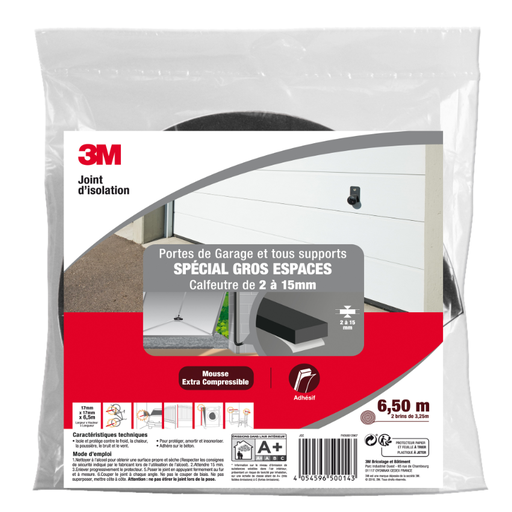
Why this choice fits this profile: this compressible polyurethane foam is designed for gaps of 2 to 15 mm, particularly on certain doors, windows, and garage doors.
The coverage range is stated before purchase. However, check that the remaining compression does not hinder closing.
Total length of 6.50 m, flexible installation, and can be used to limit drafts, cold, or noise.
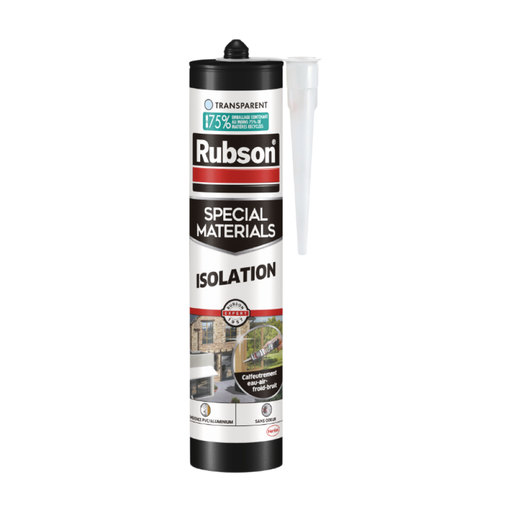
Why this choice fits this profile: its transparent finish is suitable for window frames, doors, and roof windows where the seal needs to remain discreet.
The datasheet lists compatible materials and notably excludes bitumen, polyethylene, polypropylene, and PTFE.
This one-component product accommodates the natural movements of joinery; depending on the configuration, a separation tape may be necessary.
On a smooth floor and for a gap of up to about 20 mm, a door bottom can be practical. The Door Draft Stopper Smooth Floor Quick Premium model, 0.80 m long, is presented for this use. For a door or window frame, prefer a foam or rubber seal, chosen according to the measured width.
A sanitary silicone sealant is generally intended for connections around a sink, bathtub, shower, or basin. The surface must be compatible, clean, and perfectly dry. If the old seal is moldy or detached, remove all the material before applying a regular bead.
It can limit air passages at openings and thus contribute to thermal comfort. However, the result depends on the overall condition of the home, ventilation, glazing, and the quality of the installation. A strip does not replace the complete insulation of walls, attics, or joinery.