
Livraison le jour même ou le lendemain

Qualité garantie

Débloquez vos offres de bienvenue: Livraison GRATUITE | Jusqu'à -80 % | 30 jours d'essai gratuits à JoyPlus
Téléchargez l'application
Protecting your most valuable possessions is a top priority. Whether it's identity papers, contracts, family heirlooms, jewellery, or digital media, the right home safe provides true peace of mind. However, when faced with an overwhelming selection and vague marketing promises, it's easy to fall into common traps that can make your purchase useless, or even counterproductive.
To ensure you make the right choice, let's review the three most frequent mistakes and, more importantly, how to avoid them.
To cut through the noise, focus on objective criteria. Here are the essential checkpoints to consider before you buy.
The terms fireproof safe and waterproof safe are only meaningful if they are backed by certifications from independent organisations. The two most recognised are:
The choice of mechanism depends on your habits and comfort level with technology.
A small safe can simply be carried away by a burglar. Therefore, its construction and how it is secured are paramount.
Instead of an endless list, we've selected products that meet specific needs. Our goal is to help you find the solution that's truly right for you.
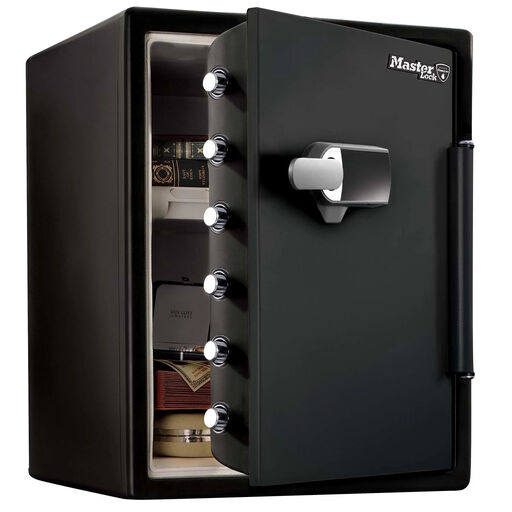
Who is it for? For those who demand maximum protection for their most precious assets (legal documents, passports, backup hard drives, family heirlooms). Here, security against fire, water, and theft is non-negotiable.
No empty claims here. The UL and ETL certifications prove it: fire resistance (1 hour at 927°C) and water resistance (24-hour submersion in 20 cm of water). This is concrete, verified protection.
360° protection: in addition to its fire and water resistance, it features six locking bolts, an anti-theft alarm, and solid steel construction.
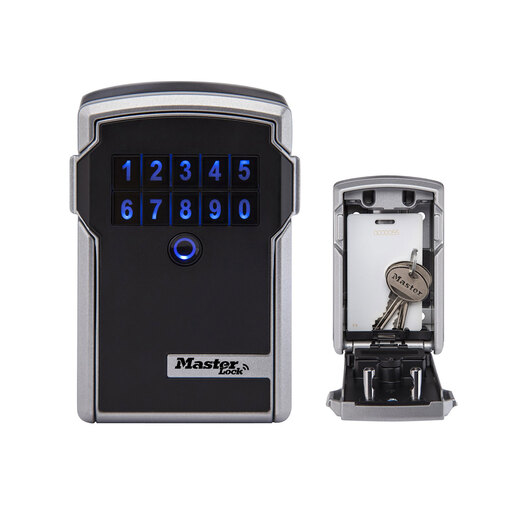
Who is it for? Ideal for short-term rental owners (Airbnb, etc.), concierge services, or families who need to grant secure access to third parties (guests, contractors, home care staff) without being physically present.
It avoids the trap of basic locks by offering dual access (Bluetooth via the Master Lock Vault Home app or a keypad code) and an activity log to track who comes and goes, and when.
Flexibility and total control: share permanent or temporary access, set access schedules, receive notifications... all from your smartphone, and it's subscription-free.
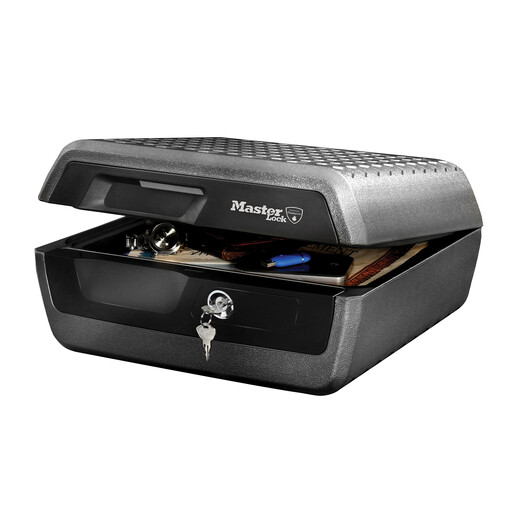
Who is it for? For those who primarily want to protect A4 documents and some digital media, on a limited budget or with limited space. It's an excellent entry point to certified, portable protection.
No more struggling with safes that are too small! Its interior is designed to hold A4 documents flat, without folding. And just like the larger models, its UL/ETL certifications ensure real protection against fire and water.
Its briefcase format offers certified, portable protection without the constraints of a fixed installation. The tubular key lock is a simple but remarkably effective mechanical solution.
Explore our full selection of products that meet our rigorous selection criteria and current security standards.
Yes, and it's essential for any safe weighing less than 500 kg. Most models include a bolting kit (expansion bolts). Anchoring it to a concrete slab floor remains the most secure solution. However, be careful: drilling into a certified waterproof safe may void its waterproof warranty. Always follow the manufacturer's instructions scrupulously.
Both are trusted labels. Historically, UL is the benchmark for protecting paper from fire. ETL has complemented these tests by also focusing on digital media (USB drives, hard drives, etc.), which degrade at much lower temperatures than paper. In any case, a product certified by either organisation is a guarantee of verified performance.
Not necessarily. Security depends on the overall quality of the mechanism, not its technology. An excellent digital safe will be very secure. But a high-security key lock (like a tubular one) on a well-built safe will always be more reliable than an entry-level electronic keypad. It all comes down to a preference between the convenience of a code and the simplicity of a key.