For working-from-home lunches, choose the size based on how many people and meals you’re catering for. A 2 × 1 L pack is best suited to situations where several portions will be eaten, while a 1 L carton or smaller packs mean you can open less soup at a time. Then check the recipe, the stated servings and the storage instructions after opening. The formats featured here are mainly cartons and instant sachets, not tins.
Who are these formats for?
People who sometimes lunch alone and sometimes with others
If the number of people eating varies from day to day, compare the volume of each pack rather than the size of the multipack as a whole. The ranges featured by Auchan, Carrefour and E.Leclerc include 1 L cartons and 2 × 1 L packs.
People who want to prepare a small portion
For a short break and a solo lunch, smaller packs mean you don’t have to open a large carton straight away. E.Leclerc offers 2 × 30 cl formats; for its instant soups, Royco recommends adding 200 ml of boiling water and leaving for two minutes. Always follow the instructions for the product you choose.
People who pay attention to ingredients
If certain ingredients or allergens affect your choice, start by checking the label for the exact recipe. Compare the nutritional information too, particularly the salt content, using the same basis and then taking account of the amount you plan to serve.
What should you look for?
First, work out how many lunches the pack needs to cover. Preparation time and the information on the packaging can then help you choose the recipes that suit your needs.
| Criteria |
What to check |
Who it matters to |
| How much you’ll need |
Compare the volume of each carton, the stated number of servings and the storage instructions after opening. |
If several people share lunch, or soup is on the menu for several days, I want to choose a size we can use up. Around 31% of consumers make this their top priority. |
| Solo breaks |
Check whether it’s soup that’s ready to heat or a sachet that needs preparing; look at the amount per unit and the instructions. |
When my break is short, I’d rather make a small amount without opening a large carton. Around 31% of consumers put this convenience ahead of other criteria. |
| Ingredients |
Check the ingredients and allergens for the exact product; compare the salt content for equivalent serving sizes. |
Before choosing a recipe, I need to know whether its ingredients suit me and be able to compare its salt content. This is the main priority for around 23% of consumers. |
| Its place in your lunch |
Check the suggested serving size and decide whether the soup will be served with other food. |
If soup makes up most of my lunch break, the serving size and what I plan to eat with it matter more than the pack size. Around 15% of consumers prioritise this. |
Mistakes to avoid
-
Limiting your search to tins
For this kind of lunch, you can also compare cartons of liquid soup and instant sachets. They’re not prepared or portioned in the same way.
First choose the type of soup you want, then compare the sizes available in that category.
-
Buying two litres without planning how you’ll use it
A 2 × 1 L pack contains two separate cartons, but once a carton is opened, you need to use it according to the instructions on the packaging. The date printed on an unopened product isn’t enough to tell you how long it will keep after opening.
If you usually eat lunch alone, consider how many portions you’ll have from one carton before opening the next.
Any opened soup you don’t use for your planned lunches could go to waste.
-
Relying on the recipe name to check for allergens
Two vegetable soups can have different ingredient lists. The recipe name alone isn’t enough to tell you whether it’s suitable for everyone eating with you.
Check the ingredients and allergen information on the packaging for each product, especially before buying several units.
-
Assuming the number of servings means the same number of complete lunches
The serving information tells you how the soup can be portioned, not necessarily everything that will be served for lunch. Its role depends on the amount you choose and what else you plan to eat.
Decide whether you’ll serve it on its own or with something else before working out how many meals the pack will cover.
Brands to consider
These brands give you a useful starting point for comparing pack sizes. A brand’s range alone doesn’t tell you what’s in each recipe.
Royco
Instant soups to consider if you prefer to prepare a small amount during your break.
- For the preparation shown online, Royco recommends adding 200 ml of boiling water and leaving for two minutes.
- An instant sachet isn’t a family-size carton of soup that’s ready to heat. Check the instructions and the quantity for the product you choose.
Liebig
Liquid soups, with some products available to compare in a 1 L carton or a 2 × 1 L pack.
- Carrefour features a 1 L carton and a Liebig 2 × 1 L pack; Auchan says that a pack of this size serves eight people.
- Check the recipe and its ingredients for each product; don’t assume they’re the same just because the pack size is.
Marque Repère / Regal Soupe
The range featured by E.Leclerc includes soups in 1 L cartons and products in 2 × 30 cl formats.
- These pack sizes give you the choice of a large carton or smaller individual units.
- Compare recipes individually: the pack size alone doesn’t tell you about their ingredients or how to prepare them.
Auchan
The soup range featured by the retailer gives you several types of packaging to compare.
- It includes liquid soups and 2 × 1 L packs.
- Check the exact recipe and pack before applying information about one product to another.
Soups available on Joybuy
These products are mainly dehydrated soups for smaller servings or lunches close together. If you’re looking to share liquid soup from a family-size carton, compare its volume and storage instructions separately rather than treating these sachets as equivalent to a 1 L or 2 × 1 L pack.
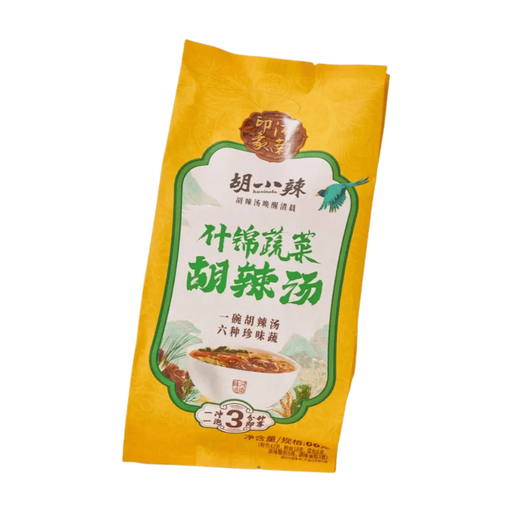 Image unavailable
Haoxiangni, spicy mixed vegetable soup, 66 g
This 66 g format is better suited to an individual serving than a shared lunch. Check the preparation instructions and allergens for this recipe before choosing it.
View on Joybuy
 Image unavailable
Royco, dehydrated noodle, carrot and mushroom soup, 3 × 20 cl
The three 20 cl units are suitable for separate individual breaks rather than a large bowl of soup to share. Check the instructions for this specific product to find out how to prepare it, and check the allergen information too.
View on Joybuy
 Image unavailable
Knorr, Thai mushroom noodle soup, 2 assorted, 69 g, 0.70 L
This product, listed as 0.70 L, is worth comparing with the amounts you want to serve over a few lunches. It needs to be cooked, so check the instructions and plan how you’ll use any prepared soup left over.
View on Joybuy
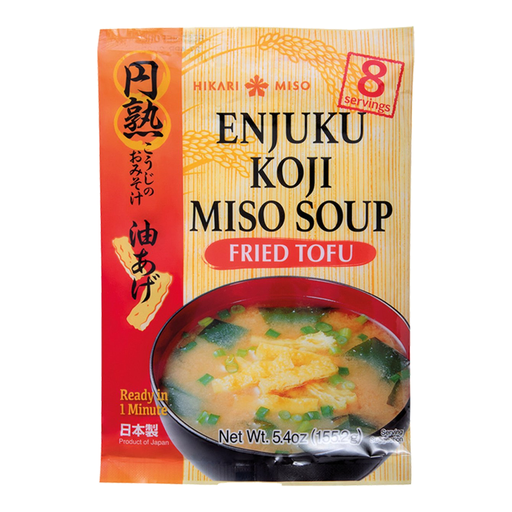 Image unavailable
Hikari Miso Enjuku, Aburaage miso soup, 155.2 g
This instant miso soup could be a good option for a solo break. The total weight of 155.2 g doesn’t tell you how many bowls it makes, so check the serving information and ingredients for the Aburaage variant on the packaging.
View on Joybuy
Frequently asked questions
Is a 1 L carton enough for four lunches?
Not necessarily: a serving suggestion of four portions doesn’t mean four complete lunches. Check the stated serving size on the carton and consider how much of each meal the soup will make up.
How can I check the allergens in packaged soup?
Read the ingredients and allergen information for the exact product, even if you’re already familiar with another soup from the same brand. The Directorate-General for Competition Policy, Consumer Affairs and Fraud Control notes that the ingredients list is part of the labelling information required for prepacked food.
Is the printed date enough to tell me how to store opened soup?
No. Once opened, follow the storage instructions and use-by period shown on the packaging. The Directorate-General for Competition Policy, Consumer Affairs and Fraud Control explains that the date on a pack is no longer enough to guide storage once it has been opened.
How can I compare the salt content of two soups?
First compare the salt content given on the same basis in the nutritional information, then take account of how much you’ll serve. Anses lists soups and broths among the foods that contribute to salt intake; a value per 100 g or 100 ml won’t automatically reflect the amount in your bowl.


