
Livraison le jour même ou le lendemain

Qualité garantie

Débloquez vos offres de bienvenue: Livraison GRATUITE | Jusqu'à -80 % | 30 jours d'essai gratuits à JoyPlus
Téléchargez l'application
With the rise of remote work and the proliferation of our electronic devices, our homes are often overrun by a nest of cables and chargers. Organizing this space to be practical, aesthetically pleasing, and safe can often feel like a puzzle. Before investing in so-called miracle solutions, it's crucial to know how to avoid the common pitfalls that turn a good purchase into a regret.
As the Head of Product Curation at Joybuy, I'm here to help you see things more clearly. Let's review the mistakes to avoid and the essential criteria for a successful smart home and office setup.
The market is flooded with seemingly ingenious solutions, but not all are created equal. Here are three common traps that can turn good intentions into genuine frustration.
To avoid making a mistake, focus on objective technical specifications. Here are the three fundamental checkpoints.
Before any purchase, check the maximum supported power, expressed in Watts (W). For standard household use in Europe, a capacity of 3680W (for 16A) is the norm for plugging in multiple devices without risk of overload. Also, ensure the product complies with CE and other key safety standards, a guarantee of conformity and security. Finally, with the widespread adoption of this standard, opting for a USB-C power strip in addition to USB-A ports has become essential for quickly charging your latest devices.
Instead of stacking power strips, consider integrated solutions. A wall-mounted power track is both an elegant and modular option for the kitchen or office, allowing you to add, remove, or move outlets as needed. Multifunctional furniture, such as a bed with storage and USB or a kitchen unit with integrated outlets, offers a discreet and centralized charging solution, ideal for a teen's room setup or a minimalist living space.
A well-designed power strip goes beyond simple plugging. A power strip with a master or individual switch allows you to cut power to standby devices and save energy. For sensitive areas (living room, children's room), a surge protector power strip is essential to protect your electronic equipment from voltage spikes. Lastly, a remote-controlled outlet can simplify daily life by allowing you to control lamps or hard-to-reach appliances from a distance.
Every household has its own needs. Here are a few products we've selected for their ability to meet different profiles, all while avoiding the pitfalls we've just discussed.
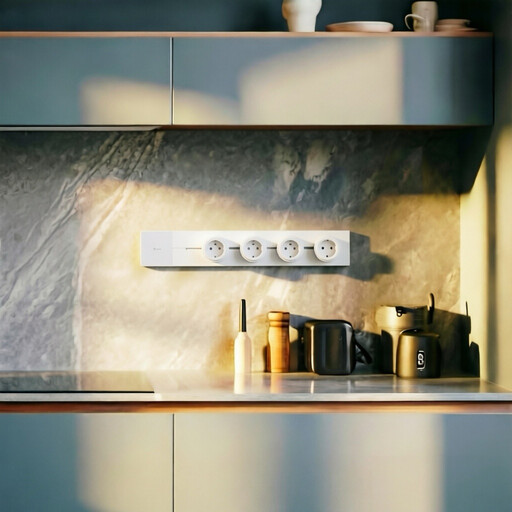
Why this product? Perfect for those seeking a clean, long-term solution to cable chaos in the kitchen or office. Its slim design and wall-mounted installation free up countertop space and create an orderly environment.
Unlike traditional power strips, this wall-mounted power track is modular. It allows you to add only the socket modules you need. Say goodbye to outlets blocked by oversized chargers!
Custom modularity; high power capacity (up to 3680W); sturdy, easy-to-clean aluminum alloy housing.
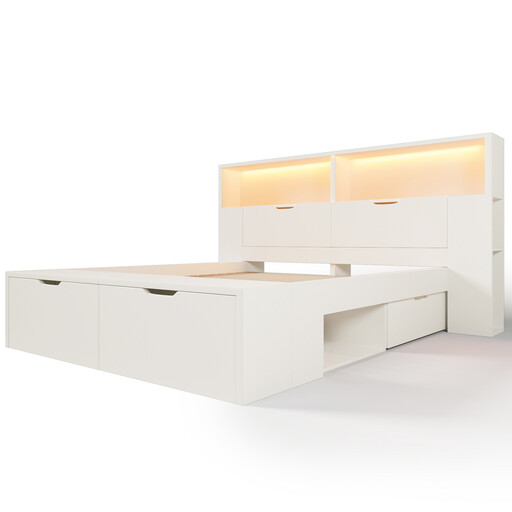
Why this product? It's the all-in-one solution for a teen's or adult's bedroom setup. It combines a bed, multiple storage options, and a complete charging solution for maximum space optimization.
This bed with storage and USB integrates connectivity directly into its frame. No more extension cords and power strips cluttering the floor: the mess is solved at the source.
Multifunctional furniture with multiple storage options (drawers, shelves, bench); integrated charging ports (USB-A and USB-C); customizable LED lighting.
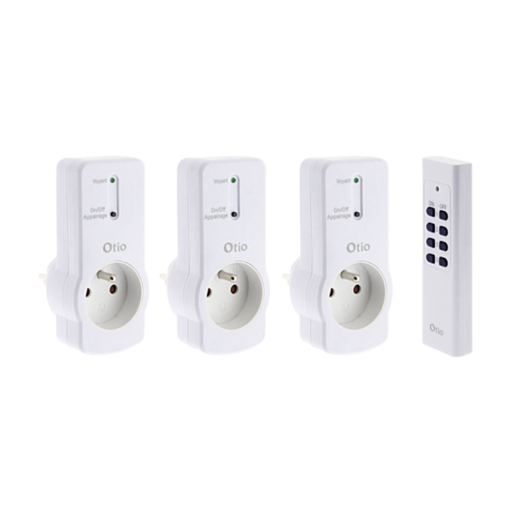
Why this product? For fans of simplicity and comfort. This kit lets you turn lamps or small appliances on and off without getting up, an incredibly effective solution for hard-to-reach outlets.
This remote-controlled outlet doesn't bother with complex integration into a smart home ecosystem. It's a "plug-and-play" solution that works immediately, with no Wi-Fi setup or mobile app required.
Instant setup; control 3 devices with a single remote; 25-meter range in open space.
We have curated a complete range of products that meet our selection criteria and local safety standards.
Yes, to protect your expensive electronic devices (TV, computer, game console, etc.). A power surge, even a brief one, caused by lightning or a fluctuation in the electrical grid, can irreparably fry their components. A surge protector power strip acts as a shield by absorbing this current spike. It's a small investment for great peace of mind.
Measure the distance from the wall outlet to where you want to place the power strip. Choose a cable length that is slightly longer to avoid any strain on the cable and the plug. A cable that's too short is both a constraint and a source of clutter, while an excessively long cable can become a tripping hazard and a dust magnet.
No, it is strongly advised not to plug power strips into each other in a series. This practice, known as "daisy-chaining," creates a major risk of overload and fire. The first power strip in the chain would have to support the cumulative consumption of all devices plugged in downstream, a load it is not designed for. Always opt for a power strip with enough outlets and a long enough cable to reach the wall outlet.