
Livraison le jour même ou le lendemain

Qualité garantie

Débloquez vos offres de bienvenue: Livraison GRATUITE | Jusqu'à -80 % | 30 jours d'essai gratuits à JoyPlus
Téléchargez l'application
With the rise of remote work, creating a dedicated professional space is no longer a luxury, but a necessity. Whether you live in a studio or a large apartment, the challenge remains the same: how do you set up a home office that is productive, comfortable, and seamlessly integrates with your decor?
This guide is here to help you design your ideal home office. We'll review the essential criteria for choosing your furniture, complete with a selection of products that check all the boxes: functionality, design, and excellent value for money.
Before you buy, a few key steps will ensure your setup is both successful and sustainable.
Spending hours in front of a screen requires equipment that supports your back and helps you stay focused. An ergonomic office chair isn't a luxury; it's a long-term investment. Prioritise models with lumbar support, adjustable seat height, and, if possible, adjustable or flip-up armrests to save space. Don't overlook the quality of the seat cushion and the breathability of the materials.
In many homes, space is at a premium. Choosing a computer desk with the right dimensions is therefore crucial. The first step: measure the available space before you order. A compact yet clever desk, with just enough surface for your computer and notes, is often a smarter choice than a large desktop that overwhelms the room. Think smart by using vertical storage, like a metal storage cabinet or wall shelves, to free up floor space and maintain a clear workspace.
Your office nook isn't an afterthought; it's part of your home. Choosing a modern design desk is the best way to integrate it harmoniously with your decor. Clean lines, a combination of wood and metal, and neutral colours (black, white, wood tones) are safe and timeless choices. A cohesive setup creates a calm and professional atmosphere, perfect for staying focused.
To put theory into practice, here are a few products that caught our eye for their functionality, style, and ease of assembly.
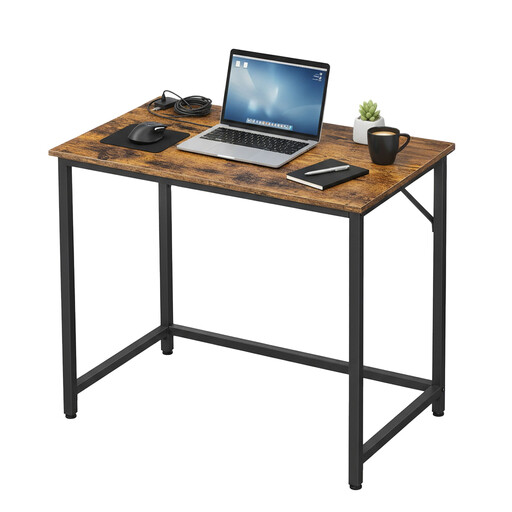
What makes it stand out? This desk gets straight to the point: functional simplicity. With its 80 x 50 cm dimensions, it offers a comfortable work surface without taking up too much space, making it especially suitable for studios or bedrooms. Its minimalist design, combining a wood-tone top with a black steel frame, fits easily into most contemporary decors.
Highlights:
Who is it for? Ideal for students, occasional remote workers, or anyone looking to set up a first computer desk that is both functional and discreet in a bedroom or living room.

What makes it stand out? This cabinet meets a dual need: security and organisation. Its matte black steel structure gives it an understated industrial look that pairs perfectly with a modern design desk. The key lock system is a major plus for protecting confidential documents or valuable equipment.
Highlights:
Who is it for? Perfect for professionals handling sensitive files, freelancers wanting to clearly separate their work and personal lives, or simply for those who demand neat, enclosed storage.
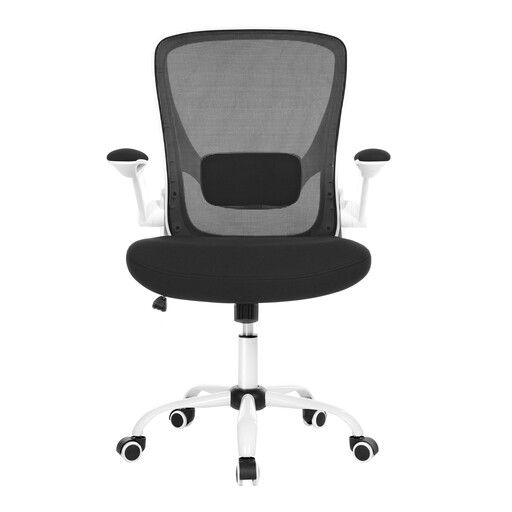
What makes it stand out? This office chair is all about customised comfort. Its curved backrest features adjustable lumbar support to adapt to your body shape. The flip-up armrests are the game-changing detail: they allow you to slide the chair completely under the desk to save precious space.
Highlights:
Who is it for? Essential for anyone who spends several hours a day at their desk. It's the smart choice for equipping your main remote work station and saying goodbye to back pain.
Black furniture, like the cabinet and desk featured, offers an elegant and timeless contrast. It pairs particularly well with light-coloured walls or bright accent colours. If you want to explore bold style combinations, such as how to incorporate Black Furniture for a Yellow Room, take a look at our selection of ideas.
Choose an unused corner or section of a wall. Opt for a shallow desk (around 50 cm deep) and favour light colours or thin legs to avoid visually weighing down the space. Use wall-mounted storage and a chair that can slide under the desk to free up foot traffic.
A width of 80 to 120 cm is generally sufficient for a laptop or a monitor, keyboard, and mouse. A depth of 50 to 60 cm provides a comfortable distance for your eyes and enough space for writing. The most important thing is that the desk fits your space and your equipment.
An ergonomic chair is designed to support the body's natural posture. It helps reduce pressure on the spine, neck, and shoulders, which lessens fatigue and pain associated with prolonged sitting. It is a key element for a healthy and productive remote work setup.