
Livraison le jour même ou le lendemain

Qualité garantie

Débloquez vos offres de bienvenue: Livraison GRATUITE | Jusqu'à -80 % | 30 jours d'essai gratuits à JoyPlus
Téléchargez l'application
With the rise of remote work and flexible spaces, home office setup has become a major focus. Yet, faced with an overwhelming and sometimes misleading array of options, it's easy to fall for marketing traps. An attractive design can hide non-existent ergonomics, and promises of comfort can vanish after just a few months of use. This guide breaks down the essential features for creating a workspace that combines productivity, well-being, and durability.
Before you decide, it's best to know the pitfalls that can turn a promising investment into a regrettable purchase.
For a high-performance remote work setup, rely on factual criteria rather than marketing speak.
A chair adapted to your body shape is the cornerstone of your comfort. Here are the non-negotiables:
The desk itself plays a vital role in your well-being. And the trend is towards movement.
Every user has unique needs. Here are a few options we've selected for their ability to meet specific requirements while avoiding the classic pitfalls.
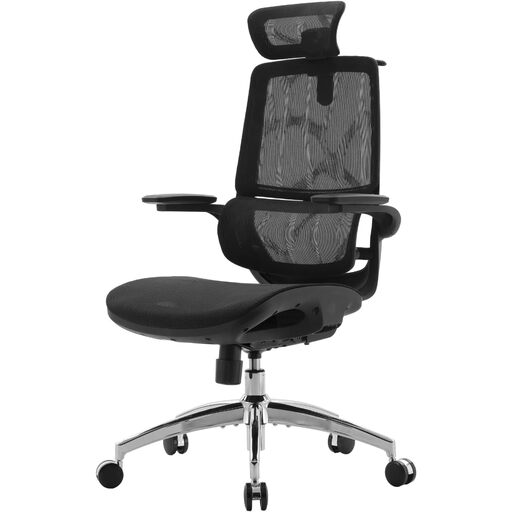
Why we chose it: Perfect for studios, student rooms, or multi-functional offices where every inch counts. Its smart design meets essential needs without sacrificing support.
It bypasses the "fake ergonomic" trap by integrating an adaptive lumbar support that follows your movements and 80° flip-up armrests—a practical feature and a rarity in this price range.
Its versatility and space-saving design, thanks to the flip-up armrests that allow the chair to slide completely under the desk.
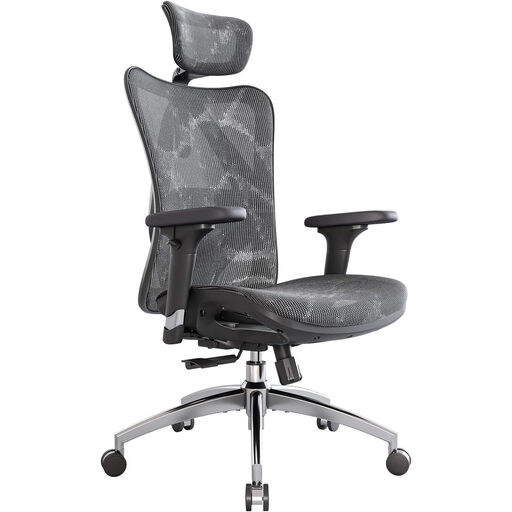
Why we chose it: Designed for those who work long days at their desk. It offers a full range of adjustments for personalised and lasting support, built for intensive professional use.
It sidesteps the durability trap with its sturdy steel alloy frame and its SGS and BIFMA-certified gas lift, capable of supporting up to 150 kg. An investment designed for longevity.
Its 3D armrests and multiple recline angles (110°, 116°, 126°) allow for fine-tuned adjustments, delivering tailor-made comfort throughout the day.
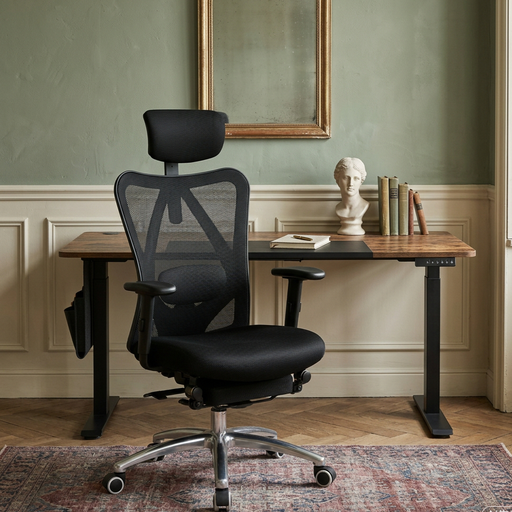
Why we chose it: For those who want to incorporate more movement into their day. This desk allows you to switch effortlessly from sitting to standing, promoting better posture and an energy boost.
It isn't just "adjustable." Its quiet motor, height memory, and inactivity alerts make it a true wellness partner, far from gadgets with questionable reliability.
The combination of a large tabletop (160x70 cm), a stable steel frame, and smart features for an active and perfectly organised workspace.
Don't forget that the details make the difference. A Senhoglb Mesh Desk Organiser can transform a cluttered desk into a zen workspace, while quality notebooks can help you rediscover the joy of handwritten notes.
We have selected a full range of products for you that meet our demanding criteria and European safety standards.
What is the average lifespan of an ergonomic office chair? The lifespan depends on the quality of the materials and the intensity of use. An entry-level chair will show its first signs of wear after 1 to 2 years. A mid-range or high-end model with certified components (BIFMA/SGS) and a metal frame will easily last between 5 and 10 years, or even longer if well-maintained.
How do I choose the right height for a sit-stand desk? In a seated position, your elbows should form a 90-degree angle and rest on the desk, with your feet flat on the floor. In a standing position, the ideal height is where your elbows maintain that same 90-degree angle as you type, without having to raise your shoulders. Remember to use the memory function to save these two heights.
Is lumbar support really necessary? Absolutely, especially for prolonged use. Good lumbar support helps maintain the natural "S" curve of the spine, which reduces pressure on the intervertebral discs and prevents lower back pain. Adjustable support is preferable because it allows for a precise fit to your body, something a simple cushion cannot offer.