
Livraison le jour même ou le lendemain

Qualité garantie

Débloquez vos offres de bienvenue: Livraison GRATUITE | Jusqu'à -80 % | 30 jours d'essai gratuits à JoyPlus
Téléchargez l'application
The rise of remote work has transformed our homes, and having the right equipment has become a priority. But with an overwhelming number of options, the pitfalls are many. A desk that looks stunning in photos can turn out to be completely wobbly, and that stylish chair might wreck your back after just a few hours. Our goal: to help you create a workspace that is both functional and built to last.
At Joybuy, our team of product experts is on a mission to bring you clarity. We analyse the market to give you practical advice, cutting through the usual marketing jargon. Here is our guide to avoiding the most common mistakes and choosing the home office desk that truly fits your needs.
Before you pull out your credit card, watch out for these common mistakes that can cost you dearly, both in comfort and in cash.
For a long-lasting investment, focus on these three pillars. They are the foundation of a truly effective workspace.
The first question to ask is: how much surface area do I really need?
Also, remember to check the desk's height (usually between 73 and 76 cm). It must be compatible with your chair's adjustments to ensure good posture.
The sturdiness and lifespan of your desk depend directly on its construction.
A good desk only reaches its full potential with the right chair. An ergonomic office chair isn't a luxury; it's a necessity for anyone who spends hours sitting down. The absolute must-haves to check for:
Here are a few products that check all the boxes for functionality and durability, each tailored to a specific user profile.

Why we recommend it: Perfect for students or for a remote work corner in a tight space. Its compact dimensions fit anywhere, from a bedroom to a studio apartment, without sacrificing comfort for daily use with a laptop.
It tackles the "one-size-fits-all" problem by offering a solution specifically designed for small spaces. Its steel frame and adjustable feet ensure good stability, a common weakness in entry-level desks.
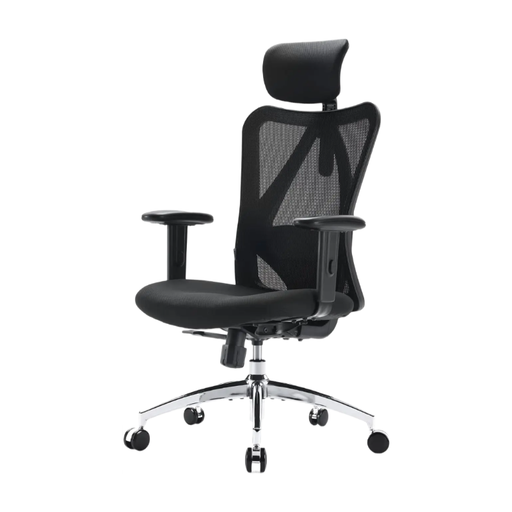
Why we recommend it: Essential for those who spend more than 6 hours a day at their screen. This chair is designed to offer complete, customisable support—the key to preventing fatigue and pain from poor posture.
It tackles trap #3: neglecting the chair. More than just a seat, it's a genuine work tool. Its multiple adjustments (headrest, lumbar, height, tilt, armrests) allow you to find the perfect posture.
Comprehensive ergonomics with adjustable lumbar support and headrest. Breathable mesh back for better comfort. Supports up to 150 kg, an excellent indicator of its durability.
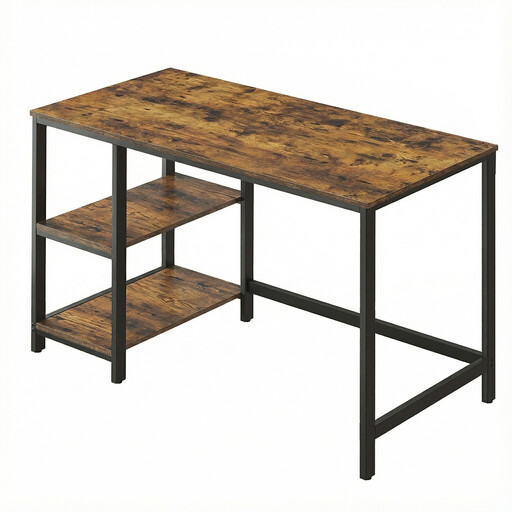
Why we recommend it: For those who need a generous work surface, capable of holding a dual-monitor setup or juggling work and leisure. Its bold industrial style integrates easily into a modern interior.
It avoids the trap of style over substance. Its industrial look isn't just for show: it combines a thick top with a robust steel frame, ensuring excellent stability (max load: 50 kg), even with heavy equipment.
Large 120 x 60 cm surface. Reversible storage shelves (can be assembled on the left or right). Solid structure and adjustable feet for perfect stability.
Explore our full, updated selection of products that meet our strict selection criteria and current safety standards.
It all depends on the materials. A desk with a steel frame and a thick top (15 mm or more) can easily last 5 to 10 years with normal use. Conversely, entry-level models without metal reinforcements can show signs of weakness (sagging top, instability) in as little as 1 or 2 years.
The golden rule of ergonomics is this: once seated, your feet should be flat on the floor, your knees bent at a 90° angle, and your forearms resting horizontally on the desk (elbows also at 90°). Since most desks have a fixed height (around 75 cm), it's the height adjustment of your ergonomic office chair that will make all the difference.
Yes, an 80 cm wide desk is perfect for a minimalist setup: a laptop, a mouse, a notebook. It's an excellent solution for optimising a desk in a small space. However, if you plan to add an external monitor, you should go directly for a 100 or 120 cm width. Your work comfort will increase tenfold.