For a quick coffee break with minimal effort, consider capsules or soft pods; some pod machines can also make two cups at once. Choose a portafilter machine if you want more control over the preparation, or a bean-to-cup machine if you drink coffee regularly and prefer using beans without measuring out each serving. According to Que Choisir, a bean-to-cup machine generally takes up more space and makes more noise than a capsule machine, but the cost per cup may be lower than for pod espresso.
Which option is right for you?
For a quick coffee break
If you mainly drink black coffee between meetings and have limited space, compare capsule and soft pod machines. Check which format each machine takes, how easy it is to clean and the cost of the consumables before choosing between models.
For several coffees throughout the day
A bean-to-cup machine is worth considering if you want to choose your beans and make each cup without measuring out the coffee by hand. According to Que Choisir, the cost per cup may be lower than for pod espresso; you’ll also need to allow for more space, noise and maintenance than with a capsule machine.
For a personalised espresso or milk-based drink
A portafilter machine is a good fit if you want to be involved in the preparation and don’t mind cleaning its accessories. A bean-to-cup machine with a milk system is another option if you’d prefer to automate coffee preparation: check the features and cleaning requirements of the specific model.
What should you compare?
To choose a machine for working from home, start with the drinks you usually make and how many cups you prepare. Then compare the four systems against the space you have and the time you want to spend on maintenance.
| Criterion |
What to check |
Think about your needs |
| Preparation |
Compare how much effort each cup takes, which drinks are available and whether the model you’re considering can make two cups at once. |
Between meetings, I want to make coffee without too many steps. If there are two of us at home, being able to make two cups at once matters too. |
| Running costs |
Compare the cost of the machine with the cost of the capsules, pods, beans or ground coffee you’ll actually use. Check which formats are compatible before working out the cost per cup. Que Choisir estimates that the cost per cup for a bean-to-cup machine can be two to three times lower than for pod espresso. |
If I make several coffees every day, ongoing costs matter just as much as the price of the machine. |
| Maintenance |
Check the manual for instructions on rinsing the trays, descaling and, where relevant, cleaning the portafilter or milk system. Que Choisir recommends regularly rinsing a bean-to-cup machine’s coffee grounds and drip trays. |
I’d like to know what I’ll need to do after making coffee, especially if I also make milk-based drinks. |
| Space and noise |
Measure the available space and make sure there’s room to access the water tank and trays. According to Que Choisir, a bean-to-cup machine takes up more space and makes more noise than a capsule machine; it’s still worth comparing the dimensions of the models you’re considering. |
My worktop is narrow, or other people work and relax nearby. |
| Coffee and waste |
Check the range of coffees the system can use and whether they come in individual wrappers. For aluminium or plastic capsules, ADEME advises putting them in the recycling bin for paper and packaging in France. |
I want to be able to switch coffees without forgetting to recycle the consumables I use every day. |
What should you check before buying?
-
Choosing based on the machine alone
If you make coffee throughout the day, the cost of consumables adds up. Que Choisir notes, in particular, that the cost per cup may be lower for a bean-to-cup machine than for pod espresso.
Estimate how many cups you usually make and compare the cost of compatible consumables with the beans or ground coffee you’d buy.
-
Assuming automatic means quiet
According to Que Choisir, a bean-to-cup machine is generally bulkier and noisier than a capsule machine. Where you put it can matter just as much as its controls.
Measure your worktop and allow room to fill and empty the trays. If noise is a deciding factor, check the information for the specific model.
-
Underestimating the cleaning involved with a grinder or milk system
Que Choisir points out that a bean-to-cup machine’s coffee grounds and drip trays need regular rinsing. A milk system adds parts that need cleaning after use.
Read the manual before buying: check which parts are easy to reach, what needs cleaning and how to descale the machine.
Allow time for these tasks too, and check which maintenance products the model requires.
-
Treating all capsules as the same type of waste
The capsule material determines how you should recycle it. In France, ADEME advises putting aluminium or plastic capsules in the recycling bin for paper and packaging.
Check the material of the capsules compatible with your machine, and follow local guidance for other formats.
Brands worth knowing
These brands offer examples of the different systems; the features mentioned may not apply to every model in a range.
Nespresso
The brand makes capsule machines, including its Original and Vertuo ranges, which use different formats and offer different recipes.
- A machine that takes just a few steps to use could suit a quick coffee break.
- Check which capsule system the machine takes and how much it will cost based on your usual consumption.
SENSEO
SENSEO refers here to soft pod machines designed for straightforward coffee preparation, particularly for longer coffees.
- Philips says the SENSEO Original HD7817/01 makes one or two cups in under a minute; check this feature on any other model.
- The pod format and drinks available depend on the model you choose.
Sage
The Barista Express is an example of a portafilter machine for people who want to be involved in making their coffee.
- Sage lists an integrated conical burr grinder and 16 grind settings for this model.
- Measuring the coffee, using the portafilter and cleaning the machine all involve more steps than making a drink at the touch of a button.
De’Longhi
The brand offers bean-to-cup espresso machines, with features that vary by model.
- De’Longhi says some of its models make a drink from freshly ground beans at the touch of a button.
- Check the size, milk system and maintenance requirements of the model you’re considering rather than assuming they’re the same across the brand.
Philips
Philips offers both SENSEO pod machines and bean-to-cup espresso machines.
- The range gives you the choice of pod or bean-to-cup preparation, depending on the drinks you’re looking for.
- Check the milk features, settings and cleaning requirements for each model.
Machines for different needs
These Joybuy models show the four options covered here: soft pods, capsules, portafilter and bean-to-cup. Compare each one with the drinks you usually make, the space you have and the steps you’re happy to take every day.
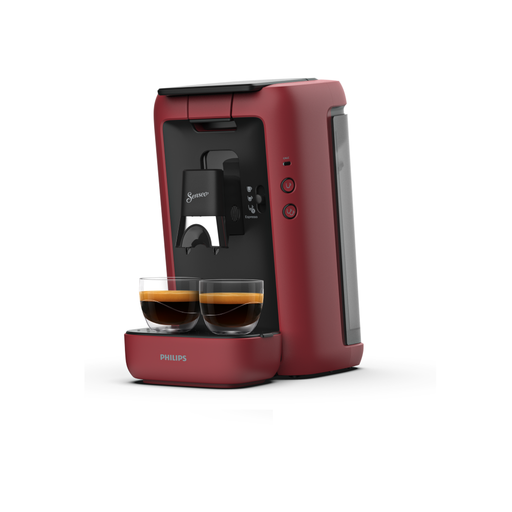 Image unavailable
Philips SENSEO Maestro CSA260/91, vivid red
A soft pod machine to consider if you want to make a coffee during a short break or serve two people. Check which SENSEO pod format you plan to use, as well as the descaling instructions.
View on Joybuy
 Image unavailable
De’Longhi Magnifica Start ECAM220.21.WW, white
This bean-to-cup espresso machine is for anyone who wants to use coffee beans without measuring out each serving by hand. Allow space for the machine, and check the manual for instructions on cleaning the grinder, steam wand and coffee circuits.
View on Joybuy
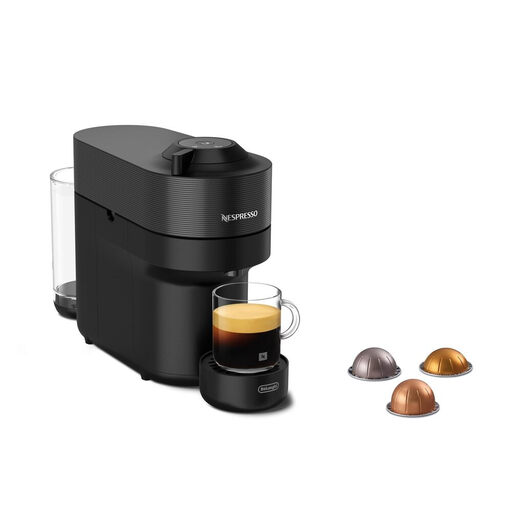 Image unavailable
Nespresso Vertuo Pop ENV90.B, black, 0.6 L
This Vertuo capsule machine is worth considering if you want to keep things simple during a break. Its tank capacity is listed as 0.6 L; check you have enough space and that you’re happy with the Vertuo capsule format before choosing this system.
View on Joybuy
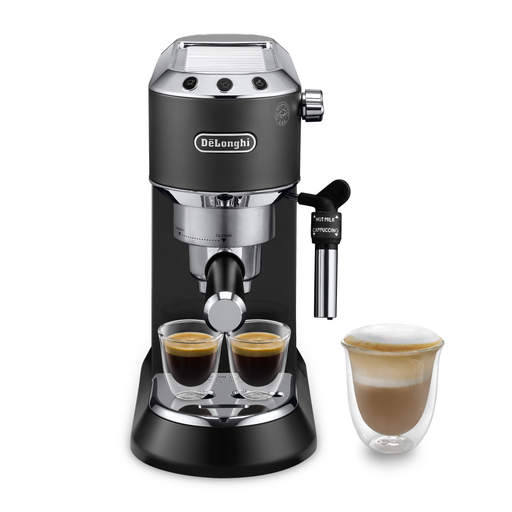 Image unavailable
De’Longhi Dedica Style EC685.BK, black, 15 bar, 1.6 L
A portafilter machine is a good choice if you want to be involved in making your coffee rather than simply pressing a button. Check which filters and coffees it accepts, and remember to clean the portafilter and steam wand after use.
View on Joybuy
 Image unavailable
HiBREW H16 bean-to-cup machine, touchscreen, six drinks
This machine with a grinder and milk system may suit a household looking to enjoy a range of drinks throughout the day. Check how much space it takes up and read the manual for instructions on cleaning the grinder and milk system.
View on Joybuy
Frequently asked questions
Which machine should I choose for a quick coffee between meetings?
Start by comparing capsules and soft pods: the coffee is pre-measured and takes little effort to prepare. If you sometimes make coffee for two, check that the model you’re considering has this feature. For example, Philips says the SENSEO Original HD7817/01 makes one or two cups in under a minute.
Is a bean-to-cup machine worth it if I make several coffees a day?
A bean-to-cup machine is worth comparing if you regularly use beans and are happy with a larger machine and the maintenance it requires. Que Choisir estimates that the cost per cup may be two to three times lower than for pod espresso; weigh up the difference against how much coffee you drink and the machine you’re considering.
What maintenance does a bean-to-cup machine need?
This includes regularly rinsing the coffee grounds and drip trays, as recommended by Que Choisir. Follow the instructions in the manual for the brewing unit, descaling and any milk system.
Where should I dispose of coffee capsules in France?
According to ADEME, aluminium or plastic capsules should go in the recycling bin, bag or container for paper and packaging. Check the material of the capsules you use, and follow local guidance for other formats.


