
Livraison le jour même ou le lendemain

Qualité garantie

Débloquez vos offres de bienvenue: Livraison GRATUITE | Jusqu'à -80 % | 30 jours d'essai gratuits à JoyPlus
Téléchargez l'application
A lingering smell in the kitchen, bathroom, toilet or on a sofa doesn't always disappear with a simple air freshener. And the promises printed on the packaging don't always make it easy to decide. Spray deodoriser, fabric deodoriser, odour neutraliser, fabric disinfectant or automatic diffuser: each format has its own area of expertise.
The selection below, recommended by the Joybuy Product Recommendation Officer, is based on concrete criteria: area of application, method of diffusion, claimed duration, usage precautions and surface compatibility.
An air freshener releases a pleasant fragrance, but it doesn't necessarily tackle the source of the bad smell. For lingering tobacco, cooking or damp odours, look instead for the term odour neutraliser or a dedicated odour-treatment technology. This doesn't replace airing out the room, cleaning or washing fabrics, but it can help maintain a feeling of freshness between cleans.
An aerosol designed to scent the air isn't necessarily suitable for curtains, rugs, mattresses or sofas. You risk leaving watermarks, soaking the fabric too much or creating a particularly stubborn fragrance. For an anti-odour fabric spray, always check the approved surfaces and test it on an inconspicuous area first.
How long a product lasts depends on the room size, ventilation, humidity and the intensity of the odour being treated. A long-lasting deodoriser can support your daily cleaning routine, but it won't replace targeted cleaning when a smell has become ingrained.
A bottle of 185 to 250 ml is suitable for occasional airborne use. Fabric formats of 385 to 500 ml offer more applications across multiple surfaces. A 600 ml aerosol can be worthwhile for frequent use, but you'll need to consider its size and storage conditions.
With a motion-activated diffuser, check the refill volume, battery operation and the frequency of activation. The ongoing cost depends mainly on the diffusion rate and the price of refills.
Before buying and before each use:
Biocide products must be handled with care, in accordance with the instructions on their label. Some contain allergenic fragrances; sensitive individuals should limit their use and ensure rooms are well ventilated.
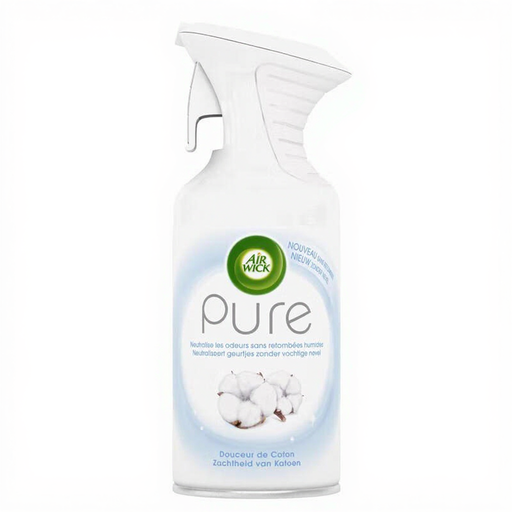
Why this choice suits this profile: its 250 ml aerosol format is ideal for a first foray into home odour neutralisers in living rooms, hallways or toilets.
The product page states a spray with no wet residue and recommends a brief burst in the centre of the room, without direct application to surfaces.
A formula with no added water according to the page, a cotton fragrance and a claimed action in seconds, with a feeling of freshness that can last up to an hour.
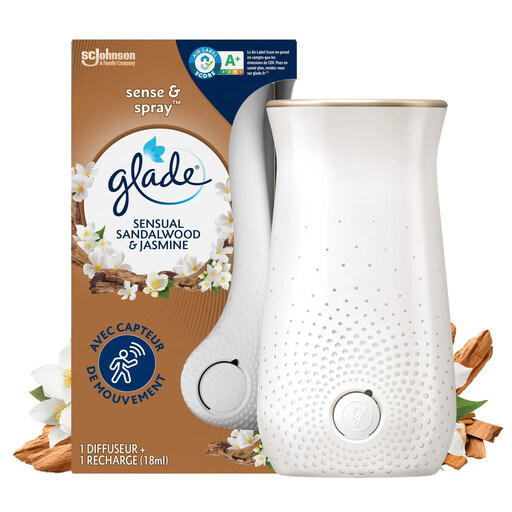
Why this choice suits this profile: this motion-activated diffuser is aimed at those who want to minimise manual intervention in a hallway, bathroom or entrance.
Diffusion is triggered by movement and the device, according to its description, has a 20-minute standby period. This helps avoid continuous spraying.
Motion detection, instant spray button and an 18 ml refill with sandalwood and jasmine fragrance.
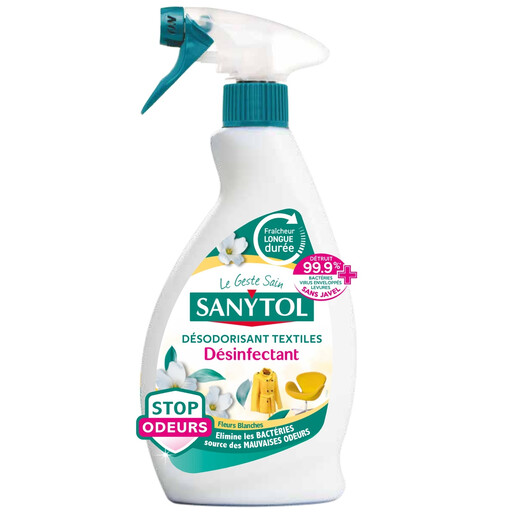
Why this choice suits this profile: it's aimed at households that regularly maintain sofas, curtains, rugs, bedding and other non-machine-washable fabrics.
Its use is specifically intended for non-washable or hard-to-clean fabrics. The page recommends a prior test and excludes leather, silk and velvet.
A 500 ml bottle, a fine mist that dries quickly and an eucalyptus fragrance. The product is presented as a biocide fabric disinfectant; consult the label for authorised uses.
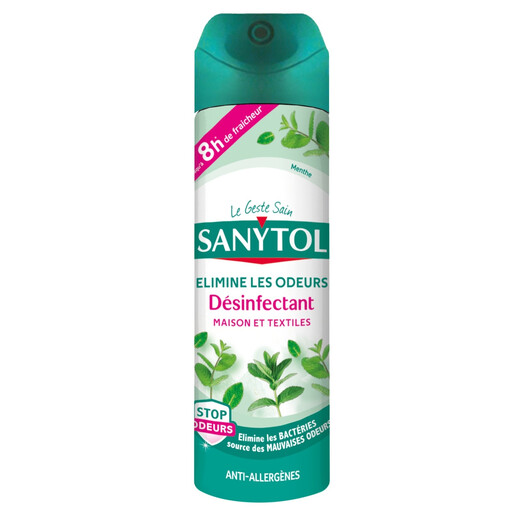
Why this choice suits this profile: its positioning for both surfaces and fabrics suits those who want to reduce the number of products in their cleaning cupboard.
The page distinguishes between surfaces and fabrics, with a spraying distance of 20 to 30 cm and natural drying. Delicate fabrics should be tested first.
A 300 ml format, a mint fragrance and a formula claimed to be bleach-free. This is a biocide product: read the regulatory information before use.
We've put together a comprehensive, real-time updated selection of products that meet these demanding criteria and comply with European safety regulations.
A fabric deodoriser will be more suitable than a spray intended only for the air. Check compatibility with the upholstery, avoid leather, silk or velvet if the label excludes them, then allow the sofa to dry completely.
It depends on the format and the conditions of use. A spray generally works for a short burst, while a diffuser can provide regular diffusion. The durations claimed by manufacturers are indicative and vary depending on ventilation and room size.
No. The term "bleach-free" simply indicates the absence of that substance and is not enough to prove a disinfectant action. For that function, look for a clearly labelled biocide product, follow its instructions and never apply it to skin or food.