
Livraison le jour même ou le lendemain

Qualité garantie

Débloquez vos offres de bienvenue: Livraison GRATUITE | Jusqu'à -80 % | 30 jours d'essai gratuits à JoyPlus
Téléchargez l'application
We all dream of a tidy living space, both indoors and out. The problem? The storage market is flooded with products making tempting promises... that often turn out to be major disappointments. To prevent your good intentions from turning into buyer's remorse, you need to learn how to avoid the most common pitfalls.
I'm the Head of Product Recommendations at Joybuy, and my job is to help you see things more clearly. Let's cut through the marketing jargon and focus on what really matters. Here are the classic mistakes and, more importantly, how to avoid them:
To make a truly informed choice, you just need to focus on a few key criteria that make all the difference in durability and practicality.
A few technical details are all it takes to separate the wheat from the chaff and distinguish a durable product from a disposable gadget.
For a plastic storage box, the material is the number one criterion. Polypropylene (PP) is generally an excellent choice for its robustness and flexibility. Take a close look at the wall thickness. A thickness of 2.5 mm with reinforcing ribs, for example, is a sign of a well-engineered design, capable of supporting weight and withstanding impacts. This is essential for properly organising your garage or cellar.
For protecting your outdoor equipment, the frame is just as crucial as the cover. A galvanised steel frame is a guarantee against rust. As for the fabric, its density is paramount. A 170 g/m? polyethylene (PE) fabric, for instance, with a UV-protective treatment, provides an effective barrier against the elements.
A good stackable storage crate does more than just sit on top of another. The lid must fit perfectly with the base of the crate above it. Telltale signs include a non-slip bottom or guide ridges. A well-designed set of storage boxes with lids is the key to safely utilising the height of your cupboards or garage.
For a bike shelter or an outdoor storage tent, true weather resistance comes down to concrete details. Zips should be protected by a storm flap. A solid anchoring system is non-negotiable for wind resistance. Finally, good ventilation is a real plus to limit condensation and mould.
Because every need is unique, here are our targeted recommendations to help you find the perfect solution.
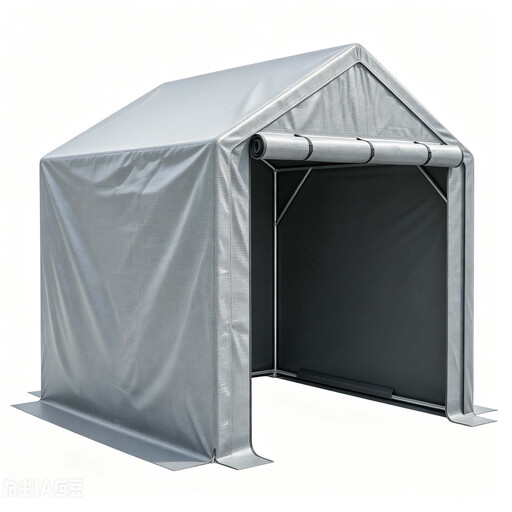
Why it's a great choice: Ideal for protecting 3 to 5 bikes, a motorbike, or gardening equipment without committing to building a permanent shed. Its flexible structure is quick to set up and can be moved as needed.
It goes beyond a vague "weather-resistant" promise by specifying its materials: a galvanised steel frame for sturdiness and a UV-treated 170 g/m? PE fabric for quantifiable durability.
A generous storage volume (6.46 m?) with a small footprint, all with tool-free assembly.

Why it's a great choice: Perfect for organising out-of-season clothes, children's toys, or archives. The transparent design lets you identify the contents at a glance, and their large capacity meets the needs of the whole family.
It avoids the twin pitfalls of flimsy plastic and precarious stacking thanks to its 2.5 mm thick PP structure, reinforcing ribs, and a flat lid designed for perfectly stable interlocking.
Its reinforced structure, combined with ergonomic handles, ensures it's easy to grip and carry, even when fully loaded.
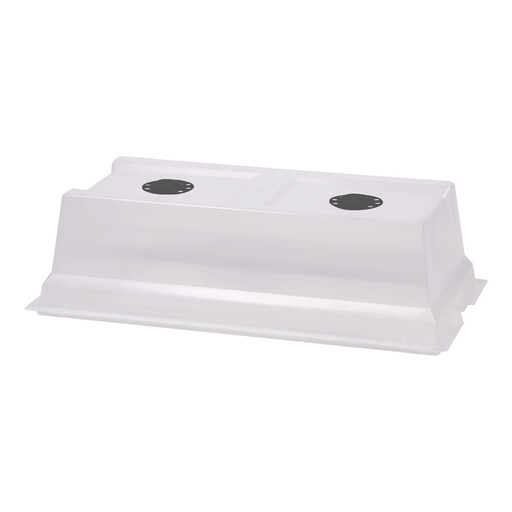
Why it's a great choice: Designed for small spaces, this compact greenhouse creates an ideal microclimate for seedlings, strawberries, or tomato plants on a balcony or terrace. It also protects against pests and light frosts.
This isn't a generic storage solution, but a specialised product. It avoids the "all-in-one" trap by focusing on a single mission: providing optimal growing conditions in a minimal space.
Its dual adjustable ventilation system allows for precise control of the internal climate, a rare and valuable feature on entry-level mini-greenhouses.
If these products aren't exactly what you need, don't worry. Explore our complete selection of indoor storage boxes.
Yes, as long as you invest in quality! A reliable model combines a sturdy frame (like galvanised steel) with an effective ground anchoring system. The fabric itself must be thick, waterproof, and UV-treated to prevent sun degradation. Also, be sure to check the seams and the protection on the zips.
Start by measuring your available storage space (the height, width, and depth of your shelves, for example). Then, estimate the volume of items you need to store. Our advice: it's better to have several medium-sized boxes than one very large one, which will quickly become too heavy and impossible to handle. For items you rarely use, stackable transparent boxes are the ideal solution.
Absolutely not! It's a very bad idea. The interlocking systems (grooves, ridges, etc.) are specific to each manufacturer, and even to each model. Mixing brands is a recipe for an unstable and dangerous stack that could collapse at any moment. For safe and stable stacking, invest in a set of identical boxes.