
当日/次日达

品质保障

开启新人专享福利: 全场免邮 | 低至 2 折 | 免费试用 30 天 JoyPlus 会员
下载 Joybuy
Equipping your home or garden is a significant project. Whether it's for an outdoor DIY task or to improve your comfort, the shelves are overflowing with options. But be warned: behind the glossy marketing promises, you'll often find poorly designed or non-durable products. As a product expert at Joybuy, my mission is to help you sort through the noise. Let's review the common mistakes to avoid and the criteria that truly matter for a smart purchase.
Before you pull out your credit card, it's wise to know the pitfalls that can turn a great project into a source of frustration and unnecessary expense.
A seemingly sturdy garden shed or roofing sheet can quickly suffer from rain, frost, or UV rays. Many entry-level products use untreated steel or poor-quality plastics that rust, crack, or fade in less than a season. The result? Equipment that needs replacing far too soon and money down the drain.
Product photos are often staged to make items appear more spacious or simpler to assemble than they really are. An outdoor storage tent that looks like it can hold two bikes can barely fit one, and a kit advertised as "easy to assemble" may require specific tools or technical skills that were left unmentioned. The result: wasted time and a product that fails to do its job.
To avoid these disappointments, simply focus on a few objective technical specifications. They are your best guarantee of quality and longevity for your home and garden equipment.
For metal structures like a roofing sheet or the frame of a bike garage, the treatment is fundamental. Galvanised steel offers excellent protection against corrosion. The material's thickness, expressed in millimetres (mm), is another key indicator of its robustness. For example, a 0.25 mm thick sheet is already a solid base for small constructions. For canvases and tarps, check the fabric density (expressed in g/m?). A high grammage, like 170g/m?, and a UV-resistant treatment are synonymous with durability.
Don't rely on vague terms like "large" or "spacious." Always check the precise dimensions: length, width, and height. For bed linen, a 240x300 cm flat sheet is designed for king-size beds to ensure a generous drape on each side. For construction materials, the total coverage area (in m?) is the crucial piece of information. It allows you to accurately calculate the amount you need for your garden landscaping project and avoid any nasty surprises during installation.
Ease of installation is a major deciding factor. Details like pre-drilled holes, included hardware, or a clear instruction manual can make all the difference. These elements show that the manufacturer has genuinely cared about the end user—an aspect often overlooked in entry-level products.
To move from theory to practice, here are a few products that cater to distinct user profiles, based on 100% objective criteria.
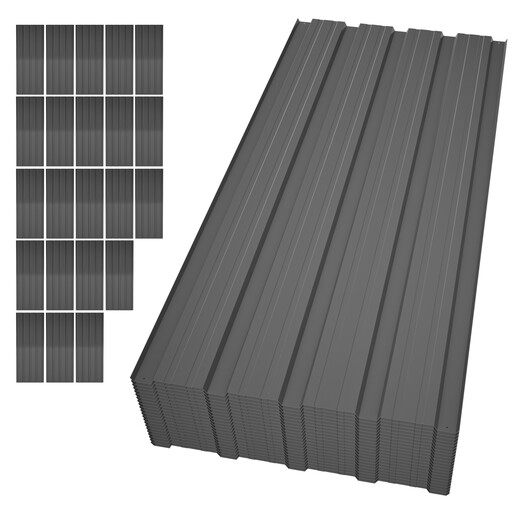
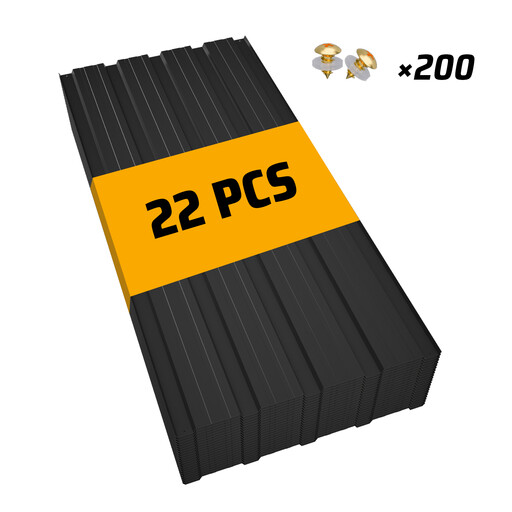
Why we recommend it: Ideal for DIYers looking for an all-in-one, affordable solution to cover a garden shed, carport, or outbuilding. This kit provides everything needed to cover a significant area.
The galvanised steel prevents rust, the number one weakness of low-end metals. The pre-drilled holes and included screws radically simplify assembly, a classic problem with incomplete kits.
Provides a total coverage of 10.12 m? in a single purchase, offering an excellent surface-to-price ratio and simplifying project planning.
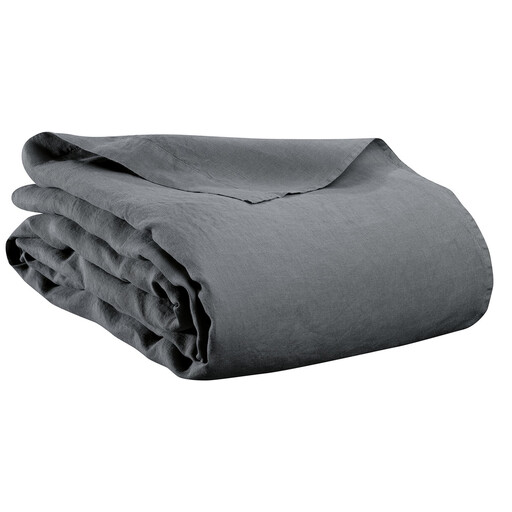
Why we recommend it: For those who prioritise sleep quality and premium materials. This hemp bed linen adds a touch of elegance and a comfort that improves with time.
Unlike synthetic materials, hemp is a natural fibre that softens with every wash. Its generous 240 x 300 cm dimensions are clearly stated, avoiding the trap of sheets that are too small for the bed.
Naturally breathable, thermoregulating, and hypoallergenic. Choosing 100% hemp is an investment in your comfort and the planet.
Why we recommend it: The perfect solution for those who need a bike garage or outdoor storage tent without committing to masonry work. Ideal for renters or small gardens.
Its galvanised steel frame and UV-treated 170g PE fabric withstand the elements, where low-end tents tear at the first storm. The tool-free assembly is realistic and well-explained.
Offers ample capacity (2 to 4 bikes) and a very practical roll-up door, all in a removable structure that's easy to move as needed.
After the shed roof, think about home insulation! We've compiled a complete list of panels that meet our strict selection criteria for performance and ease of installation.
Its longevity depends on the thickness, the quality of the galvanisation, and its exposure to the elements. For a garden shed or carport in our climate, a quality sheet that is properly installed can easily last 15 to 25 years, or even longer, with almost no maintenance.
No, its care is very simple. Hemp bed linen can be machine washed, usually at 40°C. Even better, it has the unique quality of becoming softer and more comfortable with each wash. It is just recommended to avoid bleaching agents to preserve the fibre and its colour.
In many regions, temporary, removable structures used for less than 3 months do not require a permit. An outdoor storage tent like a bike garage falls into this category. However, if the structure is intended to stay up for longer, a declaration or permit may be necessary depending on its footprint and your local planning regulations. It's always best to check your local council's website or give them a call to be sure.