
Livraison le jour même ou le lendemain

Qualité garantie

Débloquez vos offres de bienvenue: Livraison GRATUITE | Jusqu'à -80 % | 30 jours d'essai gratuits à JoyPlus
Téléchargez l'application
A home fragrance diffuser can be all it takes to transform the feel of a living room, bedroom or home office. But there’s more to choosing one than its design. A pretty bottle may release too little fragrance, run out within days or require precautions that don’t suit your home.
Here are the most common pitfalls to watch out for, the features to check and a few models to suit different needs.
Claims such as ‘long-lasting fragrance’ are usually only a guide. Room temperature, sunlight, the number of reeds used and ventilation all directly affect how quickly the fragrance evaporates.
A 100 to 120 ml reed diffuser may be advertised as lasting several weeks, while a 200 ml model naturally contains more scented solution. To compare them fairly, look at the capacity, as well as the diffusion method and recommended conditions of use.
Liquid home fragrance can be flammable or irritating if it comes into contact with skin. Keep it out of reach of children and pets, and away from flames, radiators and delicate surfaces. If spilled, the liquid may stain furniture or damage waxed wood.
Before placing an order, check the warnings, available information about the ingredients and the contact details of the responsible person in the European Union. This information doesn’t replace the usual safety precautions, but it can help you make an informed choice.
A fragranced accessory also needs to be practical for everyday use. A tall, narrow bottle may look elegant, but it could be more likely to tip over on a shallow shelf. By contrast, a stone or crystal diffuser may need special care and a separate oil refill.
The right choice depends on where you plan to put it, whether you have children or pets, and how much time you can spend looking after it — turning the reeds or topping up the oil, for example.
A compact 80 to 100 ml diffuser may be more than enough for a small room. Capacities of 120 to 140 ml are better suited to regular, everyday use. 200 ml models are a good choice for continuous fragrance in a living room, hallway or workspace, provided the room is properly ventilated.
Remember to check the dimensions, too. A diffuser that’s 25 cm tall has different space requirements from a small model designed for a bedside table.
Glass, ceramic, volcanic rock, natural fibres and crystals all suit different uses. A liquid diffuser needs a stable base. Stones and crystals should be kept away from excessive moisture and direct sunlight where the manufacturer recommends it.
In a bedroom, choose a subtle fragrance and air the room regularly. In a bathroom, make sure the bottle won’t be splashed. On a desk, a compact design will help keep clutter to a minimum.
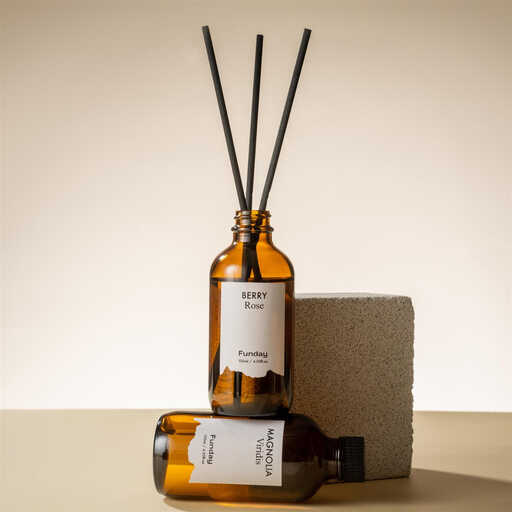
Why it suits this type of user: This 100 ml reed diffuser is easy to use, with no plug or assembly required. Its eight natural-fibre reeds make it an ideal first diffuser for a living room, bedroom or bathroom.
The capacity, number of reeds and estimated lifespan of 60 to 90 days are clearly stated. That makes it easier to compare with less clearly described products.
100 ml glass bottle, flame-free fragrance and the option to turn the reeds over occasionally to refresh the scent.
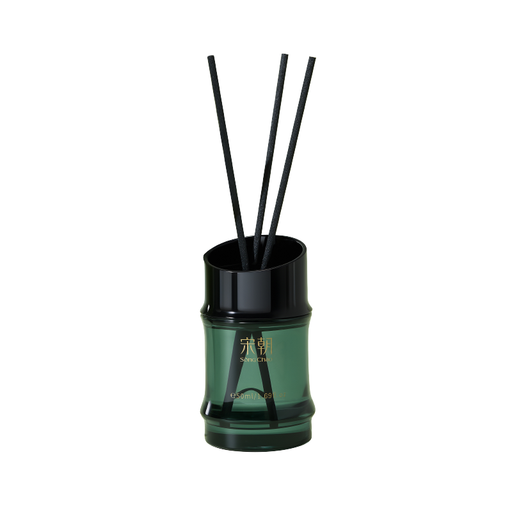
Why it suits this type of user: Its 200 ml glass bottle and dried floral details combine home fragrance with decorative appeal. It can take pride of place in a living room, hallway, bathroom or home office.
The 200 ml capacity is clearly stated, so you can assess the cost of use separately from the decorative design and the fragrance you choose.
200 ml size, reeds included, a formula described as alcohol-free and a choice of several fragrance families.
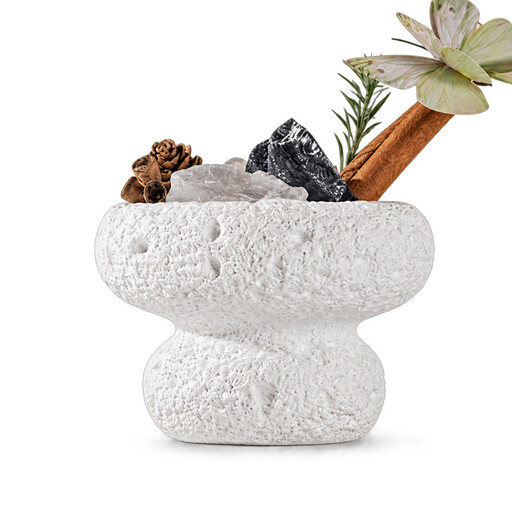
Why it suits this type of user: This stone diffuser is ideal if you want to adjust the fragrance intensity yourself and refresh the scent with an essential oil or compatible fragrance.
It needs neither a flame nor a power socket. Adding oil drop by drop helps prevent waste when you prefer a subtler fragrance.
Two 10 ml bottles of essential oil, mineral stones, dried flowers and a volcanic rock container.
We’ve put together a comprehensive selection, updated in real time, of products that meet these strict criteria and European safety requirements.
It depends on the volume, number of reeds, room temperature and ventilation. Some 100 ml models are said to last around 60 to 90 days, while an 80 ml bottle may be advertised as lasting six to seven weeks. These figures are only a guide. Turning the reeds over usually makes the fragrance stronger, but also shortens the time it lasts.
Place it on a stable, level surface that’s easy to clean, away from very sunny windows, radiators, flames and fabrics. Avoid ledges that children and pets can easily reach. In a bedroom, a subtle fragrance and regular ventilation can help you keep the scent just right.
A reed diffuser gradually uses up its liquid and doesn’t need electricity. A stone diffuser needs oil refills, but lets you measure out the drops precisely. A scented candle doesn’t need a power socket, but its lifespan depends on how long it burns and it must never be left unattended. To compare the options, add together the price of the product, the cost of any refills and the stated lifespan, rather than looking at the purchase price alone.