
Livraison le jour même ou le lendemain

Qualité garantie

Débloquez vos offres de bienvenue: Livraison GRATUITE | Jusqu'à -80 % | 30 jours d'essai gratuits à JoyPlus
Téléchargez l'application
Setting up a home gym may seem straightforward… until the equipment takes up too much room, turns out to be noisy or no longer matches your fitness level. To avoid buying something that ends up gathering dust, it is better to look beyond the marketing claims and check a few practical criteria: dimensions, storage, resistance, safety and ease of maintenance.
Equipment presented as versatile is not necessarily suited to the way you train. A multi-gym may offer a wide range of exercises, but become particularly cumbersome if you do not have much clearance. Conversely, a compact set of dumbbells allows you to work through numerous movements without requiring a bulky setup.
In a flat, noise levels are far from a minor consideration. A folding treadmill or cross trainer can transmit vibrations through the floor, especially with regular use. Claims such as ‘quiet’ should therefore be checked against the information actually provided: the type of resistance, stated noise level and whether stabilising feet are included.
The folded dimensions alone are not enough. You also need to allow a clear area for stepping onto a treadmill, pulling a rowing machine or doing pull-ups on a power tower. Remember to factor in the space needed to move and maintain the equipment, as well as to exercise without knocking into furniture.
Measure the room before ordering, taking ceiling height and door width into account. For foldable equipment, check in particular:
Lightweight home fitness equipment is easy to move, but a heavier frame generally provides better stability during dynamic movements.
For home cardio, magnetic or water resistance generally allows more consistent progression than a very basic system. Check the number of resistance levels available, the stride length of a cross trainer and the running surface of a treadmill.
For example, the KeHot YQ T3898 treadmill offers an adjustable speed of 1 to 12 km/h, a manual incline of 9% and a running surface measuring 38 × 100 cm. This width is suitable for walking and jogging, but anyone looking for greater freedom of movement should compare these dimensions with their body shape and pace.
For strength training, look at the weights supplied, the shape of the handles and the scope for progression. Dumbbells with a stand weighing 1, 1.5 and 2 kg are suitable for light workouts, general strengthening and getting back into exercise. However, they will not replace a set with heavier weights for advanced strength training.
Before buying, read the instructions and the information provided by the seller about the manufacturer, importer, electrical voltage and usage warnings. For a motorised machine, check that it is compatible with the French 220–240 V mains supply, and look for a safety key and details of the assembly requirements.
Maintenance is often overlooked: periodically retightening screws, cleaning rails, checking straps and inspecting moving parts. On a rowing machine, exercise bike or cross trainer, a lack of maintenance can quickly reduce comfort during use, even if the equipment is correctly sized.
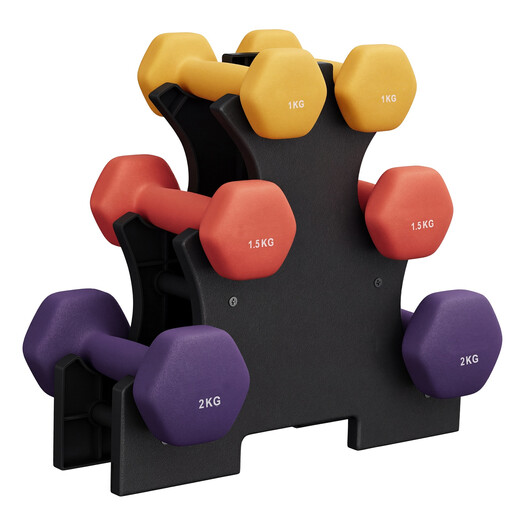
Why this choice suits this profile : this kit is designed for anyone looking to start strength training without dedicating an entire room to their equipment. The stand holds all six dumbbells and makes tidying up after a short workout easy.
The hexagonal shapes stop the dumbbells from rolling across the floor, while the stand means they do not have to be left lying around the room.
Three pairs of weights : 1, 1.5 and 2 kg. Neoprene coating and handles designed to provide a comfortable grip.
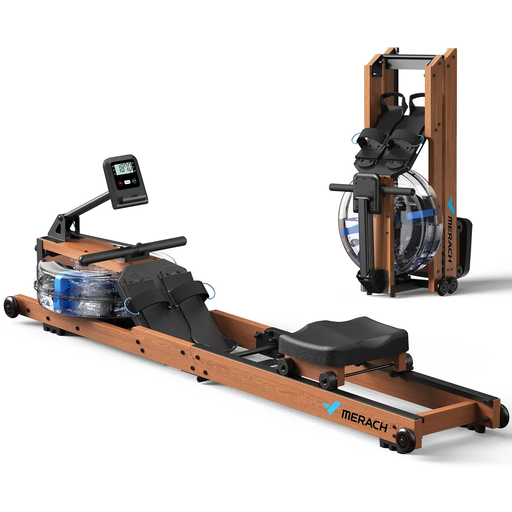
Why this choice suits this profile : its wooden frame and water resistance fit naturally into interiors where aesthetics matter just as much as training. The 180° folding mechanism makes it easy to store between workouts.
The folding system and wheels help minimise the space it takes up, while the foot straps help you maintain a consistent position.
Water resistance, LCD display, Bluetooth connectivity and a stated user weight capacity of up to 181 kg.

Why this choice suits this profile : this station is designed for users who want to combine pull-ups, dips and bench exercises in a single piece of equipment.
Its multifunctional design means you do not need to accumulate several machines. However, you should check the bolts regularly and observe the stated maximum load.
Adjustable height, non-slip handles, integrated bench and a stated capacity of 480 lb, or approximately 218 kg.
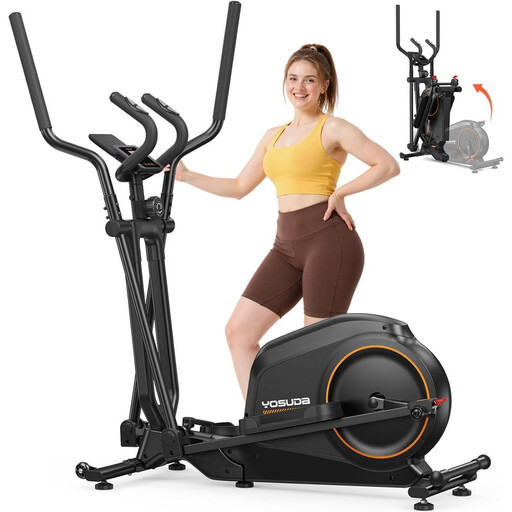
Why this choice suits this profile : this folding cross trainer is ideal for households looking for regular workouts, moderate range of motion and straightforward storage.
The three-step folding mechanism, wheels and stated folded footprint of approximately 0.2 m² make it easy to fit into a flat.
16 resistance levels, LCD display and a magnetic system rated at under 20 dB.
We have put together a comprehensive, real-time updated selection of products that meet these demanding criteria, as well as European safety standards.
Start with equipment that matches the way you will actually use it. A treadmill is suitable for walking and jogging, while a set of dumbbells lets you work your upper and lower body without taking up much space. For a more complete programme, gradually combine cardio and strength training rather than buying several machines before you have even established how often you will train.
Place the equipment on a stable floor and use a suitable shock-absorbing mat. Check the screws, wheels and moving parts regularly. Magnetic systems are often popular for being discreet, but noise also depends on the floor, pace and maintenance.
The price varies depending on the type of equipment, resistance system, maximum load and connected features. A dumbbell kit or a grip-strengthening ring is an affordable way to get started. Motorised equipment, rowing machines and multifunction stations require more space and a larger budget. Always compare the price with how often you expect to use the equipment, and remember to factor in delivery costs, assembly and warranty terms.