
Livraison le jour même ou le lendemain

Qualité garantie

Débloquez vos offres de bienvenue: Livraison GRATUITE | Jusqu'à -80 % | 30 jours d'essai gratuits à JoyPlus
Téléchargez l'application
Setting up a home training space lets you practise weight training, yoga, Pilates or functional conditioning on a regular basis. But you need to choose your home fitness equipment carefully. Some products catch your eye with their price or long list of features, without necessarily suiting your space, your level or how often you plan to use them.
A piece of equipment that claims to work for every discipline won't necessarily replace several specialised accessories. Adjustable dumbbells can accompany squats, presses and lunges, but they won't do the job for a floor mobility session. Similarly, a fitness smartwatch can track certain activity data, but it won't replace a medical device.
Before you order, start by listing the exercises you actually intend to do: strength training, cardio, stretching, yoga or sports recovery.
A freestanding pull-up bar, a bench or a training rack needs a stable, clear area. A dumbbell set with a stand can also be easier to organise than a collection of weights left on the floor. In a small flat, resistance bands, a mat and a muscle ring form a compact, easy-to-store solution.
Always check the dimensions, total weight and whether you can put the equipment away after each session.
The stated resistance must be clearly indicated and match a real-world use. For elastic bands, look for the different levels and how they progress. For a muscle ring, check the resistances depending on the direction of pressure. With dumbbells, verify whether the weight shown refers to a pair, a single bar or the whole kit.
Terms like "professional", "intensive" or "multi-function" aren't enough to judge a product. The materials, dimensions and usage instructions are far more useful for comparing models.
Beginners are best off choosing equipment that allows them to increase the load gradually. Adjustable dumbbells offer this flexibility thanks to their removable discs. Multi-level resistance bands also let you adapt the intensity depending on the exercise.
For grip work, muscle rings are generally available with several resistance levels. Some FITPADDY models, for example, offer distinct vertical and horizontal pressure. It's better to start with a resistance you can control, especially after a long break.
For regular use, examine the handle material, the texture and the stability on the floor. Cast iron, steel, PVC and neoprene each offer different feels and maintenance requirements. A knurled bar can improve your grip, while a soft finish protects your floor from marks.
A non-slip yoga mat must stay firmly in place during plank exercises and standing poses. Its thickness affects comfort, weight and how easy it is to carry. A 3 mm model is compact, but generally offers less cushioning than a thicker mat.
Measure the available space before buying any home training equipment. For compression supports, consult the size guide and make sure the fit doesn't restrict circulation. Bands should be inspected before each session to spot any tears or signs of wear.
Clean your accessories according to the manufacturer's instructions, store them away from direct sunlight and avoid contact with sharp surfaces. For connected products, check compatibility with Android or iOS, the required app and the charging method.
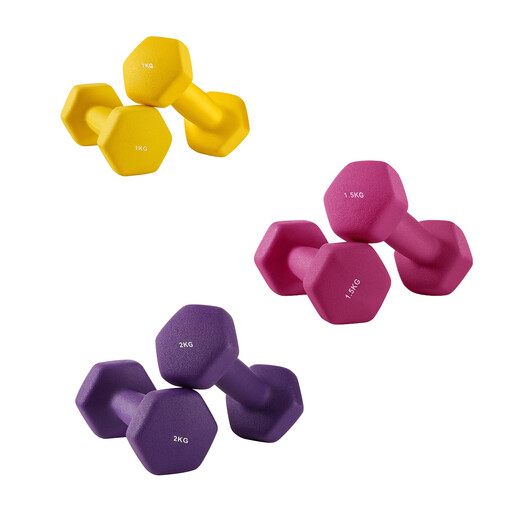
Why this choice suits this profile: The three pairs of 1, 1.5 and 2 kg let you start with moderate loads for upper body work, lunges or general conditioning. The included stand makes storage simple, even in a small space.
The weight of each pair is clearly stated and the hexagonal shape stops the dumbbells from rolling during storage or certain floor exercises.
Six dumbbells, a PP stand and rubber-coated handles. The set weighs 9 kg.
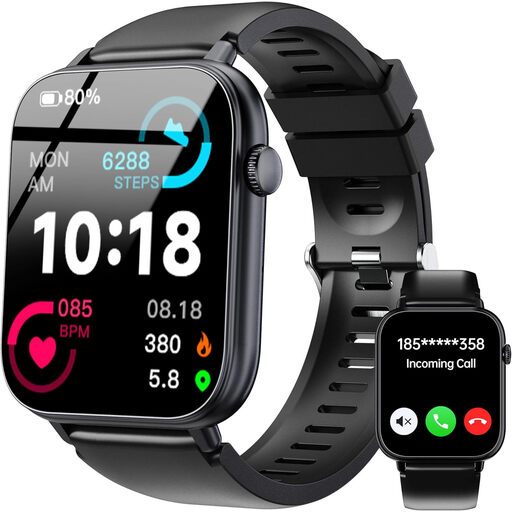
Why this choice suits this profile: This fitness smartwatch is designed for those who want to centralise their session tracking, notifications and certain daily data from their wrist.
The advertised features are detailed: 1.83-inch touchscreen, GloryFit app, Bluetooth calls and sports modes. This watch should not be used as a medical device.
Android and iOS compatibility, Bluetooth calls, activity tracking and up to 7 days of battery life in daily use.
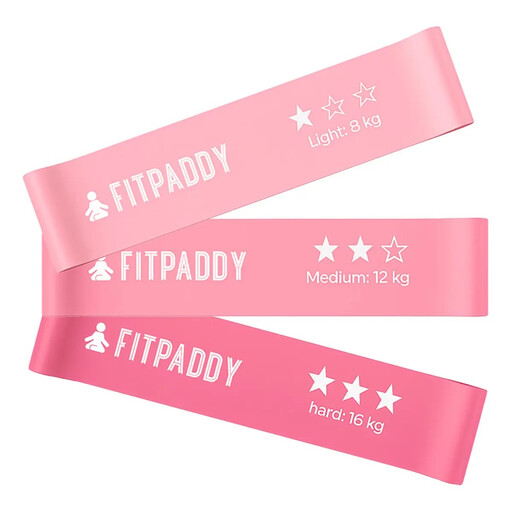
Why this choice suits this profile: This kit suits people who switch between strength work, mobility, muscle activation and stretching, at home or on the go.
The levels are clearly differentiated: 8, 12 and 16 kg. You can adjust the tension without having to buy several separate accessories straight away.
Lightweight format, three resistances and plenty of possibilities: squats, glute bridges, rows and mobility exercises.
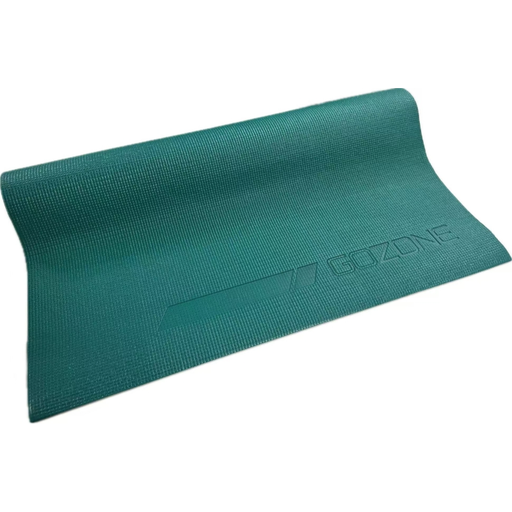
Why this choice suits this profile: This mat is suitable for floor sessions, standing poses, Pilates and plank exercises, especially when easy transport and quick cleaning are priorities.
Its dimensions of 61 × 173 cm and 3 mm thickness are clearly stated: you can compare them to your height and the level of cushioning you're after.
Textured surface, PVC material and easy cleaning with a cloth. Its size works well both at home and in the gym.
We've put together a complete, real-time updated selection of products that meet these demanding criteria and European safety standards.
A mat, a pair of dumbbells or some resistance bands make a good, versatile starting point. You can then add a muscle ring, a pull-up bar or yoga and Pilates accessories depending on your goals. The choice depends above all on the space you have, the resistance level you're after and the exercises you do.
The lifespan varies depending on the materials, how often you train and how well you look after it. Inspect bands, handles and tightening systems regularly. With adjustable dumbbells, tighten the collars before each session and follow the manufacturer's care recommendations. Storing accessories in a dry place, away from knocks, helps preserve them.
A smartwatch can be handy for recording your step count, activity duration or certain data provided by the associated app. The heart rate, sleep or saturation measurements displayed by these devices are indicative only. They don't replace a medical device or the advice of a healthcare professional.