
Livraison le jour même ou le lendemain

Qualité garantie

Débloquez vos offres de bienvenue: Livraison GRATUITE | Jusqu'à -80 % | 30 jours d'essai gratuits à JoyPlus
Téléchargez l'application
Setting up a workout space at home sounds simple enough – until you start comparing footprint, maximum load, noise levels and storage options. A machine that's too bulky quickly ends up gathering dust, while an undersized model can limit your exercises or lack stability.
To choose the right home fitness equipment, it's best to look beyond the marketing claims. Here are the most common pitfalls, the criteria you need to check, and a selection of machines suited to different user profiles.
A stated capacity of several hundred kilos may include the user's weight, the dumbbells and the forces exerted during movement. That doesn't guarantee every adjustment will hold up to intensive use.
Always check:
The dimensions of a machine when folded do not necessarily match the space needed during a workout. A folding treadmill, a folding weight bench or a drill-free pull-up bar also needs enough room to move around it.
Before ordering, measure:
Bluetooth, an LCD screen and apps can make tracking your sessions easier, but their compatibility depends on your phone, operating system and the services offered. A piece of home cardio equipment is only truly practical without a connection if its basic controls and display are comprehensive enough.
So having an app doesn't let you off checking the essential functions: resistance, speed, adjustments, safety stop and data readability.
For home strength training equipment, choose a frame that is clearly described: reinforced steel, non-slip support points and a lockable adjustment mechanism. Welds, bolts and folding joints should be inspected regularly.
Compare the maximum load to your actual usage, keeping a reasonable margin. Always stick to the manufacturer's stated limit and installation instructions. No machine should be used on an unstable or slippery surface.
Noise levels matter particularly in a flat. A magnetic exercise bike with a belt drive generally produces less mechanical noise than a direct-contact system. However, the result also depends on the floor, maintenance and pedalling cadence.
On a rowing machine, water resistance gives a progressive feel, while other systems can be simpler to maintain. A folding wooden rowing machine must be set up on a flat surface, paying close attention to the water tank, wheels and foot straps.
A machine described as foldable isn't necessarily light. Check its total weight, whether it has wheels and how much pre-assembly is required. A model delivered 80% assembled can speed up installation, but the remaining screws must be tightened according to the manual.
To extend the life of your equipment:
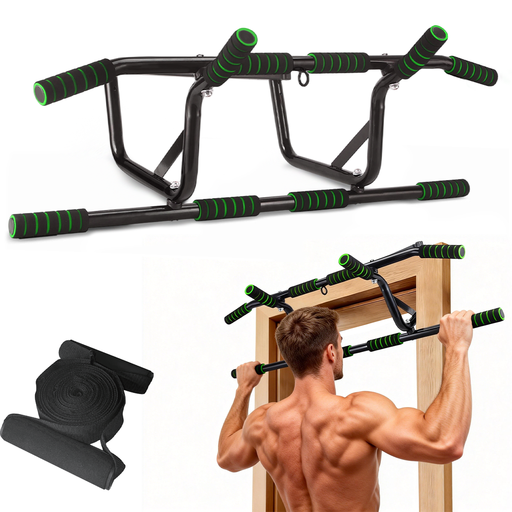
Why this suits this profile: This drill-free pull-up bar is ideal for people short on space who want to start bodyweight strength training without installing a permanent structure.
Its design means you don't have to invest in a bulky machine straight away. However, check it is compatible with your door frame and respect the stated 200 kg load.
Non-slip ergonomic handles and resistance bands included, according to the product page.
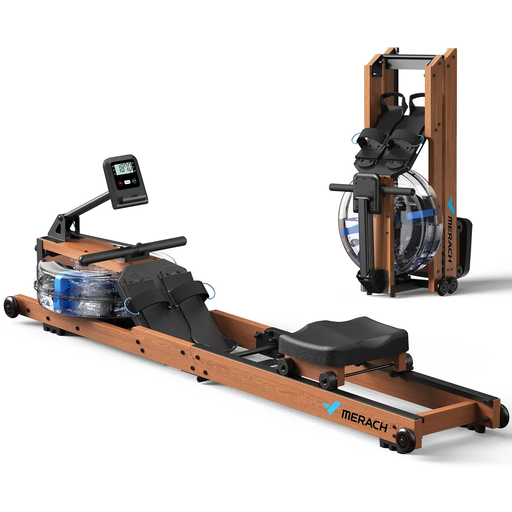
Why this suits this profile: Its wooden frame, water tank and Bluetooth tracking are aimed at users who want a more complete experience for their home gym.
It combines 180° folding storage with wheels, reducing its footprint after your workout. The water tank and its seals still need regular inspection.
Stated user load up to 181 kg, LCD screen and wireless syncing of workout data.

Why this suits this profile: This multifunctional power tower combines a pull-up bar, parallel bars and a bench in a single frame, so you can vary your home strength training exercises.
Its multifunctional design means you don't need multiple machines, but its assembled dimensions – 104 × 76 × 251 cm – mean you must measure your room carefully.
Steel frame, adjustable height and stated capacity of 480 lb, approximately 218 kg.
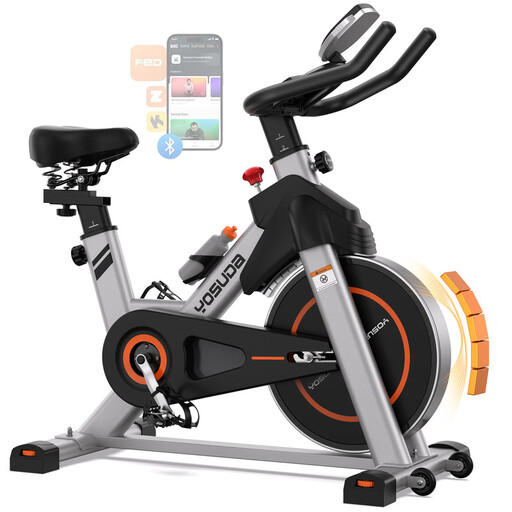
Why this suits this profile: This magnetic exercise bike fits easily into a home cardio routine when quiet operation and ergonomic adjustments are a priority.
The contact-free resistance and belt drive minimise friction. However, check the space around the bike and the maximum load of 160 kg.
8 kg flywheel, saddle adjustable in four directions, LCD screen and Bluetooth connection with app.
We've put together a comprehensive, real-time updated selection of products that meet these demanding criteria and European safety standards.
The budget depends on the type of machine and the level of versatility you're after. A pull-up bar or Pilates board is generally a more limited investment than a rowing machine, treadmill or complete station. Remember to factor in accessories, a protective mat and, if needed, delivery to an upstairs room.
Place the machine on a shock-absorbing mat on a perfectly level floor. Follow the maintenance instructions, especially checking screws and wheels. In a flat, a magnetic bike is often easier to accommodate than a machine that generates repeated impacts. For a treadmill, choose a speed suited to walking or jogging and check the permitted hours in your building's regulations.
The lifespan varies depending on how often you use it, the weight it supports, the quality of assembly and how well you maintain it. Regularly inspect parts subject to wear, such as straps, bearings, belts and folding mechanisms. Regular checks and sticking to the stated limits help preserve the machine's stability and proper functioning.