
Livraison le jour même ou le lendemain

Qualité garantie

Débloquez vos offres de bienvenue: Livraison GRATUITE | Jusqu'à -80 % | 30 jours d'essai gratuits à JoyPlus
Téléchargez l'application
Setting up a home gym can quickly become expensive. Between the promises of a full workout in just a few minutes, bulky multi-function machines, and accessories that are sometimes of limited real value, certain purchases end up gathering dust.
Three common pitfalls often crop up when choosing your home fitness equipment:
To shop more wisely, start by assessing how often you’ll use it, the type of training you’re after, and the constraints of your home.
Measure the available space before choosing a machine. Take into account its width, depth and height, as well as the room you need to move freely without bumping into furniture.
A foldable treadmill can reduce its footprint when stored. However, don’t overlook its weight and locking mechanism. For strength training equipment, also check the stability of the base, the quality of the anti-slip feet, and the maximum user weight stated by the manufacturer.
For dumbbells, an integrated stand stops weights from being left on the floor. A dumbbell set with a stand can therefore be a smart choice for a small space, provided you set aside a dedicated spot and put the weights away carefully after each session.
Don’t get hung up on the number of programmes or modes listed on the product page. For a cardio machine, look closely at:
For a home strength training machine, check the adjustment range, the dimensions once assembled, the contact points, and the assembly instructions. A pull-up station or multi-gym tower must be installed on a level surface. The screws and fixings should also be checked regularly.
Before ordering, look for a clear instruction manual, usage warnings, and the contact details of the manufacturer or the responsible person within the European Union. Where the CE marking applies, it does not indicate a performance rating: it signals a declaration of conformity with the relevant European requirements.
Regularly inspect cables, straps, resistance bands, handles and moving parts. For a fitness trampoline, pay particular attention to the condition of the elastic bands, the handlebar attachment, and ensure there is a clear area around the equipment. With a treadmill, remove the safety key after each session if the machine is accessible to children.
The options below suit different uses. The features mentioned are those stated on the product pages: always compare them with your needs, your home, and your fitness level.
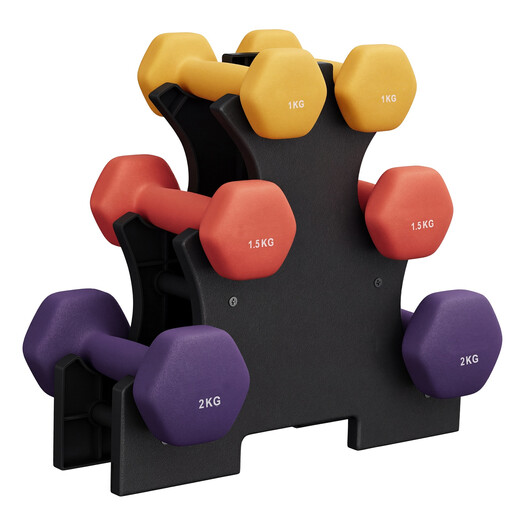
Why this choice suits this profile: The six dumbbells at 1, 1.5 and 2 kg let you start with several weight levels without buying multiple sets. Their compact stand fits easily into a living room or a small bedroom.
The stand stops weights being left on the floor, while the hexagonal shape reduces the risk of rolling. The neoprene-coated handles are designed for a more comfortable grip.
Three pairs of weights, a cast iron coating with a neoprene layer, and compact storage.
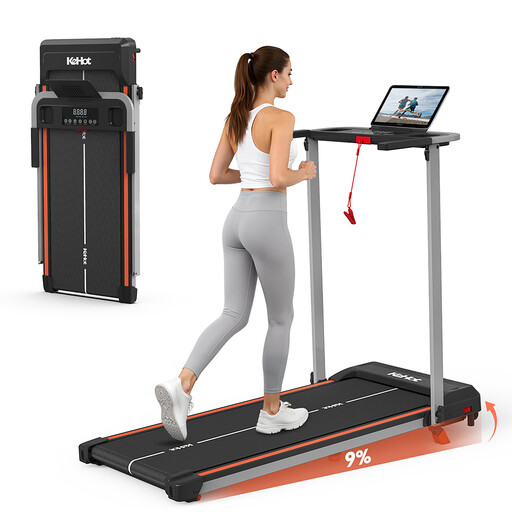
Why this choice suits this profile: Regular users who want to track their workouts benefit from an LED display, Bluetooth connectivity, and stated compatibility with EQI SPORTS, Zwift and Kinomap.
The product page specifies a running surface of 38 × 100 cm, a speed range of 1 to 12 km/h, a manual incline of 9 %, and the inclusion of a safety key.
Stated 2.5 HP motor, maximum user weight of 150 kg, and a foldable design.
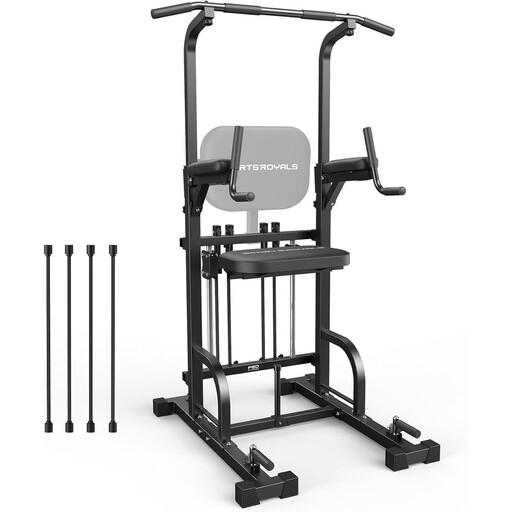
Why this choice suits this profile: This station is aimed at those who want to combine pull-ups, dips, leg raises and core exercises on a dedicated structure, with six height adjustments.
The product page states an H-shaped base, eight anti-slip feet, and a maximum user weight of 204 kg. These figures should be compared with your available floor space and your weight, including any equipment.
Adjustable height from 164.56 to 221.5 cm, handles suited to multiple movements, and stated resistance bands from 10 to 40 kg.
A foldable Pilates board can support sessions focused on movement control. A fitness trampoline with a handlebar is better suited to low-footprint cardio training. In both cases, check the floor space required, the maximum user weight, and how easy it is to store.
A sports smartwatch, such as the OUKITEL V3, offers a 1.83-inch display, over 100 stated sports modes, Bluetooth notifications, and a battery life of up to seven days with daily use. Heart rate, sleep and blood oxygen saturation data should not be taken as medical advice.
After your workout, a protein bar can be handy to take on the go. The Andros Sport Chocolate Peanut bar (55 g) states 20 g of protein and 200 kcal per serving. Remember to check the allergens: the product page mentions milk, peanuts and soya. Finally, cushioned sports socks, such as the Nike model sold in a pack of six pairs, can improve comfort, provided you choose the right size and consider the type of trainers you wear.
We’ve put together a full, real-time updated list of products that meet these strict criteria as well as European safety requirements.
A set of light dumbbells is a good starting point, without taking up much space. You can then gradually add a mat, storage accessories, or a cardio machine depending on how often you use it. The total budget will mainly depend on the versatility you’re after and the space you have available.
Wipe down surfaces after each use, store equipment in a dry place, and regularly check screws, cables, resistance bands and locking mechanisms. Always stick to the maximum user weight and the manufacturer’s assembly instructions.
Allow a clear area to get on and off the machine and to perform movements without any obstacles. For a treadmill or trampoline, don’t just go by the equipment’s dimensions: add a safety zone around it and also check the available ceiling height.