
Livraison le jour même ou le lendemain

Qualité garantie

Débloquez vos offres de bienvenue: Livraison GRATUITE | Jusqu'à -80 % | 30 jours d'essai gratuits à JoyPlus
Téléchargez l'application
Setting up a workout area at home does not necessarily require a dedicated room. A fitness mat, a few accessories or a foldable machine may be all you need to exercise regularly. However, choosing the right equipment becomes more difficult when product listings are full of promises about grip, comfort and durability without always providing clear, practical details.
Before buying your home fitness equipment, three pitfalls are particularly common:
For yoga, Pilates, stretching, floor exercises or gymnastics, a 183 × 61 cm mat is suitable for many body types. Models measuring 190 × 80 cm provide more room for larger movements, strength training and floor exercises.
Choose the thickness according to how you plan to use the mat:
A floor tile intended for a gym does not necessarily replace a yoga mat. Floor tiles are primarily designed to protect the floor and define a workout area, while a fitness mat is designed to be carried around and used directly during exercise.
TPE, or thermoplastic elastomer, is very common in yoga and Pilates mats. Check its flexibility, density, ease of cleaning and any odour that may be present when you open the packaging. These characteristics can vary depending on how the product was made and the storage conditions.
A ridged surface on top combined with raised patterns underneath can help reduce slipping. However, the mat must be placed on a clean, flat and stable surface. No coating can work miracles on a damp, dusty or uneven floor.
For cleaning, preferably use a damp cloth and, if necessary, mild soap. Leave the mat to dry completely in the open air before rolling it up. Avoid using a washing machine, abrasive products or prolonged exposure to sunlight when the care instructions advise against it.
A mat with a carrying strap can easily be stored in a cupboard and transported to a fitness class. For a foldable treadmill, pay closer attention to its weight, folded dimensions, maximum speed, motor power and the noise level stated by the seller.
Electricity consumption depends on the power actually used, the length of each session and how often you exercise. A 1 000 W machine used for one hour theoretically consumes 1 kWh at full power. In practice, consumption varies depending on the load and how the motor operates. This estimate helps you compare different uses, but it does not replace the technical information in the product listing.
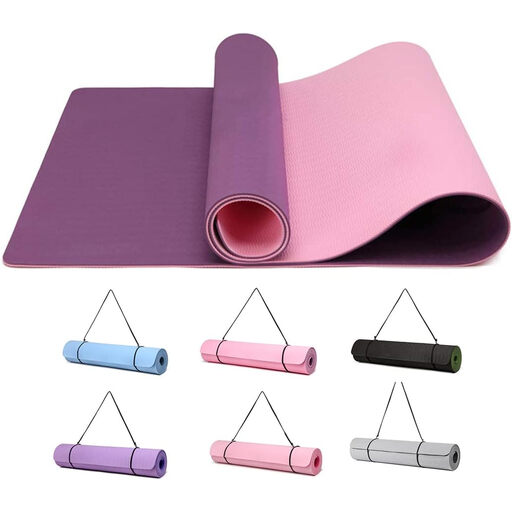
Why this choice suits this profile : its dimensions make it suitable for yoga, Pilates, light HIIT and floor-based strength training. The strap makes it easy to store in a small home and carry to a class.
The listing specifies the 6 mm thickness, approximate weight of 0,7 kg and the texture on both sides, rather than relying on a vague promise of grip.
TPE, double-sided texture, easy-to-carry format and included strap.
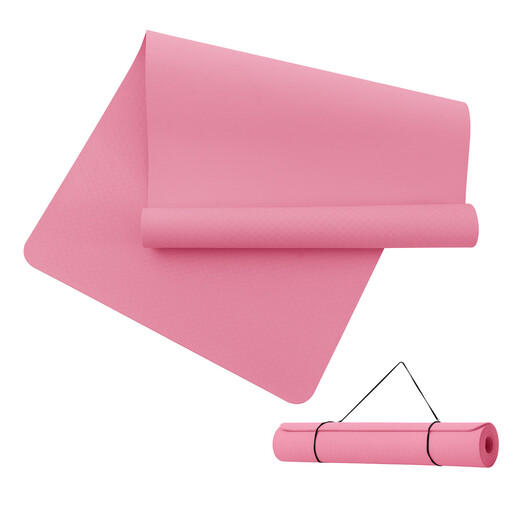
Why this choice suits this profile : its 80 cm width gives you more room for sequences, Pilates and home gymnastics exercises.
The dimensions are clearly stated, so you can check before ordering that they fit the available space.
Advertised high-density TPE, texture on both sides and carrying strap.
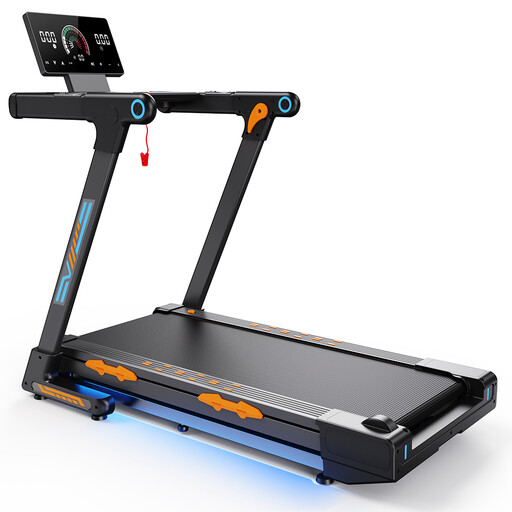
Why this choice suits this profile : this foldable treadmill is ideal for anyone who wants to walk or run at home while reclaiming their space after a workout.
The stated speed of 1 to 16 km/h and 1 000 W motor power provide practical reference points for assessing the intended use and space required.
Foldable design, stated speed of 1 to 16 km/h and a motor described as quiet.
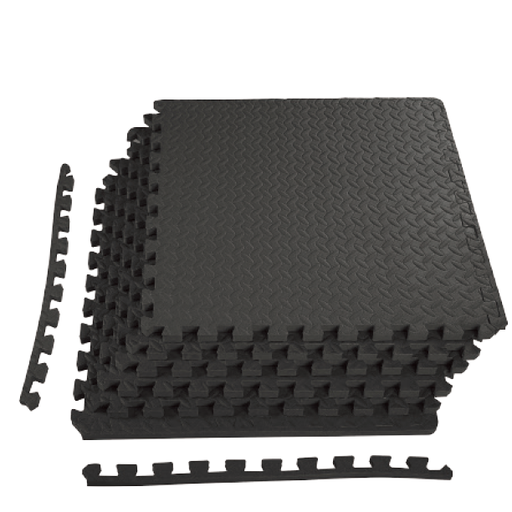
Why this choice suits this profile : these tiles are suitable for a permanent area with fitness equipment, light dumbbells or repeated floor exercises.
The interlocking system and stated coverage of 24 square feet make it possible to estimate the space required before installation.
Six 60 × 60 cm tiles, 1,2 cm PE foam and a surface advertised as non-slip.
In a flat, start by measuring the clear area when the equipment is set up for use, not just the space available for storage. For a yoga or Pilates mat, leave enough room around your arms and legs. With a treadmill, also check the ceiling height, ventilation and proximity to a power socket.
Fitness floor tiles are practical for creating a permanent workout area. However, the listing for this model states that they are not intended for outdoor use or soundproofing. If you need to move your workout area, a mat with a carrying strap will be more suitable. Golfers may also want to consider an indoor putting mat, checking the available length and ball-return system.
Finally, think about the accessories that are genuinely useful: a carrying strap, towel, wall storage, resistance bands or a small phone holder. Each addition should meet a regular need rather than simply deliver a neatly packaged marketing promise.
We have put together a comprehensive, real-time updated selection of products that meet these exacting selection criteria and European safety standards.
A thickness of 6 mm is suitable for many activities, including yoga, Pilates, stretching and moderate strength training. A thicker model may be preferable for floor exercises, provided it still offers sufficient stability.
Wipe it with a damp cloth and, if necessary, a small amount of mild soap. Leave it to dry completely in a well-ventilated place before rolling it up. Always check the care instructions: some models must not be immersed in water or machine-washed.
Consumption depends on the power, speed, user’s weight and session length. A motor rated at 1 000 W does not necessarily run at full power continuously. To estimate consumption, multiply the power used, expressed in kilowatts, by the number of hours of use, then apply your electricity tariff.