
Livraison le jour même ou le lendemain

Qualité garantie

Débloquez vos offres de bienvenue: Livraison GRATUITE | Jusqu'à -80 % | 30 jours d'essai gratuits à JoyPlus
Téléchargez l'application
If you drive an electric or plug-in hybrid vehicle, you know how crucial an efficient charging solution is. A standard household outlet works in a pinch, but it quickly reveals its limitations in terms of speed and safety. Installing a charging station, or wallbox, at home is a game-changer: charging becomes faster, safer, and often, much smarter.
With the overwhelming number of models available, it can be difficult to find your way. Should you opt for a 7 kW wallbox, an 11 kW charging station, or a 22 kW EV charger? This guide is here to break down the key criteria and help you choose the best home EV charger for your needs, complete with our selection of the top models on the market today.
Before you take the plunge, there are three essential points to consider to ensure your investment is perfectly suited to your needs and your electrical system.
The charger's power directly determines your vehicle's charging speed. The choice will therefore depend on two factors: your home's electrical setup and the maximum charging capacity your car can handle.
A smart wallbox offers a host of benefits compared to a standard model. Thanks to a Wi-Fi or Bluetooth connection and a mobile app, you can:
If you're looking for a simple and effective "plug-and-charge" solution without advanced management, a non-connected model will do the job perfectly.
Nearly all electric vehicles sold in Europe use a Type 2 connector (also known as Mennekes) for AC charging. Simply verify that the charger you're considering is equipped with this universal standard.
Regarding the installation of the charging station, hiring a qualified electrician (with a relevant certification for EV charger installation) is mandatory. This professional is the only way to guarantee an installation that complies with safety standards. They will prevent any risk of overheating or short-circuiting and ensure your installation is covered by your insurance.
Here are a few models that caught our attention for their technical specifications and excellent balance of features and price.
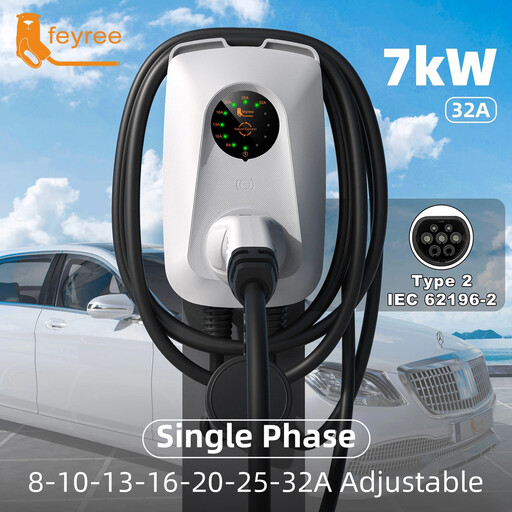
What sets it apart: Flexibility is the key word for this model. Its standout feature is the ability to adjust the current from 8 A to 32 A to precisely match your electrical circuit's capacity and eliminate any risk of overload. It's a solution that is both safe and future-proof.
Pros:
Who is it for? Ideal for EV owners in single-family homes with a single-phase installation. It's the perfect choice for a first charging station that is reliable, safe, and much faster than a standard outlet, without being bogged down with complex smart features.
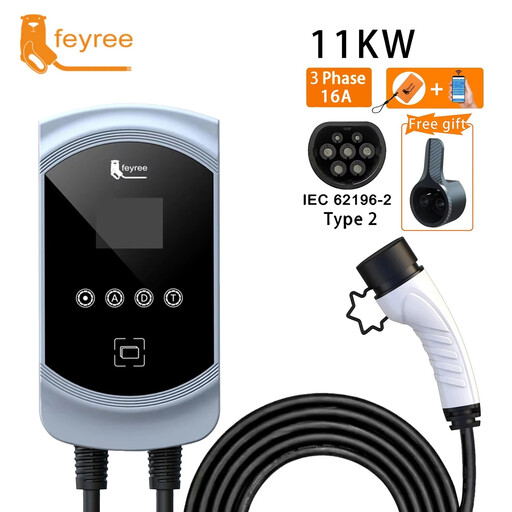
What sets it apart: This model represents an excellent balance for users with a three-phase installation. It combines the speed of a three-phase charger with the intelligence of a smart wallbox, all in a compact and secure package.
Pros:
Who is it for? Aimed at users equipped with a three-phase power supply and a vehicle that accepts 11 kW charging. It's the perfect solution for those who want to optimize their charging time and intelligently manage their energy consumption.
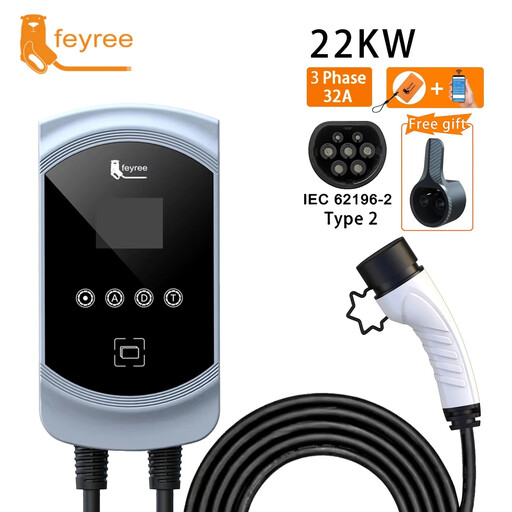
What sets it apart: With its 22 kW, this charger is built for pure performance. It is designed for those who want the fastest possible charging at home and whose installation and vehicle can handle such power.
Pros:
Who is it for? For drivers of high-end electric vehicles compatible with 22 kW AC charging, who also have the appropriate three-phase electrical installation. This is the performance choice for those who refuse to compromise on speed.
Our selection focuses on specific needs, but the market is full of alternative solutions. To explore other power levels, designs, or features, feel free to browse our complete catalog.
Discover our full range of electric vehicle charging units
As a general guide, to charge a 50 kWh battery from 20% to 80% (which is 30 kWh):
Yes, absolutely. The installation of an EV charger must be carried out by a qualified electrician. This is not only a guarantee for your safety and that of your vehicle, but also an essential condition required by insurance companies and necessary to qualify for certain government incentives. An improper installation can lead to fire hazards and void the equipment's warranty.
The vast majority of wall-mounted chargers sold in Europe, including those presented here, are equipped with a Type 2 connector. This standard is used by almost all manufacturers for AC charging, including Tesla (for European models), Renault, Peugeot, Volkswagen, Hyundai, etc. Compatibility is therefore nearly universal. The only point to verify is the maximum charging power your vehicle can accept.