
Livraison le jour même ou le lendemain

Qualité garantie

Débloquez vos offres de bienvenue: Livraison GRATUITE | Jusqu'à -80 % | 30 jours d'essai gratuits à JoyPlus
Téléchargez l'application
Charging your electric car at home should be effortless, not a headache. Yet, navigating the maze of models and technical jargon can make choosing the right electric car charging station feel like an uphill battle. Power, current, smart features… it's easy to get lost.
Our mission?: to help you make sense of it all. This guide breaks down the key aspects of a home charging station (or Wallbox) and presents our selection of the best models to get you equipped for 2026.
Before diving into our top picks, let's review the three essential criteria that will guide your decision.
Power, measured in kilowatts (kW), directly determines how fast your vehicle will charge. Your choice will primarily depend on your home's electrical system.
Note?: The charging speed will always be limited by your car's onboard charger capacity. There's no point in installing a 22?kW station if your vehicle can only accept 11?kW.
A smart charging station is much more than just a power outlet. Connected via Wi-Fi and managed through a mobile app, it unlocks new capabilities?:
The star feature is dynamic load balancing (or Dynamic Load Balancing). This intelligent system measures your home's total energy consumption in real-time and automatically adjusts the charger's power output. The result?: no more tripped breakers when the oven, washing machine, and car are all running simultaneously!
In Europe, the Type 2 connector has become the universal standard. Nearly all new electric and plug-in hybrid vehicles are equipped with it. This makes it the safe bet for maximum compatibility.
Warning: installing a home EV charger is not a simple DIY project. It must be carried out by a qualified electrician to ensure the safety and compliance of your installation.
Here is our selection of chargers that cater to different needs and budgets, all compatible with the Type 2 standard.
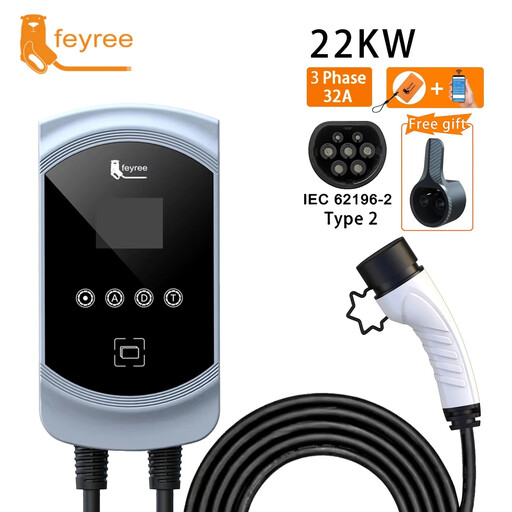
Why it stands out?: Engineered for those who demand maximum charging power at home, its 22?kW capacity on a three-phase supply drastically reduces charging times for compatible vehicles.
Key features?:
Who is it for?? Owners of 22?kW-compatible vehicles with a three-phase electrical supply. The ideal choice for high-mileage drivers who need to regain maximum range as quickly as possible.
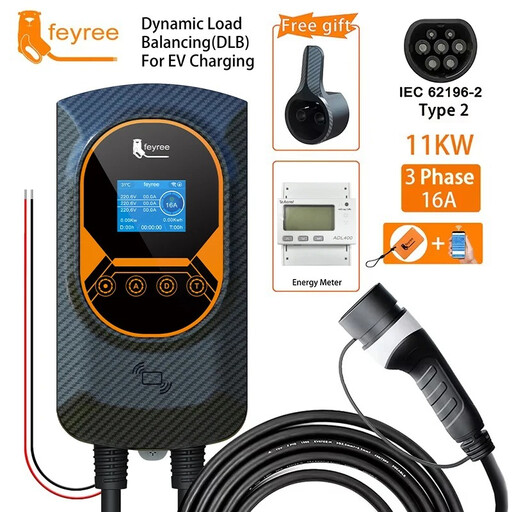
Why it stands out?: Its key advantage?: the dynamic load balancing (DLB) feature. This smart charger protects your electrical system's stability, making it the ultimate safety solution for homes with many high-consumption appliances.
Key features?:
Who is it for?? For users with a three-phase supply who want powerful charging without the risk of an overload, especially if they simultaneously use a heater, an oven, or a heat pump.
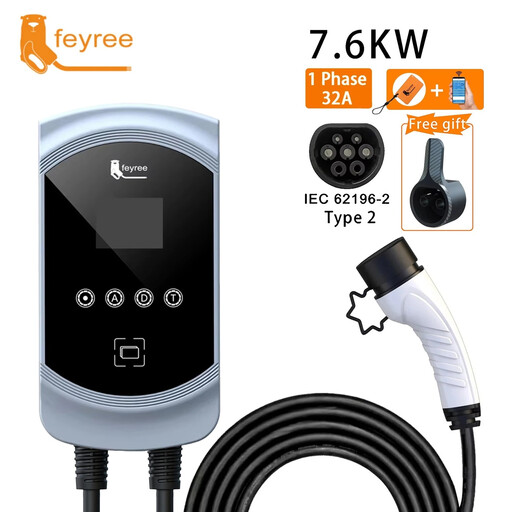
Why it stands out?: This is the all-rounder solution, the easiest to install in most homes. Compatible with a standard single-phase supply, its 7.6?kW power output is more than enough for a full charge overnight.
Key features?:
Who is it for?? For all owners of electric or plug-in hybrid vehicles with a single-phase supply. It's the ideal entry point for a fast, smart, and safe charging solution.
Choosing a charger is a personal decision that depends on your car, your home, and your driving habits. If our selection doesn't meet your needs, or if you're simply looking for a replacement cable or an adapter, feel free to explore other options.
? Discover our full range of Type 2 EV Charging Cables to find the right equipment for your needs.
For a single-phase supply, a 7?kW charger is the standard. It offers the best balance between speed and ease of installation. If you have a three-phase supply, you can aim higher with 11?kW or 22?kW for rapid charging, provided your car supports it.
Yes, for two main reasons. First, for your wallet?: schedule charging during off-peak hours to take advantage of the lowest electricity rates. Second, for convenience?: you can manage everything from your smartphone, from starting a charge to tracking your energy consumption.
The question isn't about the charger itself, but about your home's electrical system and your utility plan. The vast majority of homes have a single-phase supply, which limits the charger's power to around 7?kW. A three-phase supply, required for 11?kW or 22?kW chargers, needs a specific installation. A quick look at your electrical meter or utility bill will give you the answer.