Which type of machine is right for you?
If you enjoy espresso regularly, the most useful distinction is between the convenience of capsules, automated preparation with whole beans and the more hands-on approach of a portafilter machine.
You want to move on from capsules
If you want to choose the beans for your espresso, compare an automatic grinder with a portafilter machine. The first means less work while making your coffee; the second gives you more control, as long as you’re happy to put in the extra effort.
You make espresso in a small kitchen
A capsule machine is worth considering if you want to keep adjustments to a minimum. Check its dimensions, access to the water tank and which capsule format it accepts. Soft pods are another simple option, but check which drinks the machine can make before choosing one for short espressos.
You also make milk-based drinks
Check how the milk is prepared: you may need to use a steam wand yourself, or the machine may have an automatic system, depending on the model. Cleaning these components matters just as much as whether cappuccino appears on the drinks menu.
What should you look for before choosing?
Start with the type of coffee and drinks you actually make, then see how each machine fits your space and cleaning routine.
| Factor | What to check | Think about your needs |
|---|
| Coffee format |
Identify the exact capsule or pod system, or check whether the machine can use whole beans or ground coffee. Make sure you know which consumables are compatible with the model you choose. |
I want to choose my own beans, or I’d rather pop in a capsule without preparing the coffee grounds. If I choose Nespresso, I’ll check whether it’s Original or Vertuo. |
| Cleaning |
Check how easy it is to reach the water tank and trays, how to clean the brew unit if there is one, and what the machine’s milk-system instructions say. UFC-Que Choisir’s protocol, published in January 2026, highlights the importance of cleaning bean-to-cup machines. |
I’d prefer quick, everyday cleaning, or I’m happy to clean the grinder and milk components too. |
| Drinks and how they’re made |
Check which drinks the exact model makes and whether it has a manual steam wand or an automatic milk system. With a portafilter, consider which parts of the process you want to control yourself. |
Espresso is enough for me, or I’d also like to make milk-based drinks. If so, I’ll decide whether I want to prepare the milk myself. |
| Space and noise |
Measure the space available, including the clearance needed to fill and empty the machine. UFC-Que Choisir says bean-to-cup machines take up more space and make more noise than capsule systems or filter coffee machines. |
My worktop space is limited, or I make several coffees in a row and want easy access to the water tank and trays. |
| Packaging |
Consider the format used for each cup. In France, ADEME says aluminium and plastic capsules can go in the recycling collection for paper and packaging. |
If I want to cut down on individual packaging, I’ll also compare whole beans and ground coffee, remembering that being recyclable doesn’t mean producing no waste. |
Which brands and ranges should you compare?
These examples show different ways to make coffee. Always check the features and cleaning requirements of the exact model.
De'Longhi
The bean-to-cup range includes models with different drinks options and ways to prepare milk.
- The Magnifica S Smart featured below combines a grinder with a steam wand for manual milk preparation.
- Don’t assume a model’s recipes or milk system from the range name alone: check the exact model you’re considering.
Sage
The Barista Express is designed for people interested in a portafilter machine with an integrated grinder and manual milk preparation.
- Sage lists a 54 mm portafilter, grind settings and a steam wand for this model.
- Making espresso this way takes more hands-on effort than selecting a drink on an automatic grinder machine.
Nespresso
The Original and Vertuo capsule systems offer different machine and drink options.
- Nespresso positions Original for short coffees and Vertuo for a range of cup sizes.
- Check the machine’s system before choosing capsules: Original and Vertuo are different formats.
SENSEO / Philips
SENSEO machines use soft pods; some models can also make filter coffee to share.
- Philips’ product information for the Switch describes a filter coffee jug and a cup made with a pod.
- Don’t assume every model offers both options, or that a pod drink will be what you’re looking for in a short espresso.
TASSIMO / Bosch
The TASSIMO system uses T DISCs in compatible multi-drink machines.
- Bosch describes a service T DISC for maintaining compatible TASSIMO machines.
- Check which drinks, T DISCs and cleaning accessories are compatible with the exact model.
Espresso machines available on Joybuy
These models offer three ways to make espresso at home: an automatic grinder, a portafilter or capsules. Start by comparing the method and coffee system that suit you; a filter coffee machine is better suited to making coffee to share.
 Image unavailable
Philips Series 2200 EP2230/10 LatteGo, black
Worth considering if you regularly want to make espresso from whole beans and use a milk system too. Check which drinks are programmed for this variant and which LatteGo parts need cleaning after use.
View on Joybuy
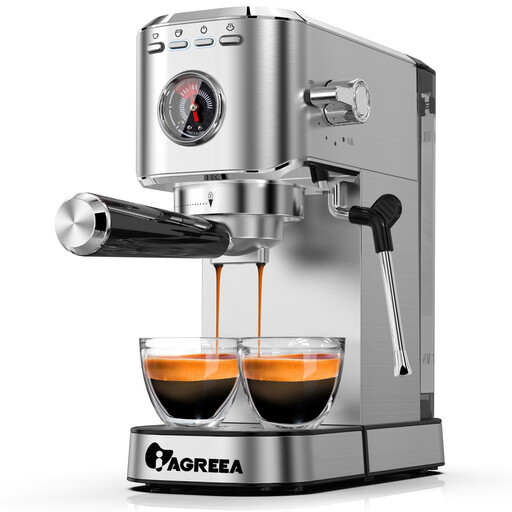 Image unavailable
IAGREEA 20Bar portafilter machine, 1.1 L tank
This portafilter machine is for people who want to get hands-on with making their coffee and prepare milk with a manual steam wand. The title lists a pressure gauge and a removable 1.1 L tank; the “20Bar” figure alone isn’t enough to judge the coffee in the cup. Make sure you check the required voltage before using it in France.
View on Joybuy
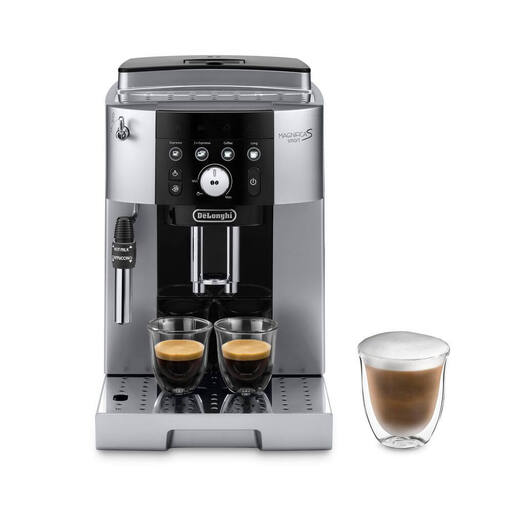 Image unavailable
De'Longhi Magnifica S Smart ECAM250.23.SB, silver
Consider this if you want to make espresso with an automatic grinder while keeping the option to use ground coffee. The steam wand means you’ll need to prepare and clean the milk system yourself. Check the dimensions and make sure you can easily access the parts you need to fill and empty in your kitchen.
View on Joybuy
 Image unavailable
KRUPS Nespresso Essenza Mini, white, 0.6 L
This capsule machine is suitable if you choose the Nespresso Original system. The title lists a 0.6 L tank and 1200 W power. Check that your chosen capsules are specifically labelled as compatible with Original, and remember to clean the water tank and capsule container.
View on Joybuy
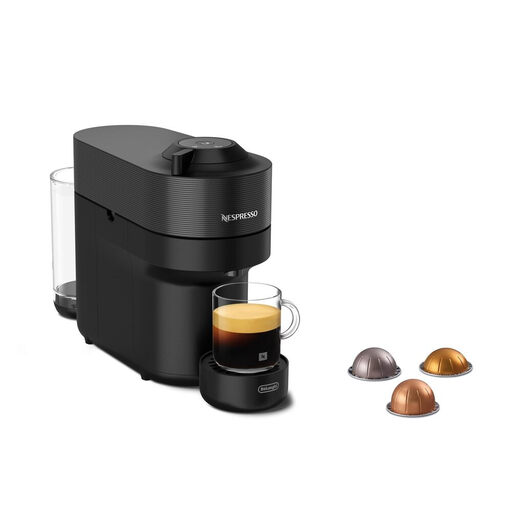 Image unavailable
Nespresso Vertuo Pop ENV90.B, black, 0.6 L
Worth a look if you prefer the Vertuo capsule system and want to choose between different coffee sizes. The title lists a 0.6 L tank. Check the drinks offered by this exact variant and choose compatible Vertuo capsules, not Original capsules.
View on Joybuy
Frequently asked questions
How can I check whether capsules are compatible?
Find the exact system listed for the machine, then choose capsules clearly labelled as compatible with it. Nespresso, for example, distinguishes between Original and Vertuo. Owning a machine from the brand doesn’t mean it accepts both formats.
What cleaning does a bean-to-cup machine need?
Empty and clean the trays, then follow the model’s instructions for the brew unit and cleaning cycles. If the machine makes milk-based drinks, check how to clean the milk system too. UFC-Que Choisir’s January 2026 protocol highlights the importance of cleaning these machines.
Where should I put aluminium or plastic capsules in France?
ADEME says to put them in the recycling bin, bag or container for paper and packaging. Even a capsule that can be recycled is still used for every brew.
What should I do with a coffee machine at the end of its life?
In France, electric coffee machines come under the waste electrical and electronic equipment scheme, as described by the ministries responsible for the ecological transition. Check for a suitable collection point or take-back scheme before disposing of your machine.
What should I check when cleaning a TASSIMO machine?
Check the instructions for the exact model and make sure any cleaning accessories are compatible. Bosch describes a service T DISC for cleaning and descaling compatible TASSIMO machines. The drink format and cleaning method go hand in hand.


