Households looking for a quick, easy cup
Capsules and pods give you a pre-portioned dose, so there’s no need to measure or tamp the coffee. Check that the format is right for the coffee you plan to drink regularly.


If you regularly make espresso at home, choose capsules or pods for a quick, low-effort brew; a portafilter if you want to control the extraction; or a bean-to-cup machine if you want to start with whole beans and automate the process. Then check which drinks the model actually makes, how much space you have and how much cleaning you’re happy to do.
Capsules and pods give you a pre-portioned dose, so there’s no need to measure or tamp the coffee. Check that the format is right for the coffee you plan to drink regularly.
A portafilter is a good fit if you want to control the ground coffee, dose and extraction, and don’t mind a more hands-on preparation and clean-up.
An automatic bean-to-cup machine is ideal if you want to grind beans fresh for each cup. For milk-based drinks, choose a milk system with its cleaning requirements in mind, and follow the model’s instructions for descaling.
For home espresso, capsules, pods, portafilters and bean-to-cup machines suit different ways of making each cup. If you mainly serve larger coffees rather than espresso, consider a filter coffee machine too: it’s designed for a different kind of drink.
Consider this if: you want to pop in a ready-to-use portion and keep the steps between cups to a minimum.
Bear in mind: your choice of coffee depends on the format compatible with the machine, and each cup uses a capsule.
Consider this if: you want pre-portioned coffee without switching to a grinder or the hands-on process of using a portafilter.
Bear in mind: this format isn’t for you if you want to fine-tune the grind, dose and extraction.
Consider this if: you want to prepare the ground coffee yourself and control how your espresso is extracted.
Bear in mind: measuring the dose, preparing the coffee and cleaning the machine all take more effort.
Consider this if: you regularly make espresso from whole beans and want an automated process.
Bear in mind: you’ll still need to descale the machine and clean the parts specified in the instructions, especially if it has a milk system.
| Priority | What to check | Who is it for? |
|---|---|---|
| Easy preparation | Steps before and after each cup; availability of compatible capsules or pods. | When I’m making coffee after coffee, I want to avoid measuring and tamping every time. Around 29% of consumers would put ease of use first. |
| Control over your espresso | Types of coffee accepted; access to the portafilter and space for a separate grinder if needed. | If I enjoy fine-tuning my coffee, I’m happy to put in a little more effort. Around 21% of consumers would make this their priority. |
| Milk-based drinks and maintenance | Type of milk system; parts to rinse or take apart according to the instructions. | If I often make milk-based drinks, I need to be able to clean the system after use. Around 21% of consumers would prioritise this balance between milk-based recipes and manageable cleaning. |
| Consumables and waste | Required coffee format; instructions for sorting used portions and access to suitable collection points. | If I make coffee every day, I want to choose consumables that suit me and know what to do with used portions. Around 29% of consumers would put this first. |
A removable jug can make some cleaning tasks easier, but it doesn’t remove the need to maintain the machine as instructed. De’Longhi France says that how often you need to descale a bean-to-cup machine depends in part on water hardness.
Check the instructions for the model you’re considering to see which parts need rinsing after use, which need to be removed and how to descale the machine.
Remember to allow time to rinse and clean the milk system, too.
Before choosing a single-use format, check the information on the packaging and the collection options available to you.
Check the Info-tri sorting instructions and your local council’s guidance. If you plan to use a collection scheme offered by a brand, check that it’s available where you live.
A long list of recipes doesn’t tell you which ones your household will make regularly, or how much effort milk-based drinks will take. UFC-Que Choisir assesses certain aspects of making several cups in a row separately.
Start with the drinks you make most often, then check the features of the exact model and what maintenance they involve.
The French range includes espresso machines with grinders. Milk systems and the number of drinks available vary by model.
Some Philips automatic machines feature a LatteGo milk system for households that enjoy milk-based drinks.
Nespresso capsule machines use ready-to-use portions. Check the collection options available where you live.
These models are for making espresso at home: three machines with grinders, one portafilter model and another espresso machine. First, choose the preparation method that suits you, then check the features of the specific variant you’re considering.
 Image unavailable
Worth considering if you want to make espresso from whole beans and use a milk system.
This variant’s name includes LatteGo. Check its instructions for cleaning steps and any accessories you may need.
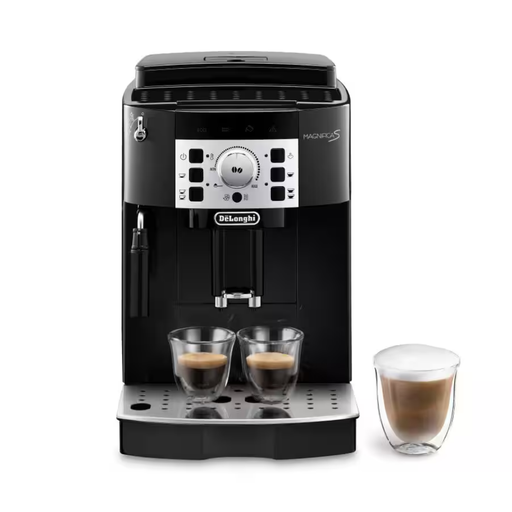 Image unavailable
Worth considering if you’re looking for an automatic espresso machine with a grinder for regular use.
Check the dimensions and the cleaning and descaling steps required for the ECAM22.140.B.
 Image unavailable
Worth considering if you regularly make espresso from whole beans and want an automatic machine.
Before choosing this variant, check its dimensions and the maintenance steps listed in its instructions.
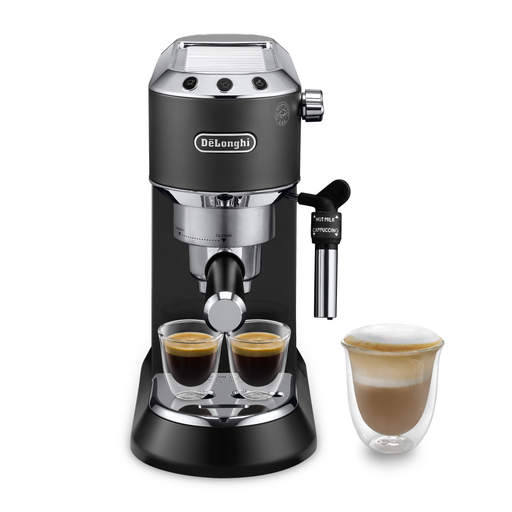 Image unavailable
Worth considering if you’re happy to take a more hands-on approach to making espresso.
The model name indicates a rated pressure of 15 bar. Check the capacity of this variant’s water tank and how much space you’ll need to install it.
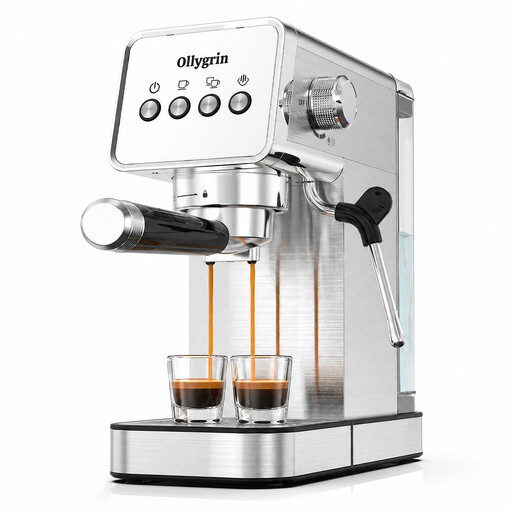 Image unavailable
Worth considering if you want to make espresso at home with a steam wand.
The model name indicates a rated pressure of 20 bar, a removable water tank and a removable drip tray. Check which types of coffee it accepts and how it’s operated before choosing this model.
How often you need to descale depends in part on water hardness and how much you use the machine, according to De’Longhi France. Follow the instructions and descaling procedure for your model.
No. A removable jug can make some cleaning tasks easier, but you’ll still need to clean it. Philips describes the LatteGo jug on the relevant models as having two parts and no tube, and as being dishwasher-safe. Check the instructions for your model.
According to ADEME, aluminium or plastic capsules can be put in the recycling collection for paper and packaging. Check the Info-tri sorting instructions and local guidance, too. Nespresso offers collection points for its capsules and lets you check by postcode whether they can go in the yellow recycling bin.
In France, the statutory guarantee of conformity applies to new, second-hand and refurbished goods sold by a professional to a consumer, according to the Ministry of the Economy. The DGCCRF says you have two years from delivery to bring a claim. Keep your proof of purchase and contact the seller with details of the fault.
Take it to a collection point for electrical and electronic equipment rather than putting it in your household waste. Ask a retailer or collection point about take-back options that are right for you.