If you make coffee at home regularly, start by thinking about which steps you’re happy to repeat. Capsules and pods take the guesswork out of measuring, a portafilter gives you more hands-on control, while a bean-to-cup machine automates the process using whole beans. Then check that you can easily get compatible supplies, that you have enough space and that you’re happy with the maintenance involved for the specific model, especially if you make milky drinks.
Who are these machines for?
Busy households looking for simple controls
If you want to make coffee with minimal effort, pre-portioned coffee and some automated options are worth considering. UFC-Que Choisir distinguishes between capsule, soft-pod and bean-to-cup machines; each involves different filling and cleaning tasks.
People who make coffee regularly
If coffee is part of your daily routine, check that your chosen capsules, pods, ground coffee or beans fit easily into your usual shopping habits. Also think about the maintenance your machine will need.
Fans of milky drinks or hands-on coffee making
If you make cappuccinos, compare a steam wand with a milk carafe, taking into account the steps involved and the cleaning you’re happy to do. If you prefer to measure and tamp the coffee yourself, look at a portafilter machine and its accessories.
What matters for everyday use?
Each of the four systems involves different steps for every cup. Your choice depends not only on how the coffee is made, but also on how easy it is to get supplies and fit cleaning into your routine.
Capsules
Worth considering: if you want pre-measured portions and minimal preparation before each coffee.
Bear in mind: you’ll need to choose capsules that fit your machine and find out how to recycle them locally.
Soft pods
Worth considering: if you want a simple way to make a short or long coffee without grinding or tamping.
Bear in mind: check the pod format and the coffee lengths available with the model.
Portafilter
Worth considering: if you want to fill the portafilter and take a hands-on approach to making coffee.
Bear in mind: you’ll have more steps for every coffee and, if you make milk-based drinks, you’ll need to use and clean the steam wand, if included.
Automatic bean-to-cup
Worth considering: if you want to make coffee from whole beans without measuring and tamping every portion.
Bear in mind: you’ll need space for the machine, you’ll hear the grinder and you’ll need to clean the reservoirs and any milk system. UFC-Que Choisir highlights the size and noise of this type of machine in particular.
| Factor |
What to check |
Who is it for? |
| Everyday steps |
Count the steps before and after each cup, and check which coffee lengths are available. |
When mornings are busy, I want to make coffee without measuring or tamping every time; around 31% of consumers prioritise this convenience. |
| Getting supplies |
Check the compatible format and whether it’s available where you usually shop. |
If I make coffee often, I want to be able to find the right portions or beans for my machine easily; around 25% of consumers put this first. |
| Beans and milk |
Check which drinks the model can make and which parts of the milk system need rinsing after use. |
If I regularly make coffee from beans and milky drinks, I want fewer steps without neglecting cleaning; around 25% of consumers prioritise this. |
| Hands-on control |
Check the portafilter and its accessories, and whether there’s a steam wand if you make milk-based drinks. |
If I prefer to measure and tamp the coffee myself, I’m happy to spend more time on every cup; around 19% of consumers make this control their priority. |
Mistakes to avoid
-
Assuming all milk systems work in the same way
A manual steam wand and an automatic milk carafe involve different steps. For example, Philips’ quick-cleaning guidance for LatteGo applies to that system, not to every machine that makes milk-based drinks.
For the model you choose, check which parts need rinsing after every drink and which are dishwasher-safe.
-
Putting off descaling as long as the coffee still flows
UFC-Que Choisir notes that poor maintenance can contribute to early faults. De’Longhi says the frequency of descaling depends, among other things, on water hardness and how often you make coffee.
Follow the alerts and instructions in your machine’s manual rather than using the same schedule for every model.
-
Assuming all capsules go in the same recycling bin
Instructions vary depending on the capsule and where you live. ADEME says that capsules thrown away with household waste are incinerated or sent to landfill; dedicated collection follows a different route.
Before choosing a system, check your local guidance and the collection points for the capsules you’re considering.
Brands to know
Nespresso
A brand to consider if you’re looking at a capsule machine and want to find out how to recycle used capsules.
- Nespresso says it has more than 2,000 collection points in France.
- Whether you can put the capsules you choose in the yellow recycling bin depends on local guidance, so check the rules where you live.
Philips / SENSEO
SENSEO machines use soft pods, while some Philips bean-to-cup machines also feature the LatteGo milk system.
- The Philips SENSEO Original Plus lets you choose the coffee length or strength. For selected models, Philips describes LatteGo as a two-part carafe with no tube.
- Features vary by model. The easy-cleaning design of LatteGo doesn’t remove the need to follow the machine’s descaling instructions.
De’Longhi
The brand offers both manual portafilter machines and automatic bean-to-cup machines, to suit different coffee-making routines.
- De’Longhi describes its manual machines as suitable for people who want to be involved in making their coffee; some of its bean-to-cup machines can make milky drinks.
- Milk-system cleaning and descaling steps vary by model. De’Longhi says that descaling frequency depends in particular on water hardness and how often you use the machine.
Machines to suit your routine
These machines offer three ways to make coffee at home: use capsules, take a hands-on approach with a portafilter or opt for an automatic machine. Before you decide, compare the compatible formats and the cleaning steps involved for each model.
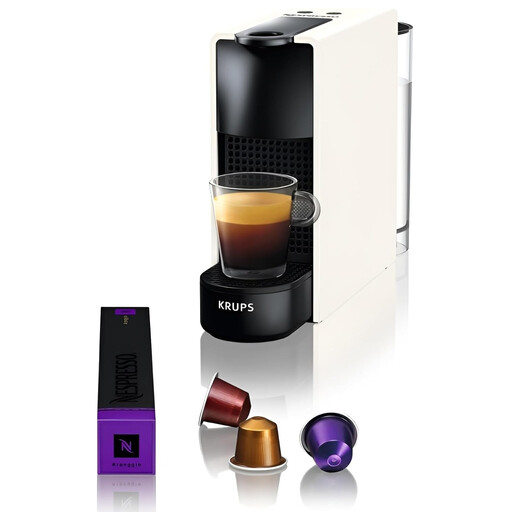 Image unavailable
KRUPS Nespresso Essenza Mini, white
For a capsule-based routine with minimal preparation before each cup. Check that your capsules are compatible with the Nespresso Original system specified for this model.
0.6 L reservoir and stated power of 1200 W.
View on Joybuy
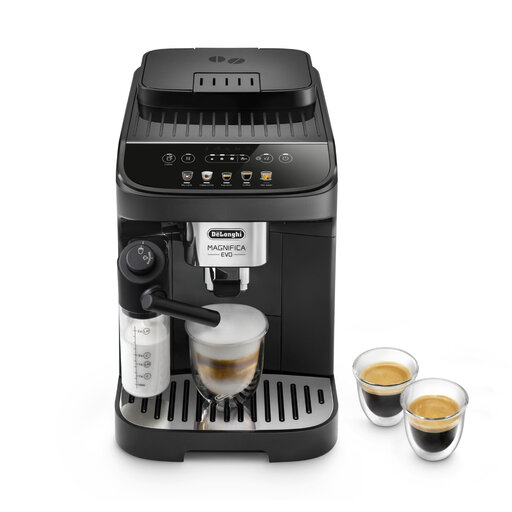 Image unavailable
De’Longhi Magnifica Evo LatteCrema ECAM290.61.B, black
Worth considering if you want automatic coffee preparation and milky drinks. Check which recipes are available on the ECAM290.61.B and what rinsing is required for its milk system.
View on Joybuy
 Image unavailable
HiBREW H16, automatic espresso machine with grinder
Make coffee from whole beans using the touchscreen controls. If you plan to make cappuccinos, check how the milk system works and how to clean it.
The product name specifies six coffee varieties.
View on Joybuy
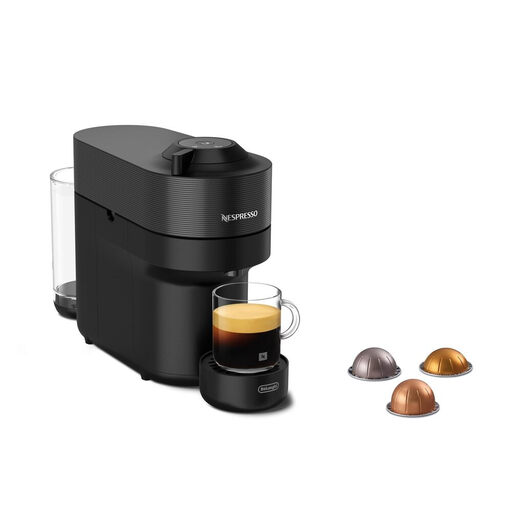 Image unavailable
Nespresso Vertuo Pop ENV90.B, black
For making coffee with Vertuo capsules. Check their availability and local collection options. Don’t confuse this format with Nespresso Original capsules.
The product name specifies a 0.6 L reservoir.
View on Joybuy
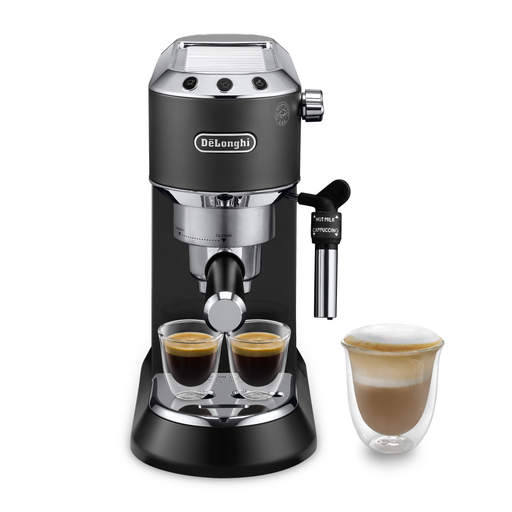 Image unavailable
De’Longhi Dedica Style EC685.BK, black
For making coffee with a portafilter, giving you the opportunity to get hands-on. If you want to prepare milk, check which accessories you’ll need and what cleaning is required after use.
Stated rated pressure of 15 bar. Check the reservoir capacity on the model’s product page before deciding where to put it.
View on Joybuy
Frequently asked questions
Should you descale your espresso machine at set intervals?
No. The same schedule won’t suit every machine. De’Longhi says water hardness and how often you make coffee affect how frequently you need to descale. Follow the alert and instructions for your model.
Does a milk carafe mean you don’t have to clean the machine after making a cappuccino?
No. Check what needs rinsing after use, which parts can be removed and whether they’re dishwasher-safe. Philips describes the LatteGo carafe on selected models as having two parts and no tube, but cleaning instructions vary by machine.
Can all coffee capsules go in the yellow recycling bin?
No. Instructions depend on the capsule and your local council. Nespresso recommends checking local options for its capsules; ADEME says that capsules thrown away with household waste are incinerated or sent to landfill.
What should you do with an old electric coffee machine in France?
Look for a reuse option or, if the machine has reached the end of its life, use the recycling route for electrical and electronic equipment. ADEME mentions options including taking it to a shop or recycling centre, or handing it to a delivery driver. Check which options are available locally.


