Busy people with limited space
If you want your everyday coffee without complicated settings, start by comparing capsule and pod machines. Still, check which type of coffee each machine takes and what routine care it needs.


For your daily coffee at home, start by choosing between pre-portioned coffee, whole beans and a portafilter machine. Capsules and pods keep the steps per cup to a minimum, a grinder automates preparation from beans, while a portafilter gives you more hands-on control. Whichever you choose, check the consumables, space required and care instructions for the specific model.
If you want your everyday coffee without complicated settings, start by comparing capsule and pod machines. Still, check which type of coffee each machine takes and what routine care it needs.
A bean-to-cup espresso machine lets you use whole beans while automating preparation. It could suit you if you have room for the machine and are happy to look after its different parts.
A portafilter machine is worth considering if you want to control the dose and extraction, or make milk-based drinks with a machine that has the right features. You’ll also need to be happy to clean it after use.
Worth considering: for pre-portioned coffee with minimal handling, in a machine that is usually compact.
Bear in mind: your choice of coffee depends on the machine’s capsule system. Nespresso, for example, has separate Original and Vertuo systems.
Worth considering: for a simple, pre-portioned brew without switching to whole beans.
Bear in mind: you’ll need pods that fit the machine, and to descale it as set out in the instructions.
Worth considering: if you want to measure out your coffee and take part in the extraction process.
Bear in mind: there are more steps, and you’ll need to clean the portafilter and baskets after use.
Worth considering: if you want to choose your own beans while automating the preparation of each cup.
Bear in mind: these machines are generally bulkier, and you’ll need to keep on top of the settings and maintenance.
| Criteria | What to check | Who it matters to |
|---|---|---|
| Speed and simplicity | Compare the steps involved in making a cup with those needed for everyday cleaning. | If you want each coffee to take minimal effort, simplicity matters more than settings; around 29 % of consumers would put it at the top of their list. |
| Coffee choice and consumables | Check which capsule or pod format the machine takes, or whether you can use your choice of beans. | If I want to enjoy different coffees without relying on a particular portion format, choosing my own beans becomes essential; around 29 % of consumers would make this their top priority. |
| Control over preparation | For a portafilter machine, check what’s included and whether it has a steam wand or built-in grinder. | If I want to measure out my own espresso or make a milk-based drink, I’m happy to put in a few more steps; around 21 % of consumers would put this control first. |
| Maintenance and waste | Check the descaling process, which parts need cleaning and which consumables the model requires. | If I want to keep on top of maintenance and the packaging used in my routine, these considerations guide my choice; around 21 % of consumers would make them a priority. |
A capsule with the same brand name as your machine won’t necessarily work with every range. Nespresso, for example, says its Original capsules are compatible with its Original machines.
Check the machine’s exact system, then look at the coffee options and cup sizes available before choosing.
Simple preparation doesn’t mean you can skip maintenance. De’Longhi says descaling frequency varies, in particular, with water hardness and use; for the Bambino Plus, Sage recommends cleaning the portafilter and baskets after every session.
Check the instructions for the model you’re considering to see whether its maintenance routine suits you.
Remember to allow time for cleaning and to budget for the care products specified for the model.
In France, ADEME says aluminium and plastic capsules can go in the packaging recycling bin. However, this guidance doesn’t eliminate the individual packaging used with each serving.
If you want to cut down on single-serve portions, compare whole beans and portafilter machines too. For capsules, follow the recycling guidance for the material they’re made from.
A range of capsule machines, including the Original and Vertuo systems.
Machines that use soft coffee pods for pre-portioned brews.
A range that includes bean-to-cup espresso machines and manual models.
Portafilter machines, with some models combining several preparation features.
These Joybuy machines showcase four systems to compare for making coffee at home: soft coffee pods, capsules, a bean grinder and a portafilter. Start by choosing the preparation method that suits you, then take a closer look at the specific model.
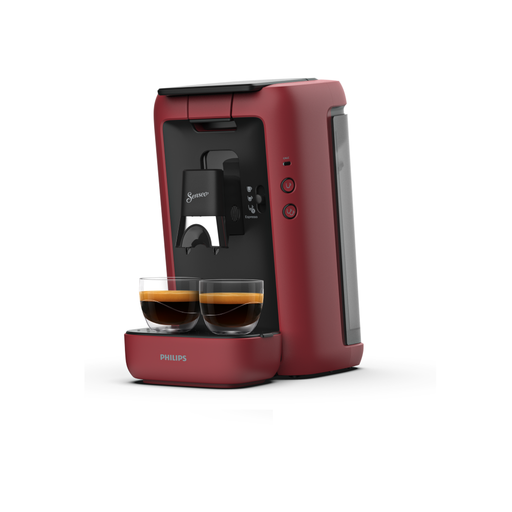 Image unavailable
Worth considering if you prefer pre-portioned coffee made with soft pods. Check which pod format this model takes and how to descale it.
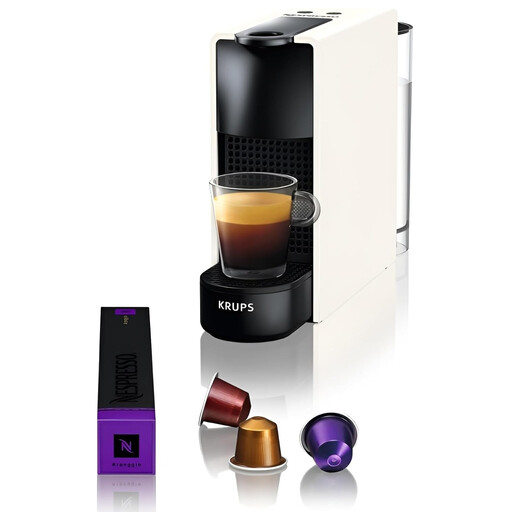 Image unavailable
Worth considering if you want to make coffee with capsules. The product name lists a 0,6 L reservoir and 1 200 W power rating; check the exact capsule system and care instructions for this model.
 Image unavailable
This bean-to-cup machine is for people who want to make coffee from whole beans. The LatteGo system is included with this variant; check the cleaning steps and care products it requires.
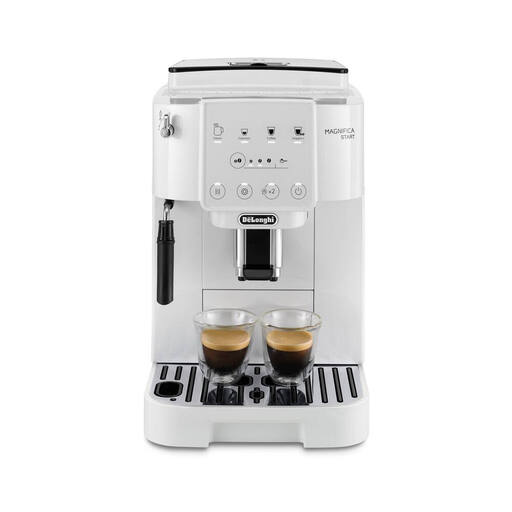 Image unavailable
Another option for making coffee from whole beans with a built-in grinder. If you’re thinking of making milk-based drinks, check what’s involved in using the steam wand and how to clean it afterwards.
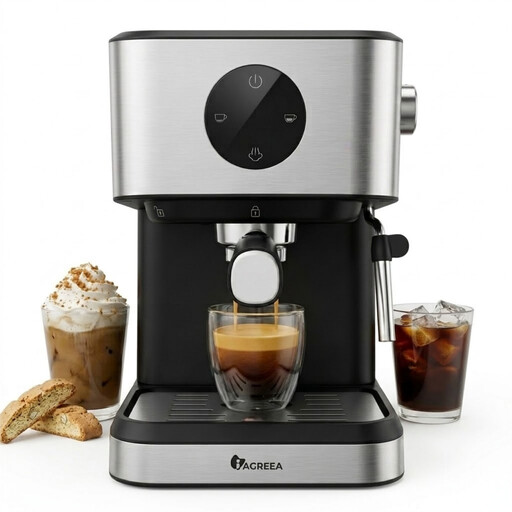 Image unavailable
Worth considering if you want to take a hands-on approach with a portafilter and use a steam wand. The title lists a rated pressure of 20 bar; check the reservoir capacity of the variant on sale and what coffee you’ll need to use it.
No, compatibility depends on the exact system. Nespresso says its Original capsules work with its Original machines. Check the machine and capsule ranges, and don’t assume Original and Vertuo systems are interchangeable.
Follow your model’s alert and instructions. Que Choisir recommends descaling every two to three months on average, while De’Longhi notes that frequency varies with water hardness and use. This average doesn’t replace the guidance for your specific machine.
ADEME says aluminium and plastic capsules can go in the packaging recycling bin. If you’re unsure about the guidance where you live, or about a different material, check with your local authority.
Search for the exact model number on the manufacturer’s support page, then check the relevant manual, parts, accessories and repair options. Philips provides these sections for its coffee machines, but you’ll need to check what’s available for each model.