For anyone who wants to keep things simple
If you make one or more espressos a day in a small kitchen, a capsule machine is worth considering. Check its actual footprint and the capsule format it accepts.


If you make espresso at home regularly, start by deciding what you want to do for each cup: insert a capsule or pod, control the extraction with a portafilter, or use beans in an automatic machine. Depending on the model, a grinder lets you adjust your drink, but it takes up space and needs regular maintenance. Before choosing, also check the consumable format, dimensions and cleaning requirements.
If you make one or more espressos a day in a small kitchen, a capsule machine is worth considering. Check its actual footprint and the capsule format it accepts.
Depending on the model, an automatic grinder lets you choose your beans and adjust the strength or size of your drink. It’s a better fit if you’re happy to empty the containers and follow the cleaning instructions in the manual.
With a portafilter, you measure and tamp the ground coffee before brewing, then clean the filter. It’s a different routine from making coffee with a capsule or an automatic machine.
Consider this if: you want to make espresso with minimal effort and need a machine that fits into a small space.
The trade-off: your choice of capsules depends on which system the machine accepts.
Consider this if: you’d rather insert a pod than measure out ground coffee.
Check: the exact type of pod the machine accepts and the drink it makes.
Consider this if: you want to measure and tamp your coffee, then take a hands-on approach to making your drink.
The trade-off: each cup takes a few steps, and the filter needs cleaning.
Consider this if: you regularly use beans and want to adjust your drink without preparing the portafilter yourself.
The trade-off: allow space for the machine and access to its containers, as well as time for regular cleaning.
| Feature | What to check | Your needs |
|---|---|---|
| Consumables | Check which formats a capsule or pod machine accepts. For a grinder, check the maintenance products listed in the manual. | I want to be able to use the right consumables for my machine easily, day after day. |
| Maintenance | Compare access to the containers and brewing unit, rinsing requirements and descaling process. Also check how to clean the milk system, if there is one. | Am I happy to empty and rinse parts every day, or would I prefer a routine with fewer steps? |
| Space and noise | Measure the available space, including room to fill the water tank and remove the containers. If noise matters, look for comparable noise measurements for the models you’re considering. | Will my machine sit on a small worktop, or do I make coffee at a time when grinder noise could be an issue? |
| Drinks and settings | Check the volume and strength settings, whether it can make several cups in a row and, for milk-based drinks, the type of steam wand or milk system. Que Choisir’s testing protocol also assesses how consistent the volume is across several cups. | I want to customise my espresso, serve several people or make milk-based drinks too. |
One-touch brewing doesn’t mean there’s no maintenance. Que Choisir points out that the grounds and drip containers need regular rinsing, as does the brewing unit, though less often.
Check the manual for your chosen model to see how to remove these parts and clean and descale the machine.
One capsule format won’t necessarily work with a different system. Nespresso, for example, says that its Original and Vertuo systems use different technologies.
Check the machine’s exact system, which capsules are compatible and what drink sizes it offers.
Pressure alone doesn’t tell you how well a machine handles several cups in a row. Que Choisir’s testing protocol also looks at volume consistency, temperature, flow and preheating.
For the models you’re interested in, compare these features as well as ease of use and cleaning requirements.
These examples illustrate different brewing systems; check the specifications for each individual model.
In France, De’Longhi offers manual portafilter machines as well as automatic machines with grinders.
Philips’ LatteGo range includes automatic machines that make milk-based drinks.
Nespresso has two capsule systems, Original and Vertuo. The brand describes Original as being for espresso lovers.
These Joybuy machines showcase three ways to make espresso at home: use beans with an automatic grinder, take a hands-on approach with a portafilter or insert a capsule. First, choose the routine that suits you, then check the specifications of the model you’ve picked.
 Image unavailable
Consider this bean-to-cup machine if you regularly want to make espresso from beans and are also interested in milk-based drinks. Check the LatteGo system’s maintenance requirements and which accessories are included with this model.
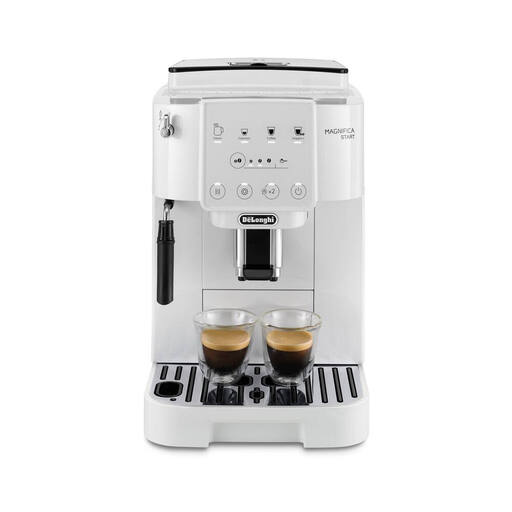 Image unavailable
This automatic espresso machine makes coffee from beans. If you’d also like to make milk-based drinks, check how the milk is prepared on this model and what steps are involved.
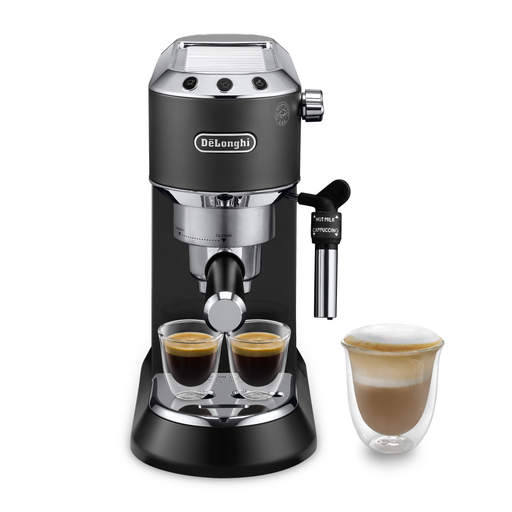 Image unavailable
A portafilter machine is a good choice if you want to measure and tamp the coffee yourself, then clean the filter after use. The product name states a pressure of 15 bar, but that alone isn’t enough to judge the result. Check the water tank capacity of your chosen version before you buy.
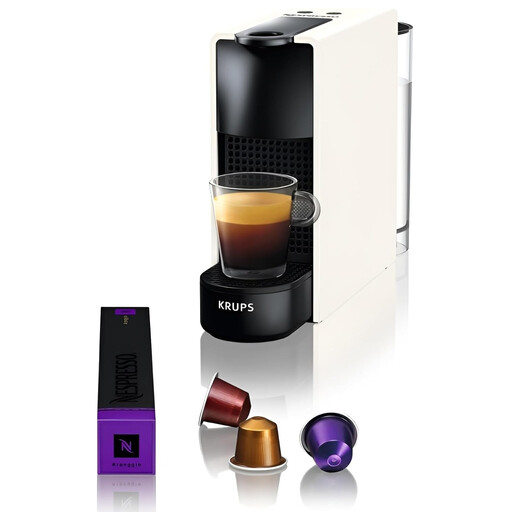 Image unavailable
Consider this capsule machine if you’d rather insert a capsule than prepare a portafilter. Its name states that it has a 0.6 L water tank and 1200 W of power; check which capsule system it accepts before choosing.
 Image unavailable
This automatic machine with a grinder and touchscreen is designed for households considering a range of drinks. The product name advertises six varieties. Check the recipe list and milk system cleaning instructions to see whether they suit your routine.
A capsule machine is a good place to start if you want to keep preparation simple and save space. Still, measure the area available and check which capsule format the model accepts.
As Que Choisir points out, you’ll need to rinse the grounds and drip containers regularly and the brewing unit less often. Follow the model’s manual for descaling and, if it has a milk system, cleaning that too.
ADEME says to put aluminium or plastic capsules in the paper and packaging recycling collection. Check the guidance for other materials and find out which facilities are available near you.
Coffee machines aren’t included in the list of products covered by the repairability index published for France by the Ministry of the Economy in August 2026. To compare models, look instead at their documentation, access to maintenance parts and the after-sales service terms on offer.