
Livraison le jour même ou le lendemain

Qualité garantie

Débloquez vos offres de bienvenue: Livraison GRATUITE | Jusqu'à -80 % | 30 jours d'essai gratuits à JoyPlus
Téléchargez l'application
Moving a sheet of glass, a large tile or a marble worktop takes more than finding a good handhold. You need to maintain a secure grip while reducing the effort required and the risk of dropping the material. An electric vacuum lifter creates suction automatically, making smooth materials easier to carry and position.
Bear in mind, though, that product listings can blur the difference between theoretical capacity, operating conditions and what’s actually included. Here are the key points to check before you buy, along with a selection of models for different needs.
A stated capacity of 200, 250 or 300 kg doesn’t mean the lifter can handle that weight in every situation. Its grip depends on factors such as how flat, clean and dry the surface is, the temperature and the rigidity of the material.
A flexible sheet, dusty surface or slightly porous substrate can all reduce suction. The manufacturer’s stated capacity should therefore be treated as a maximum value achieved under specific conditions, not as a guarantee for every job.
Without a clear indicator, you have to rely on how the grip feels. When handling glass or polished stone, this makes it harder to check the suction as you move the material.
An electric vacuum lifter with a pressure gauge, whether mechanical or digital, lets you check the pressure before lifting and spot a drop in suction sooner. Of course, it doesn’t replace checking the surface or using additional restraints.
A professional vacuum lifter is primarily designed for smooth, non-porous surfaces such as glass, mirrors, painted metal, rigid plastic, glazed tiles, polished marble and granite. It’s rarely suitable for raw concrete, highly porous wood, heavily textured surfaces or greasy materials.
Before placing your order, also check the battery life, charging time, battery type, what’s included in the case and whether replacement wear parts—particularly seals and filters—are available.
A 20 to 20.5 cm pad provides a suitable contact area for large panels and sheets. The rubber should remain flexible, have an even lip and be compatible with the material you’re handling. A thick pad can accommodate minor contact imperfections, but it won’t make a porous surface airtight.
For a vacuum lifter for glass, a vacuum lifter for marble and granite, or a lifter for an aquarium, check that it’s stated to be suitable for delicate, polished surfaces. Always clean the pad and the surface before use.
Look for a display that’s easy to read, with a clearly marked, sufficiently wide pressure range. Some models have a sensor that automatically restarts the pump if the vacuum drops. This can be useful when transporting materials over a longer period, but you should still keep an eye on the indicator.
For a vacuum lifting device, also check how it releases the load. A double-press button or dedicated valve helps prevent accidental release, provided you follow the instructions in the manual.
Compare the safe working load with the actual weight of the sheet, leaving a safety margin. For a large pane of glass, worktop or heavy panel, using two spaced-apart lifters will generally improve control and distribute the load more evenly. Even so, they’re no substitute for proper planning on site.
An anti-slip handle, a sturdy case and spare batteries are particularly useful for glaziers, tilers, stone installers and aquarium fitters. An electric tile lifter should also allow precise positioning, not just vertical lifting.
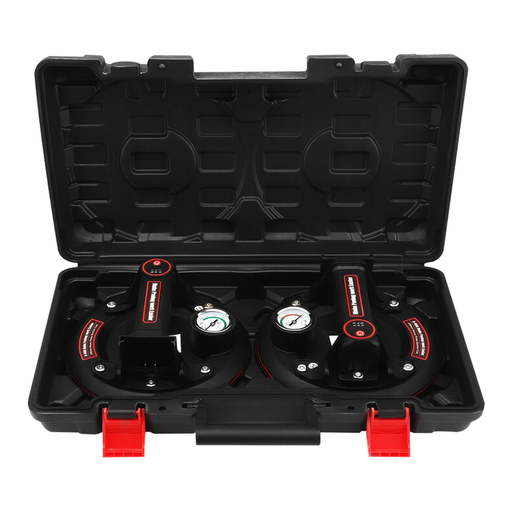
Why it’s a good fit: An electric lifter with a digital display, anti-slip handle and 20 cm pad, suited to occasional jobs involving glass, tiles or an aquarium.
The real-time indicator means you don’t have to rely on the feel of the handle alone. The listing states a maximum capacity of 200 kg per unit, subject to the conditions of use.
Built-in pump, digital display, 15 mm rubber pad and stated compatibility with glass, granite, marble and tiles.
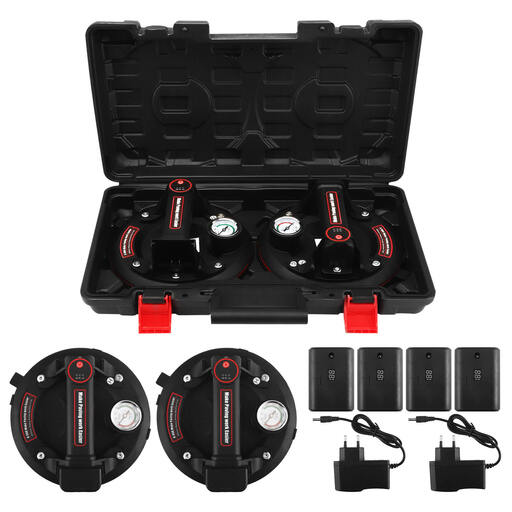
Why it’s a good fit: This two-unit set is well suited to large sheets that need a distributed grip and coordinated handling.
The digital pressure gauge gives you a clear visual reference, while the four stated batteries help reduce interruptions during a job.
Two 20 cm vacuum lifters, 15 mm cushioning pads, a carry case and a stated capacity of 200 kg per unit.
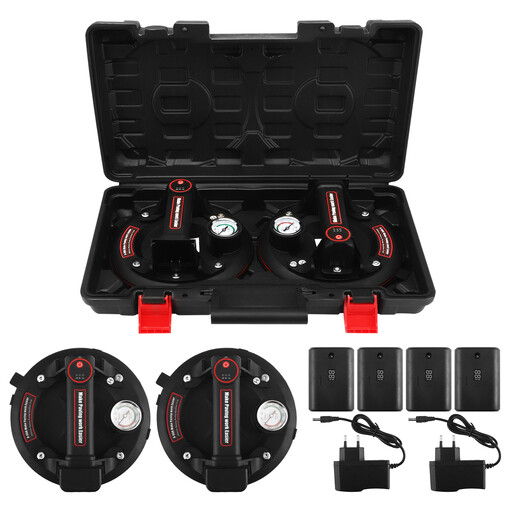
Why it’s a good fit: With two operating modes and four stated batteries, this model is designed for frequent jobs involving panels, aquariums, glazing and sheets.
The stated automatic sensor helps compensate for a drop in pressure, while the gauge lets you keep an eye on the vacuum as you handle the material.
Stated capacity of 250 kg, vacuum hold of up to 6 hours according to the listing, a spare filter and a carry case.
We’ve put together a comprehensive, regularly updated selection of products that meet these strict selection criteria and European safety requirements.
Glass, mirrors, smooth tiles, polished marble, polished granite, some metals and non-porous plastics are generally suitable. Rough, dusty, wet or porous surfaces can prevent the lifter from creating a strong enough vacuum.
Charging time depends on the battery capacity and charger. Check the instructions for your chosen model and charge it before heading to the job site. For professional use, a spare set of batteries can help reduce downtime.
It makes it easier to grip and move smooth materials, but it doesn’t replace certified lifting equipment, a crane or a restraint when the weight, height or site conditions call for one.