
Livraison le jour même ou le lendemain

Qualité garantie

Débloquez vos offres de bienvenue: Livraison GRATUITE | Jusqu'à -80 % | 30 jours d'essai gratuits à JoyPlus
Téléchargez l'application
Buying home cleaning products seems straightforward… until bottles pile up in the cupboard, the scents become overpowering, or the formulas turn out to be unsuitable. A multi-purpose cleaner may not be right for your wooden floor, liquid laundry detergent doesn’t work the same as capsules, and disinfectants come with certain precautions.
Before you fill your cupboard, check three things: the surface you need to clean, the dosage you actually need and the safety instructions. These criteria help you avoid unnecessary purchases and choose products that suit your home, your family and your cleaning routine.
A product marketed as multi-purpose may work on many washable surfaces, but not necessarily on untreated wood, aluminium, natural stone or surfaces that come into contact with food. The same goes for floor cleaners: tiles, PVC, laminate and wooden floors all react differently to moisture and cleaning agents.
Read the list of approved surfaces carefully, and always test on an inconspicuous area if the material is fragile or delicate.
A pleasant smell tells you nothing about the degreasing power or the correct dosage. Claims like “natural”, “green” or “eco-friendly” also deserve to be backed up with concrete evidence: EU Ecolabel, Ecocert certification, recyclable packaging, refillable format or a percentage of naturally derived ingredients.
A refill can indeed reduce the amount of plastic used, but it often requires precise dilution. In that case, the instructions are your best source of information.
Bleach, drain cleaners and some oven cleaners are corrosive or irritating. Never mix them with an acid, vinegar or another household product. Contact between a chlorine-based product and an acidic substance can release toxic gas.
Wear gloves when the label recommends it, ventilate the room and store products out of reach of children. For biocidal products, follow the usage instructions on the packaging to the letter.
For everyday cleaning in the kitchen and bathroom, a ready-to-use multi-purpose cleaner is often the most practical option. A bicarbonate of soda formula can help cut through grease and neutralise odours, but surfaces that come into contact with food usually need to be rinsed with drinking water.
For wooden floors, choose a floor cleaner explicitly compatible with washable wood surfaces. The Carolin product with linseed oil extract is suitable for modern wooden floors. It is used diluted with a mop or cloth and, according to its product sheet, does not require rinsing. Still, avoid using too much water, even with a suitable product.
To compare prices, look at the number of washes stated rather than just the bottle volume. A liquid laundry detergent of 1.53 l designed for 34 washes, or a detergent of 1.6 l stated for 32 washes, gives you a fairer idea of the cost per cycle. The dosage should then be adjusted according to the load, the level of soiling and the water hardness.
Laundry capsules offer a pre-measured dose, but they must be kept dry and out of reach of children. Do not open them or place them in the detergent drawer if the instructions say to put them directly into the drum.
If certain ingredients concern you, check for the presence of fragrances, enzymes, preservatives or allergens listed on the label. Certifications and precise information are more meaningful than vague promises: EU Ecolabel, Ecocert certification, recyclable packaging, plant-based fibres or a refillable bottle.
Wipes are handy for a quick clean, but they generate more waste each time you use them. Never flush them down the toilet, even if they are labelled as compostable or biodegradable.
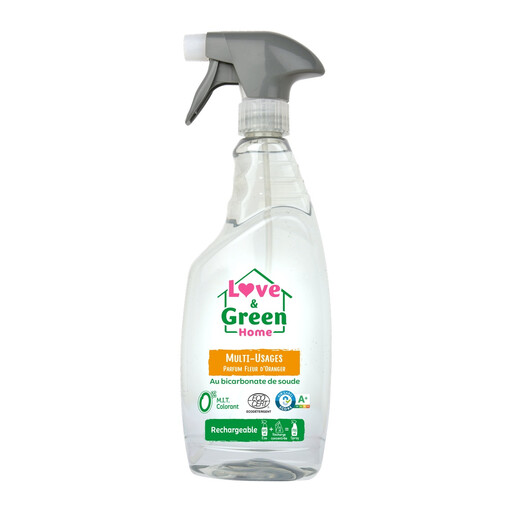
Why this suits this profile: Its 750 ml spray is ideal for everyday cleaning of tables, worktops and other washable surfaces. The bottle is refillable and recyclable.
The product sheet states 99.7% naturally derived ingredients, with no MIT, no colourants and no listed allergens.
A bicarbonate of soda formula, orange blossom fragrance and Ecocert Ecodetergent certification, according to the information provided.
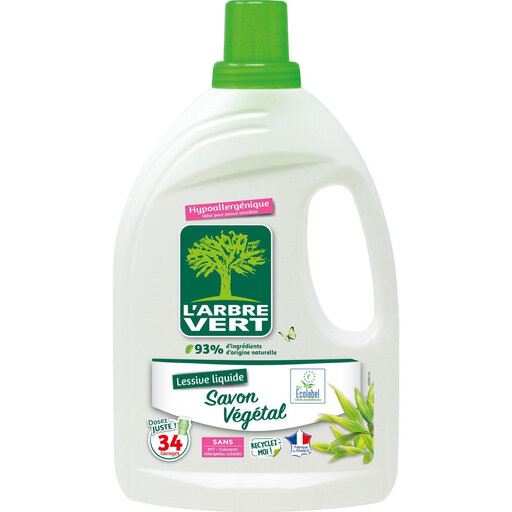
Why this suits this profile: This liquid laundry detergent is aimed at households looking for a family-sized format, a formula described as hypoallergenic and a clearly stated number of washes: 34 in total.
The stated number of washes makes it easy to compare the cost per cycle, without being guided solely by the bottle volume.
93% naturally derived ingredients stated, no colourants or optical brighteners, with the EU Ecolabel according to the product sheet.
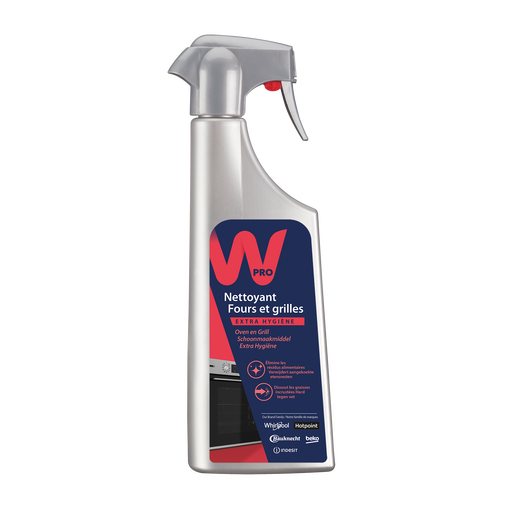
Why this suits this profile: This oven cleaner is designed for appliances, hobs, barbecues and extractor hoods covered in baked-on grease or stubborn residue.
The instructions specify the action time depending on temperature and prohibit use on painted or aluminium surfaces.
A 500 ml spray with a lemon fragrance, usable on warm or cold surfaces, with thorough rinsing recommended.
We’ve put together a comprehensive, real-time selection of products that meet these criteria as well as European safety requirements.
A multi-purpose cleaner is suitable for hard, washable surfaces used every day. However, it does not replace a product designed for wooden floors, ovens, laundry or drains. Check the approved materials before each use.
Liquid laundry detergent lets you adjust the dosage to the load and level of soiling. Capsules contain a pre-measured dose and are quick to use. In both cases, compare the price per wash, taking into account water hardness and the manufacturer’s recommendations.
Follow the date or instructions on the packaging. Store each product in its original container, sealed, in a dry place away from heat. If the smell, colour or texture changes, check the label before using.