
Livraison le jour même ou le lendemain

Qualité garantie

Débloquez vos offres de bienvenue: Livraison GRATUITE | Jusqu'à -80 % | 30 jours d'essai gratuits à JoyPlus
Téléchargez l'application
Between multi-surface sprays, concentrated formulas, bleach-based products and cordless stick vacuum cleaners, it’s not always easy to know what to pick. An attractive price doesn’t necessarily mean a lower cost per use, and a promise of disinfection doesn’t guarantee the product is suitable for every surface.
To choose home cleaning products that work for your daily routine, focus on four things: the intended use, the dosage, compatibility with materials, and the precautions listed on the label.
A multi-purpose cleaner can remove dirt, grease marks and unpleasant odours without being a surface disinfectant. When a product claims to have disinfectant action, the label must specify the intended uses and the contact time required.
The LA CROIX products shown here, for example, contain chlorinated bleaching agents, but their description clearly states they are not intended for disinfection. The ST MARC spray and the SANYTOL cleaner, on the other hand, are presented as surface disinfectants, with precise usage instructions.
A 5-litre container might seem more economical. It only becomes genuinely worthwhile if you regularly use a concentrated floor cleaner or need to treat large areas. In a small flat or for occasional use, a 750 ml or 1-litre bottle will often be more practical and easier to store.
Instead, compare the ready-to-use volume, the recommended dosage and the number of rooms you need to clean, rather than the price on the bottle.
A pleasant fragrance tells you nothing about whether the product is compatible with varnished parquet, aluminium or painted surfaces. Similarly, a formula described as “powerful” may require rinsing or the use of gloves.
Home cleaning products should be chosen based on the surface and the type of soiling. Cooking grease, limescale, dust, pet marks and everyday maintenance don’t necessarily need the same formula.
For everyday cleaning, a kitchen and bathroom cleaner or a multi-purpose cleaner is generally suitable for hard, washable surfaces, as long as you follow the manufacturer’s recommendations. For hobs, extractor hoods, grills and heavily soiled worktops, it’s better to go for a household degreaser.
For floors, check compatibility with tiles, vinyl, laminate or treated surfaces. A concentrated floor cleaner lets you adjust the amount used, but the dilution stated must be followed carefully.
Chlorinated formulas, particularly bleach, require special care. They can cause serious skin and eye damage. Never mix them with an acidic product or one containing ammonia: dangerous gases could be released.
With any household cleaning product:
A 750 to 800 ml spray is handy for spot-treating a sink or hob. A 1 to 1.5-litre bottle is better for regular cleaning of several rooms. 5-litre containers are aimed more at large families, bigger homes and professional cleaners.
For floors, also think about vacuuming. A cordless stick vacuum cleaner is particularly convenient for quick passes. If you have pets, choose a model with a brush designed to reduce hair and fur tangling.
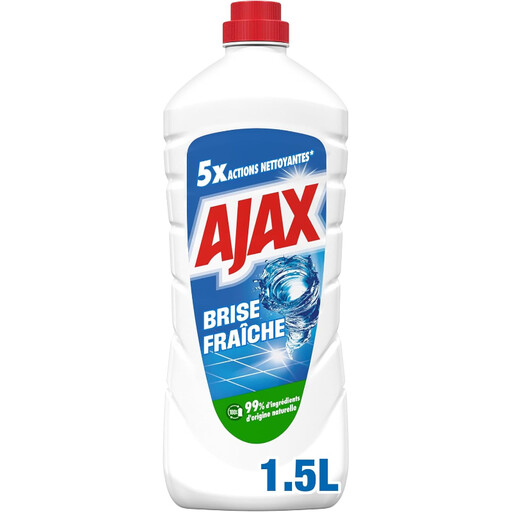
Why this choice suits this profile: With its 1.5 L format and the option to use it with cold water, this product is suitable for everyday cleaning of floors, the kitchen and the bathroom.
The formula can be used neat or diluted as directed. This helps you avoid overdosing the product for everyday tasks.
A 1.5 L format, multi-surface use and a bottle made from recycled plastic, according to the product description.
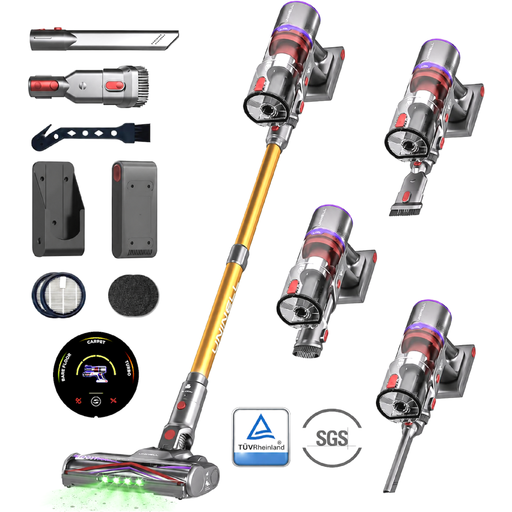
Why this choice suits this profile: This cordless stick vacuum combines a removable battery, a touchscreen, a flat-parking position and several accessories to adapt to different uses.
The maintenance alerts shown on the screen let you monitor blockages and the condition of the brush, two common causes of loss of suction.
The description claims up to 65 minutes of runtime, seven-stage filtration and an anti-tangle brush.
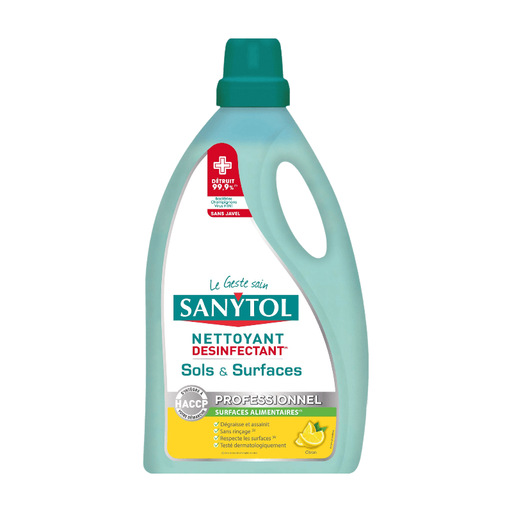
Why this choice suits this profile: The 5 L container is suitable for large areas, households that clean frequently and professional cleaners working to a defined protocol.
The description distinguishes between use on floors and surfaces and the need to rinse food-contact surfaces with drinking water.
A bleach-free formula, a large format and instructions referencing EN 13697, EN 1650 and EN 14476 standards, according to the product description.
No. Mixing bleach with an acidic product, a descaler or ammonia can release dangerous gases. Use one product at a time and rinse the surface before applying another.
It varies depending on the formula and storage conditions. Keep the container tightly closed, away from heat and direct sunlight. When an expiry date or batch number appears on the packaging, rely on that information.
Follow the recommended dilution, adjust the amount to the level of soiling and only choose a concentrated format if you use it regularly. With a cordless vacuum, empty the bin after each use and clean the filter as per the instructions to maintain performance.