
Livraison le jour même ou le lendemain

Qualité garantie

Débloquez vos offres de bienvenue: Livraison GRATUITE | Jusqu'à -80 % | 30 jours d'essai gratuits à JoyPlus
Téléchargez l'application
Buying home cleaning products seems simple enough… until a stain remover discolours a garment, a degreaser damages a delicate surface, or a device runs out of battery mid-clean. Between the promises of “maximum power”, the bulk sizes and the so-called multi-purpose products, a few checks are in order before you head to the checkout.
A product marketed as multi-purpose isn’t necessarily suitable for all surfaces. Bleach can be useful for certain household tasks, but it risks damaging textiles, wood, aluminium or painted surfaces. Always check the list of compatible materials on the label.
Never mix bleach with an acidic product, vinegar or ammonia: dangerous gases can be released. Also wear gloves and ventilate the room when the precautions on the label recommend it.
Claims like “fast-acting”, “no scrubbing” or “professional strength” are primarily marketing speak. In reality, the result also depends on the nature of the stain, the dwell time, the temperature and the surface.
For a fabric stain remover or a laundry stain remover, it’s always best to test on an inconspicuous area first. A grease stain isn’t treated the same way as a wine, coffee or berry stain.
The price of the bottle alone isn’t enough to compare two products. Look at the net contents, the number of doses, the amount needed per use and how often you’ll need to replace it. For a cordless vacuum cleaner, also consider the actual battery life, the cost of filters and the availability of replacement parts.
Start by identifying exactly what you need to clean:
Read the hazard pictograms, the main ingredients and any usage restrictions. Powders containing oxygen-based bleaching agents should not be applied to wool, silk or leather if these materials are excluded in the instructions. With sprays, ventilate the room and avoid inhaling the spray mist.
Biocidal products must be used in accordance with their label. A claim like “eliminates 99.9% of bacteria” should be understood as an indication valid under the intended conditions of use, not as a universal guarantee regardless of the context.
A pre-treatment spray is suitable for occasional use, while a 960 g or 1.45 kg powder will be more practical for regular laundry maintenance. In households with children or pets, a spot-cleaning device can complement liquid products. However, check its power, tank capacity and maintenance requirements.
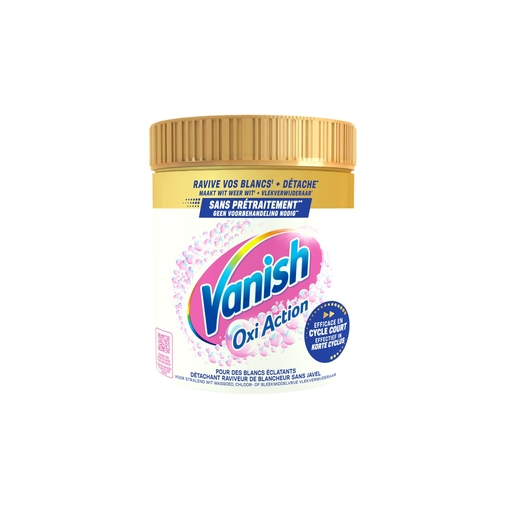
Why this choice suits this profile: Its powder format, supplied with a measuring scoop, is ideal for regular laundry and can be used on white or coloured items according to the instructions on the packaging.
Its bleach-free formula prevents confusion with a chlorinated whitener. A colourfastness test is still essential, though.
Oxygen-based bleaching agents at 30% or more according to the supplied sheet, effective from 20°C as stated, and includes a measuring scoop.
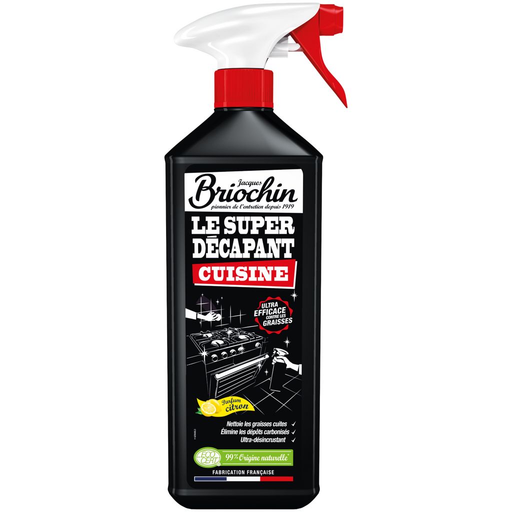
Why this choice suits this profile: It tackles cooked-on grease and residue on ovens, hobs, extractor hoods and barbecue grills, with a foam application.
The list of incompatible surfaces, including aluminium and delicate materials, reminds you that a powerful degreaser isn’t universal.
500 ml, 99.5% naturally derived ingredients according to the sheet, ECOCERT certification mentioned, and made in France.
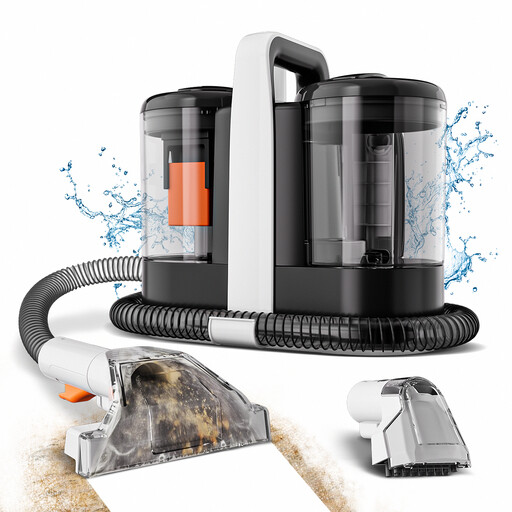
Why this choice suits this profile: This 600 W corded device is designed for spot-cleaning carpets, rugs, sofas, car seats and areas particularly exposed to pets.
Mains-powered operation means you don’t have to wait for a battery to recharge during repeated stain removal. The trade-off is that you need a nearby socket.
Rated power of 600 W, suction of 15 kPa according to the sheet, and a design dedicated to wet textile cleaning.
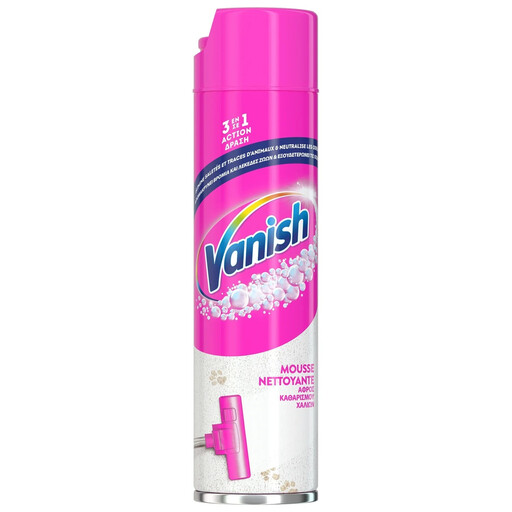
Why this choice suits this profile: Its 600 ml format is ideal for spot-cleaning carpets, rugs and upholstery fabrics, especially for dealing with everyday little accidents.
The instructions recommend testing the product and dabbing the area, which reduces the risks associated with overly vigorous scrubbing or fibre incompatibility.
Spray application, claimed action on odours and fibres, and intended for routine maintenance and localised stains.
We’ve put together a comprehensive, real-time updated selection of products that meet these demanding criteria and European safety regulations.
A laundry stain remover specially formulated for grease, such as a pre-treatment spray or a dedicated solution, will generally be more suitable than a simple whitening powder. First test the product on a discreet area, check the colour fastness, follow the garment’s care label, then run the recommended wash cycle.
This depends on its formula, its category and the information on the packaging. Respect the date or batch information when available, keep the container tightly closed and store it away from heat and light. A change in smell, texture or colour should prompt you to check the product before using it.
A cordless vacuum cleaner makes quick clean-ups and moving from room to room easier, but its battery life and condition limit how long you can use it. A corded device designed for stain removal can run continuously, at the cost of less freedom of movement. The right choice therefore depends on the area to be cleaned, how often you clean and the availability of nearby sockets.