
Livraison le jour même ou le lendemain

Qualité garantie

Débloquez vos offres de bienvenue: Livraison GRATUITE | Jusqu'à -80 % | 30 jours d'essai gratuits à JoyPlus
Téléchargez l'application
Between promises of long-lasting freshness, "5-in-1" formulas and express disinfection, it's not always easy to find your way through the range of home cleaning products. The price on the label doesn't always reflect the real cost per use, and a heavily fragranced product won't necessarily tackle the source of a bad smell.
Before you fill your cupboard with toilet gel, laundry disinfectant, fabric deodoriser or moisture absorber, take the time to compare their function, instructions for use, lifespan and any precautions. A few simple checks can help you avoid unsuitable purchases and nasty surprises.
A pleasant scent can simply mask an odour for a while, without removing the residue that's causing it. An odour neutraliser or disinfectant should be chosen according to the surface and intended use: toilet bowl, laundry, fabric, ambient air or worktop.
In the loo, a deodorising toilet rim block usually releases its fragrance with every flush. However, it doesn't replace regular cleaning with a brush and a suitable product.
A multi-purpose cleaner isn't necessarily compatible with marble, untreated wood, aluminium or delicate fabrics. Similarly, a concentrated kitchen degreaser may require thorough rinsing and a patch test on an inconspicuous area.
The term "multi-action" often refers to several functions within a very specific context. It doesn't mean the product can be applied without care to all materials.
A product sold in a pack or marketed as long-lasting can actually work out more expensive if it needs replacing frequently. To compare offers, look instead at the number of washes, the stated duration per refill or the number of flushes covered.
With moisture control solutions, also check that the format is compatible with your device. A 300 g moisture absorber refill won't necessarily fit a unit designed for 450 g tablets.
Start by identifying the problem you need to tackle:
For a biocidal product, the label and instructions remain the reference. Standards such as EN 1276, EN 13697, EN 14476 or EN 16615 should be understood in light of the specific conditions of use stated by the manufacturer: dilution, contact time, surface type and any rinsing required.
A 750 ml bottle, a box of 28 doses and a pack of two refills can't be compared directly. Don't just look at the total quantity: check the number of uses stated instead.
Laundry capsules must be stored in a dry place and handled with dry hands. Toilet blocks should be replaced when they have dissolved or their effectiveness drops. For moisture absorbers, the lifespan depends on factors such as temperature, humidity levels, ventilation and room size.
Never mix a product containing bleach with an acidic product, ammonia or another cleaner. This type of mixture can release dangerous fumes. Wear gloves if the label recommends it, ventilate the room and always store products out of reach of children and pets.
Aerosol sprays require particular care: keep them away from flames and heat sources, do not smoke while using them and follow the stated storage temperature. Before spraying a fabric deodoriser over a large area, test it on an inconspicuous spot.
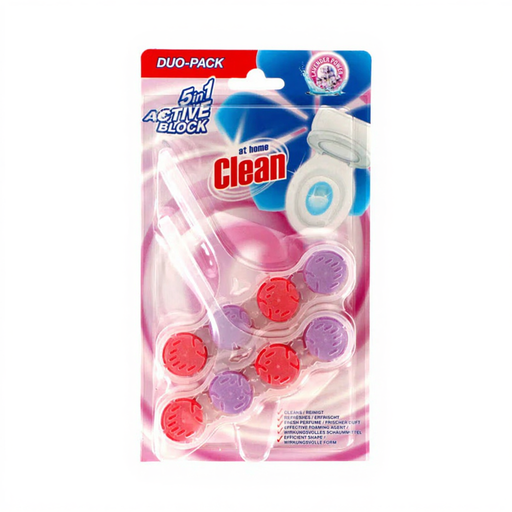
Why this choice suits this profile: this block clips directly onto the rim of the toilet bowl and releases a cleaning agent and a fragrance with every flush, with no complicated installation.
With two blocks and a stated lifespan of around four to six weeks, the replacement schedule is easy to plan ahead.
No cage to install, activation with every flush and a lavender fragrance. The block should be replaced once fully dissolved.
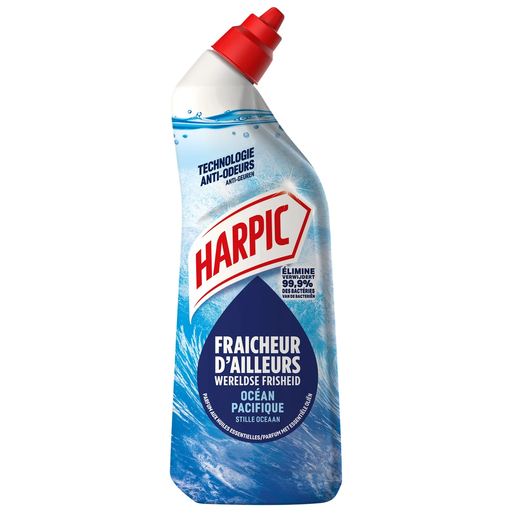
Why this choice suits this profile: this toilet gel is applied under the rim, releases an oceanic fragrance and claims an anti-limescale action on the label.
The instructions recommend leaving it to work for a few minutes, then brushing and rinsing. The fragrance is therefore not the formula's only selling point.
A 750 ml bottle, an adhesive gel and benzalkonium chloride stated at 0.29 g per 100 g. Follow the applicable biocide warnings and rinsing instructions.
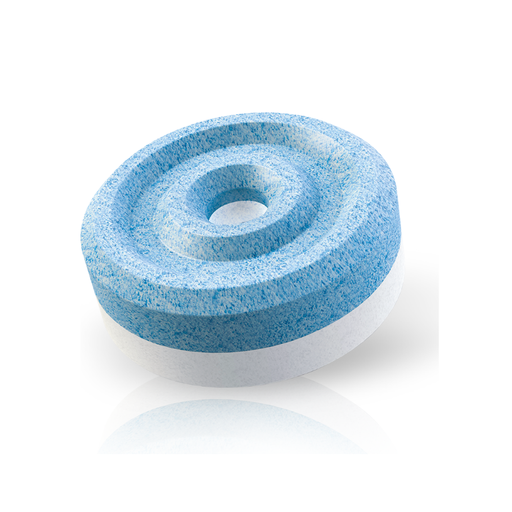
Why this choice suits this profile: this pack is suitable for rooms prone to condensation, cupboards, caravans and, more broadly, homes where humidity needs to be monitored regularly.
Compatibility with units that accept 450 g or larger refills is stated, reducing the risk of choosing the wrong one when restocking.
Absorbent crystals, odour control and a fragrance with green and floral notes. Depending on room conditions, the stated lifespan can be up to three months.
Start by finding the source of the problem: poorly dried laundry, a drain, a bin, condensation or the toilet bowl. A moisture absorber can help in poorly ventilated spaces, while a fabric odour neutraliser is suitable for curtains, rugs and compatible fabrics. Replace the refill when it's saturated, following the indicator or the instructions in the manual.
It depends on the formula and the instructions on the label. Some laundry disinfectants are poured into the fabric softener compartment and are designed for low-temperature cycles. However, they should not be applied directly to dry clothes. Before each use, check which fabrics are suitable, the recommended dosage and any incompatibilities.
The lifespan depends on the block's size, the water flow and the number of daily flushes. The models we offer generally state several weeks, but this estimate varies according to use. To keep control of your budget, compare the number of blocks, the stated duration and whether you might need additional cleaning with a toilet gel.