
Livraison le jour même ou le lendemain

Qualité garantie

Débloquez vos offres de bienvenue: Livraison GRATUITE | Jusqu'à -80 % | 30 jours d'essai gratuits à JoyPlus
Téléchargez l'application
A multi-surface cleaning cream, scouring sponge or cleaning brush may seem interchangeable. However, the wrong choice can scratch a hob, wear out after just a few uses or leave residue that is difficult to rinse away. To choose home cleaning products that are genuinely suitable, it is better to compare the intended use, material and format rather than relying solely on the promises on the packaging.
A highly abrasive surface may remove a baked-on stain, but it is not necessarily suitable for polished stainless steel, non-stick coatings, glass or painted furniture. Metal scourers and some scouring sponges should be reserved for robust surfaces.
Even a sponge advertised as scratch-resistant deserves to be tested on an inconspicuous area. The pressure applied, particles present on the surface and condition of the coating can completely change the result.
A 2-litre bottle can be a sensible choice for a large family, a busy household or professional use. For occasional cleaning, it takes up more space and can sometimes be less convenient to handle. Compare the price per litre with the amount you actually use, rather than with the bottle price alone.
The term ‘multi-surface’ does not mean you can ignore the instructions for use. A Cif cleaning cream or equivalent formula may be suitable for many surfaces, but delicate surfaces, untreated wood, glossy finishes and appliances that are still hot require particular care.
Before choosing your bathroom cleaning products or kitchen cleaning accessories, start by identifying the surfaces involved:
Scratch-resistant sponges are designed to reduce the risk of marks, but they are not compatible with every surface. Traditional scouring models are better suited to saucepans, dishes and hard-wearing surfaces. For heavily ingrained dirt, stainless steel scourers provide more powerful action, but come with significant restrictions for fragile materials.
A durable product should also remain easy to maintain. Check the number of pieces, whether they can be machine washed and the recommended replacement schedule. Several Spontex models specify washing at 40 °C or 70 °C depending on the reference, but this does not mean that a sponge can be kept indefinitely. Rinse it after every use, wring it out and leave it to air dry.
For liquid or cream formulas, check the volume, storage conditions and warnings. Wearing gloves may be useful in the event of prolonged contact with certain products.
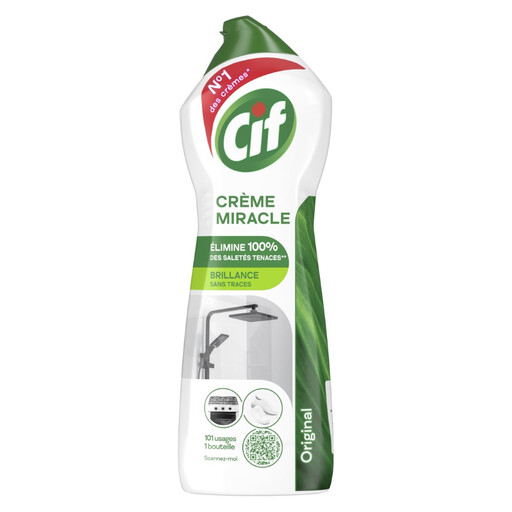
Why this choice suits this profile : at 750 ml, this format is suitable for everyday kitchen and bathroom cleaning without taking up the space of a professional container. The product information recommends applying it to a damp cloth or sponge, followed by rinsing.
This practical volume reduces the risk of buying a large format that is unsuitable for occasional use. For sensitive surfaces, testing it on a discreet area is still recommended.
A versatile 750 ml cream, an original fragrance and an application designed for use with a damp sponge or cloth.
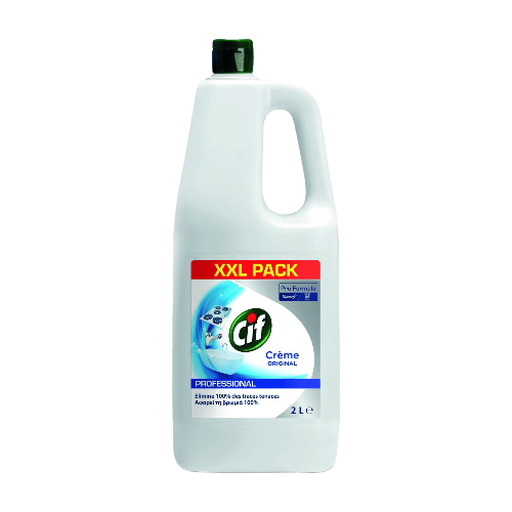
Why this choice suits this profile : this 2-litre container is aimed at households that clean frequently and professionals looking for a long-lasting format. The formula is described as easy to rinse and suitable for different types of surface.
Its volume makes it easier to compare the price per litre and avoids accumulating small bottles when consumption is high.
A professional 2-litre format, application with a damp cloth or sponge, and rinsing with water or a clean damp cloth.
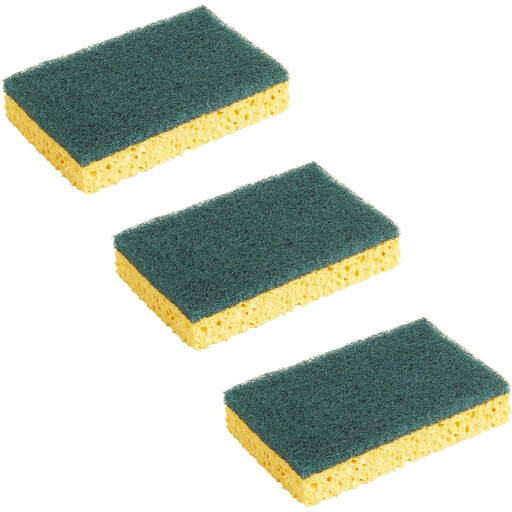
Why this choice suits this profile : this pack of three sponges is suitable for busy kitchens, house shares and small establishments. The product information states that they have an absorbent cellulose section and can be machine washed at 70 °C.
Machine washing helps extend the sponge’s useful life. However, the recommendation to replace it regularly prevents you from continuing to use it once it has worn out or developed unpleasant odours.
A pack of 3 pieces, absorbent cellulose, a protected scouring surface and machine washing at 70 °C.
We have put together a complete, real-time updated selection of products that meet these demanding criteria and European safety regulations.
To avoid mixing up uses, set aside a sponge or brush for each area: the kitchen, bathroom and general surfaces. A cleaning brush with a short handle is ideal for sinks, grout and awkward corners. Scratch-resistant sponges are better suited to hobs, frying pans and surfaces that require gentle action. A cleaning eraser can remove pencil or sole marks, but dampen it and use it without applying too much pressure.
When dealing with ingrained grease, first leave the product to work according to the instructions on the label. You will often need to scrub less vigorously as a result. Never mix different cleaning products, particularly those containing bleach, and ventilate the room while using them.
Choose a sponge explicitly described as non-scratch and check the manufacturer’s recommendations. Avoid metal scourers and scouring surfaces designed for stubborn dirt. Even with a soft sponge, test it on a small area first and do not use the abrasive side if the instructions advise against it.
It depends on how frequently it is used, the level of moisture and the condition of the surface being cleaned. Rinse the sponge after every use, wring it out and leave it to dry. Several product listings recommend replacing it approximately every two months, or sooner if it starts to fray, becomes misshapen or develops an odour.
No. It may be sufficient for many everyday tasks, but delicate surfaces, significant limescale deposits, grout and untreated materials may require a specific product or accessory. Always read the label, follow the recommended dosage and test the product first on an inconspicuous area.