
Livraison le jour même ou le lendemain

Qualité garantie

Débloquez vos offres de bienvenue: Livraison GRATUITE | Jusqu'à -80 % | 30 jours d'essai gratuits à JoyPlus
Téléchargez l'application
Between cleaning, storage, waste sorting and caring for a baby, practical home and baby essentials should above all fit into your everyday routine. A detailed product description is not always enough to make the right choice. Some essential features can easily go unnoticed, while marketing claims may promote comfort or durability that can be difficult to assess.
Here are the criteria to review before comparing prices, along with a selection of products suited to different types of households in France.
In a photograph, a piece of furniture or a step ladder may look compact. However, once unfolded, the width of its legs or the space needed to open a lid can make a significant difference in everyday use. For a 3-step folding ladder, measure both the storage space and the area available in front of a cupboard or shelving unit.
The same applies to a rolling storage trolley: check the width of passageways, particularly between the fridge, worktop and base units.
A large-capacity waste-sorting bin means you can empty it less often, but it also takes up more space and can become difficult to move when full. For stackable storage boxes, the litre capacity is not everything: the maximum load, lid stability and access to boxes stored underneath are just as important.
Damp recesses encourage build-up and unpleasant odours. A crevice cleaning brush should therefore be slim enough to reach seals, while remaining easy to rinse and dry. In baby care, all components should be washed according to the instructions and checked regularly.
For size 3 baby nappies, the weight stated on the packaging is a more reliable guide than age alone. For bottles intended for storing breast milk, check compatibility with your breast pump, the closure system and the instructions for freezing.
For a cleaning accessory, ABA and PP are valued for their light weight. That said, the shape of the bristles and the flexibility of the head often play a more important role in reaching corners. A brush measuring 23 × 3 × 2 cm, for example, may be suitable for narrow spaces, provided its flexibility matches the surface being cleaned.
For a step ladder, check the maximum static load, the presence of non-slip feet and its stability on a flat surface. Always follow the instructions: do not stand on the top step and avoid using the ladder on a wet or greasy floor.
A compartmentalised bin should be assessed according to how its sections are divided, rather than solely by its total capacity. A 60 litre system divided into 30 L, 17 L and 13 L will not meet the same needs as a model with two larger compartments.
For stackable boxes, check the maximum load and whether handles or castors are included. A 60 L Curver Totem box has a stated maximum load of 15 kg. It must under no circumstances be used as a seat, step or support for a child.
Accessories intended for breast milk should offer a reliable seal, clearly readable graduations and a material suitable for food contact. The Medela bottles featured here are made from polypropylene, with no BPA or BPS according to their product description, and are fitted with screw-top lids. Check every component before use and never use a cracked or damaged part.
For nappies, check the fit around the waist and thighs. A pack of size 3 baby nappies may be suitable for a baby weighing 6 to 10 kg, depending on the product reference, but the child’s build remains the deciding factor.
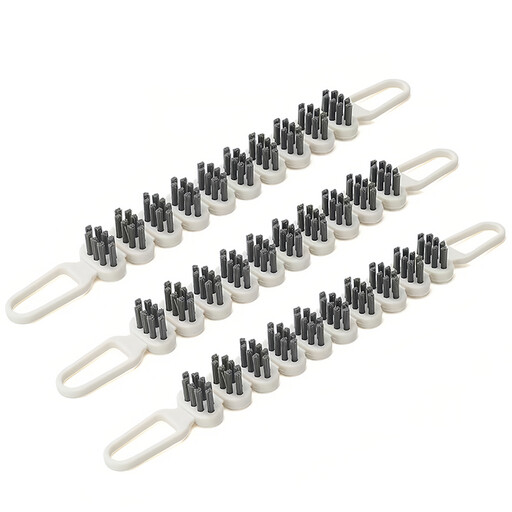
Why this choice suits this profile : This set of three brushes is designed for seals, taps and hard-to-reach spaces in the bathroom and kitchen, so you do not need to buy several accessories separately.
The flexible head and soft bristles tackle often-forgotten recesses, while the compact design makes rinsing and storage easier.
3-piece set, stated dimensions of 23 × 3 × 2 cm, ABA and PP materials, suitable for use in the kitchen, bathroom and on taps.
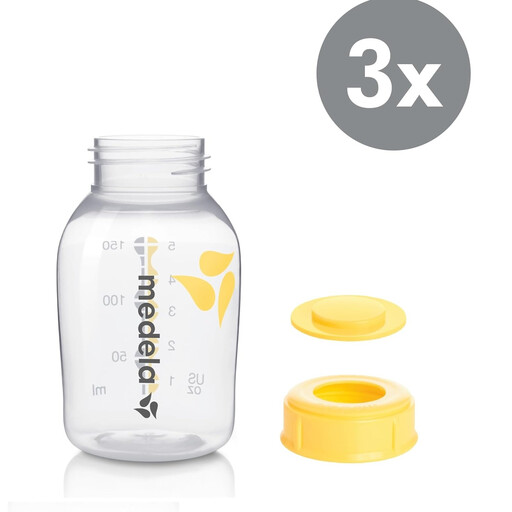
Why this choice suits this profile : This set of three containers is ideal for parents who want to simplify expressing, storing and feeding by using the same format throughout.
The screw-top lids and graduations help prevent handling errors and make it easy to identify the amount stored at a glance.
3 x 150 ml bottles, compatible with Medela breast pumps, dishwasher-safe in the top rack and suitable for freezing according to the product description.
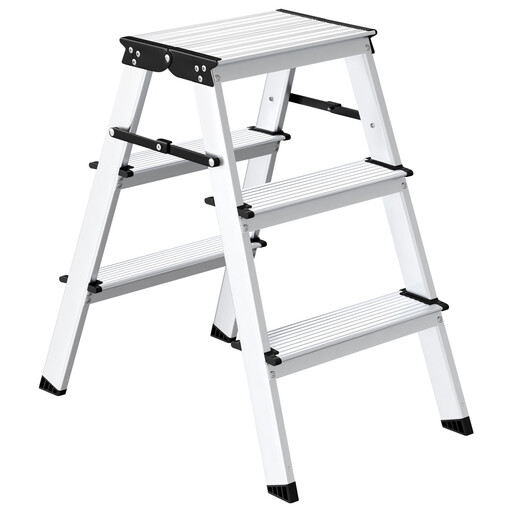
Why this choice suits this profile : It is suitable for households that regularly use a step ladder to reach high cupboards, clean, change a light bulb or put up decorations.
The ladder folds away for easy storage and features textured steps and non-slip feet. It must always be placed on a flat, stable surface.
Aluminium, PP and steel construction, stated weight of 2.3 kg, maximum static load of 150 kg and dimensions of 36.6 × 59.7 × 57 cm.
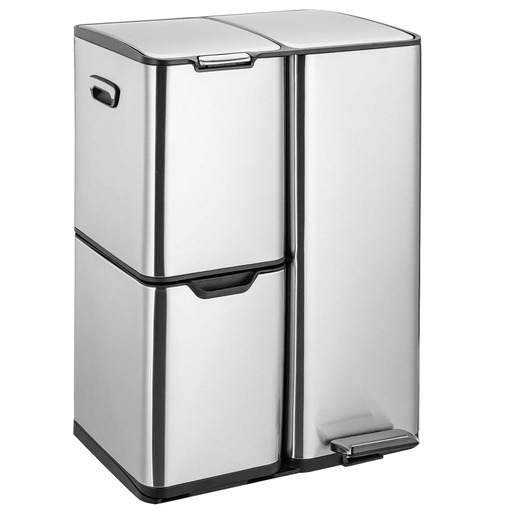
Why this choice suits this profile : Its 30 L, 17 L and 13 L sections may suit a kitchen where you want to separate several types of waste without installing three separate bins.
The capacity of each compartment is clearly specified, so you can check whether the smaller bins will genuinely accommodate your volume of glass, packaging or general waste.
3 compartments, pedal-operated opening and a structure combining steel and PP according to the product title.
We have brought together a complete, real-time selection of products that meet these demanding criteria and European safety standards.
Start with the constraints of your home: the width of passageways, available storage space and frequency of use. Then group products by function, such as cleaning, waste sorting or storage. This approach helps you avoid duplicate purchases and accessories that take up too much space.
The storage period depends on the storage recommendations followed, the temperature and the container used. The Medela bottle description states that they can be kept in the fridge for up to three days at 4 °C and in the freezer for up to 180 days at −18 °C. Always check the instructions that apply to your situation and inspect the bottle before every use.
Start by checking the weight range shown on the pack. For the product reference featured here, it is 6 to 10 kg. Then check that the nappy is not tight around the waist or thighs and remains securely in place. If irritation occurs, stop using it and seek advice from a healthcare professional.