What should you compare before deciding?
Start with the appliance and its role in your household, then check whether a repair would do the job. When comparing new models, choose a function and capacity that suit the way you use it.
| What matters |
What to check before buying |
Consumers concerned |
| Appliances used for refrigeration all year round |
Compare kWh/year and the fridge and freezer capacities of appliances of the same type. |
If my fridge or freezer runs all year, I want to know how much energy it uses without choosing a size that doesn’t suit my needs. Around 27% of consumers would make this a priority. |
| Laundry, dishwasher or drying cycles |
For a washing machine or dishwasher, check the kWh/100 cycles, capacity and length of the reference programme; consider tumble drying separately. |
If I run frequent cycles, I’m looking for an appliance that suits my loads and the time I have available. This would be the top priority for around 33% of consumers. |
| Repair or replacement |
Ask for a diagnosis or quote, then check whether parts are available and how long the repair will take. |
If my appliance can still be used, I’d rather find out whether it can be repaired before buying another one. Around 27% of consumers would prioritise this decision. |
| Cooking and installation |
Check the appliance type, capacity, installation dimensions and the cooking methods you use. |
When replacing a cooking appliance, I want it to suit my kitchen and the meals I make. This would be the main concern for around 13% of consumers. |
Brands to consider
There are no brands to feature in this section.
Fridges, laundry and tumble dryers at Joybuy
These appliances may suit you if you’re replacing a fridge-freezer, washing machine or tumble dryer. Before choosing, check that the capacity and installation requirements work for your household, then compare the energy information for the exact model with the way you use it.
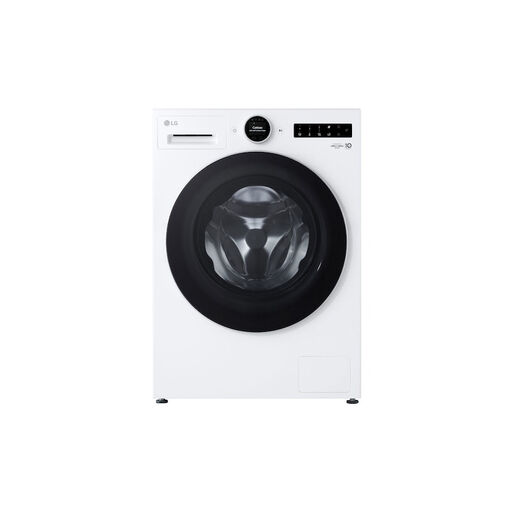 Image unavailable
LG F4WX851Y front-loading washing machine, 11 kg, white
Worth considering if your laundry loads call for an 11 kg capacity.
Class A is stated in the product name. Check the energy use, the length of the programme you’re interested in and the dimensions of the exact model before comparing it with your current appliance.
View at Joybuy
 Image unavailable
Candy CFQQ5T817EPS fridge-freezer, four doors, 467 L
Consider this if you need plenty of storage space and a four-door appliance.
The product name states 467 L, class E and Total No Frost. Check the split between fridge and freezer capacity, the dimensions and the kWh/year for the exact model before comparing it with another fridge or freezer.
View at Joybuy
 Image unavailable
Sonlu CC-520WE fridge-freezer, 444 L
Worth considering if you’re looking for a 444 L capacity and the appliance’s configuration suits your kitchen.
The product name states class E and frost-free operation. Check the dimensions, compartment capacities and kWh/year for the exact model: total capacity alone isn’t enough to compare two appliances.
View at Joybuy
 Image unavailable
Candy TCA464TM4-S ProWash 500 washing machine, top-loading, 6 kg
Worth considering if your usual loads are around 6 kg and a top-loading machine suits the space you have.
The product name states class B, a spin speed of 1,400 rpm and 17 programmes. To assess its electricity use, check the kWh/100 cycles and the conditions for the reference programme of the exact model.
View at Joybuy
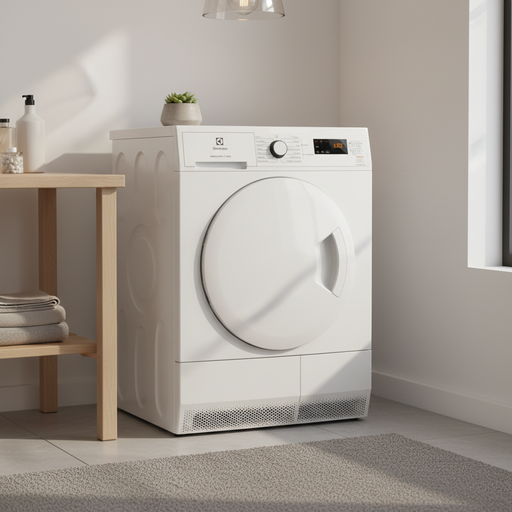 Image unavailable
Electrolux EDH1018CD GentleCare condenser tumble dryer, 8 kg
Consider this if you use a tumble dryer regularly and its 8 kg capacity suits your loads.
The product name mentions OptiSense. Check the dimensions, installation requirements and energy information for the exact model; you’ll also need to factor in how often you dry clothes to estimate running costs.
View at Joybuy
Frequently asked questions
How can I estimate the electricity cost of a new fridge?
Multiply the annual energy use shown in kWh/year for the exact model by the per-kWh rate, including VAT, on your tariff. Compare appliances with similar capacities and features. To estimate the difference compared with your old fridge, you’ll also need to know its energy use under comparable conditions.
How do I use the kWh/100 cycles figure for a washing machine or dishwasher?
Divide the figure shown by 100, then multiply it by your annual number of cycles and the per-kWh rate, including VAT, on your tariff. The European Commission uses this unit on the labels for these appliances; also check the capacity and programme that the figure relates to.
Is the regulated tariff enough to predict my bill?
No. Use the rate that applies to your own contract. The Energy Regulation Commission says regulated tariffs change twice a year; if your contract has different time-of-use rates, factor these into your estimate.
Does every home appliance have a durability index?
No, the applicable index depends on the product category. The Ministry of the Economy states that, since 2025, the durability index has replaced the repairability index for certain categories. Check which one applies to the model you’re considering, but don’t use it to infer the appliance’s electricity consumption.


