What should you check before choosing?
First decide which features you’re missing in everyday life. Then check how each appliance you’re considering fits your home and household routine.
| Priority |
What to check |
My needs |
| Actual use |
Note what the appliance does, how often you expect to use it and whether any equipment you already own can do the same job. Choose a capacity that suits the quantities you actually need to process. |
I want to cover the cooking, food storage, laundry or cleaning tasks that matter in my household, without buying an appliance for a use that’s only hypothetical. |
| Installation |
Measure the space and access points, and check the water supply, drainage and electrical supply required by the model. For a washing machine in a bathroom, Promotelec mentions earthing and 30 mA residual-current protection in particular. |
I’m interested in a compact model if I can actually get it into the room, connect it and use it there. |
| Cycles and usage |
Compare capacity, energy and water consumption, cycle times and noise on a like-for-like basis. For washer-dryers, the European Commission says the label provides information including these figures per cycle or per 100 cycles, depending on the measurement. |
If the appliances will run near living areas, noise and cycle times matter just as much to me as capacity. With a combined model, I need to check the washing and drying figures separately. |
| Second-hand |
Check the condition and features of the specific appliance on offer, which functions have been tested, the seller’s status and the applicable guarantee terms. According to the French Ministry of the Economy, a refurbished product is a second-hand item whose functions have been tested and which has been repaired or restored if necessary. |
I’m happy to consider a second-hand appliance if it suits my needs and I know exactly what I’m buying and who I’m buying it from. |
A guide to brands
The models featured here include appliances from Heinrich's, Bosch, Samsung and CHiQ. A brand name alone won’t tell you whether a model is right for your home, so compare its features, capacity and installation requirements with your needs.
Appliances to consider on Joybuy
These models illustrate different options for washing dishes, doing laundry and storing food. Before adding an appliance, compare its features with your needs and your home’s installation requirements.
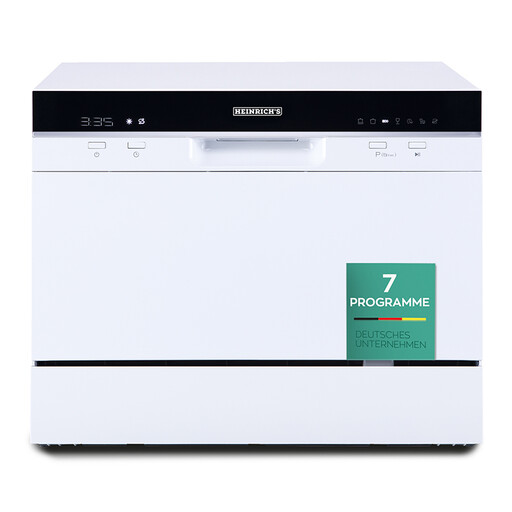 Image unavailable
Heinrich's HTG 8840 Weiss worktop dishwasher
Worth considering if you wash dishes regularly and have room for a worktop appliance in your kitchen. The product title lists seven programmes and a noise level of 47 dB. Check the usable capacity, consumption per cycle, water supply and drainage requirements for your installation; the tap adaptor isn’t included.
View on Joybuy
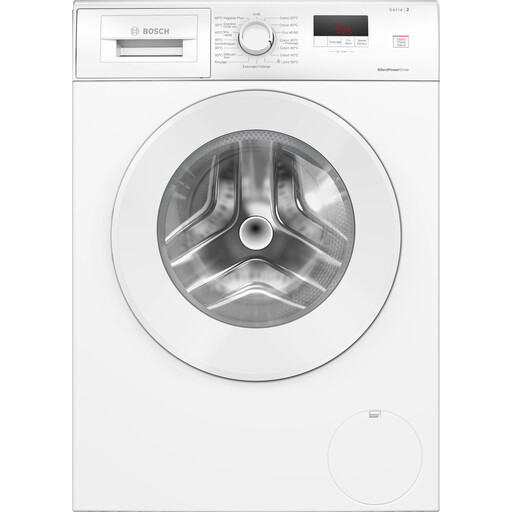 Image unavailable
Bosch WGE02407FR, 7 kg front-loading washing machine
This freestanding washing machine is worth considering if your household’s laundry needs justify a 7 kg capacity. The product title states 1,400 rpm and an energy rating of A. ADEME says that 7 kg is enough for most people, though that won’t be right for every household. Check the dimensions and connection requirements in the model’s instructions.
View on Joybuy
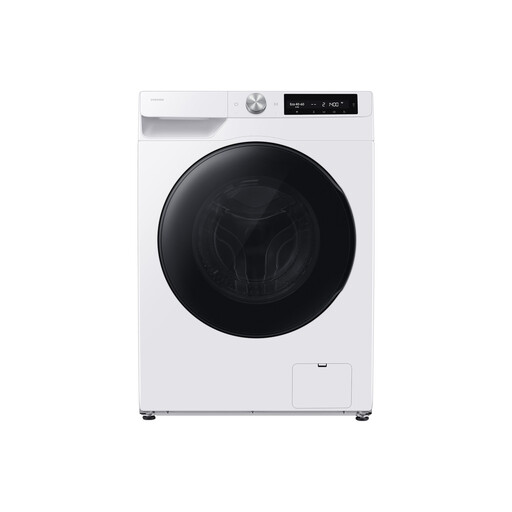 Image unavailable
Samsung WD10HG6U34BEU3, 10 kg / 6 kg washer-dryer
A combined model is worth considering if your household regularly washes and dries clothes but has limited space for two appliances. The product title lists a 10 kg washing capacity and a 6 kg drying capacity, so you won’t be able to dry a full wash load in a single cycle. Compare the figures for both functions on the model’s label, and check the water, drainage and electrical connections.
View on Joybuy
 Image unavailable
CHiQ JR227LSE, 227 L silver fridge freezer
This model has two compartments, making it an option for households that need both a fridge and a freezer. The product title lists 153 L for the fridge, 74 L for the freezer, a width of 54 cm and an energy rating of E. Compare the capacity with your habits, and check the model’s height, depth, clearance requirements and annual energy consumption.
View on Joybuy
Frequently asked questions
Do I need to buy all my appliances as soon as I move in?
No. Start with the tasks your household needs to manage from day one, then see which ones genuinely call for another appliance. ADEME recommends buying only what you need, so you can wait before buying anything for an uncertain or occasional use.
What should I check before buying a washing machine or dishwasher?
Measure the space and access points, then check the water supply, drainage and electrical supply required by the model. Promotelec recommends a dedicated socket near the water supply and drainage points for these appliances. Always check your plans against the instructions and the existing installation.
Can I install a washing machine in a bathroom?
Yes, provided the installation meets the safety requirements for that location. Promotelec mentions earthing and a circuit protected by a 30 mA residual-current device in particular. If you’re unsure whether the location is suitable, ask someone to check the room and electrical circuit.
Is a washer-dryer always suitable for a small home?
No. A combined design doesn’t automatically mean that both functions will suit your needs. Check the washing and drying capacities, cycle times and consumption figures separately. The European Commission says washer-dryer labels provide information including energy and water use, cycle time and noise.
What should I ask about a refurbished appliance?
Ask about the condition of the specific appliance on offer, which functions have been tested, any repairs and the seller’s identity. According to the French Ministry of the Economy, a refurbished appliance is a second-hand item whose functions have been tested and which has been repaired or restored if necessary. Also check its installation requirements and which guarantees apply to the sale.


