Households replacing a fridge
You’re looking for enough fridge space for your usual food shop and want to compare an appliance that runs continuously. ADEME points out that size and extra features can also affect energy consumption.


Start with the appliance you actually use: refrigeration runs continuously, while the cost of washing and cooking depends more on how many cycles you run. ADEME and the European Commission use different comparison measures for different appliances. You can then work out the cost using your electricity tariff and how often you use the appliance, without assuming that replacing it will always save you money.
You’re looking for enough fridge space for your usual food shop and want to compare an appliance that runs continuously. ADEME points out that size and extra features can also affect energy consumption.
You’re comparing washing machines and dishwashers based on your loads, the cycles you use, water consumption and the duration of the reference programme. ADEME and the European Commission specify the units and programmes these figures relate to.
You want to choose an oven or hob without confusing power, energy per cooking cycle and annual consumption. For ovens, the European Commission distinguishes between consumption per cycle and the cooking mode.
First, identify the function and capacity your household needs. Then compare appliances using the same unit and reference programme.
| What to consider | What to check | Who this is for |
|---|---|---|
| Fridge capacity and energy consumption | Compare the kWh/year and the capacity in litres of each compartment for appliances with a suitable function and capacity. | If you’re replacing an appliance that runs continuously, you want enough fridge space for your usual food shop without choosing an oversized model. Around 29 % of consumers prioritise everyday refrigeration. |
| Whether you need a separate freezer | Check the usable capacity in litres, kWh/year and available space, then compare these with the freezer capacity of a fridge-freezer. | If the freezer compartment in your fridge-freezer isn’t big enough for your usual stocks, you’re looking for extra capacity to suit your needs. Around 14 % of consumers prioritise a separate freezer. |
| Cost of dishwasher cycles | For the eco programme, check the kWh/100 cycles, litres per cycle, capacity and duration. | If you run your dishwasher regularly, you’ll want to choose a capacity and programme figures that suit your usual loads. Around 22 % of consumers prioritise regular dishwashing. |
| Washing machine capacity and cycle costs | Compare the kWh/100 eco 40-60 cycles, litres per cycle, capacity in kg and duration. | If you do laundry regularly, you’re looking for a suitable capacity without choosing a larger drum than you need. Around 21 % of consumers prioritise regular laundry. |
| Energy per cooking cycle | Compare the kWh/cycle for the same mode across ovens suited to the dishes you cook; don’t apply this measurement to a hob. | If you’re replacing your cooking appliances, you’ll want to compare oven figures for the modes you actually use. Around 14 % of consumers prioritise electric cooking. |
The letter doesn’t replace comparing capacity and energy consumption using the same unit. ADEME also highlights that size and having more features than you need can affect consumption.
Compare appliances with the same function and a suitable capacity, then check the kWh/year or cycle figures, depending on the category.
An oversized appliance can take up more space and use more energy than one with a capacity better suited to your needs.
This figure relates to a reference programme. The number of cycles you run and the programmes you actually use will affect the cost you calculate.
Estimate how many cycles you run each year and check which programme the label refers to.
A separate freezer runs continuously, adding to the energy consumption of the rest of your household.
Consider the amount of food you usually store and check whether the freezer compartment in a fridge-freezer will be enough before choosing a separate appliance.
An estimate based on a particular electricity tariff may not match the rate you pay under your contract. For example, Bosch’s estimate for the KGN36NLEA is based on a rate of 0,28 €/kWh in June 2024.
Recalculate the cost using the model’s energy consumption and your tariff in €/kWh.
These examples relate to specific models. Their features don’t amount to a ranking or an assessment of each brand’s entire range.
Examples of a fridge-freezer, dishwasher and oven to compare using the relevant measures for each category.
The EW9FI71014FC washing machine is worth considering if a capacity of 10 kg suits your household’s loads.
The HDPR1618CNPK fridge-freezer from the 2D 60 Série 1 PRO range is worth considering if its dimensions and capacity suit your needs.
Consider the B5RCNA346HG fridge-freezer based on where you plan to put it and the configuration you’re looking for.
You can compare the GBV3100EPY fridge-freezer if its capacity meets your household’s needs.
This selection includes refrigeration, laundry and dishwashing appliances to consider based on your household’s needs and the consumption figures given for each use.
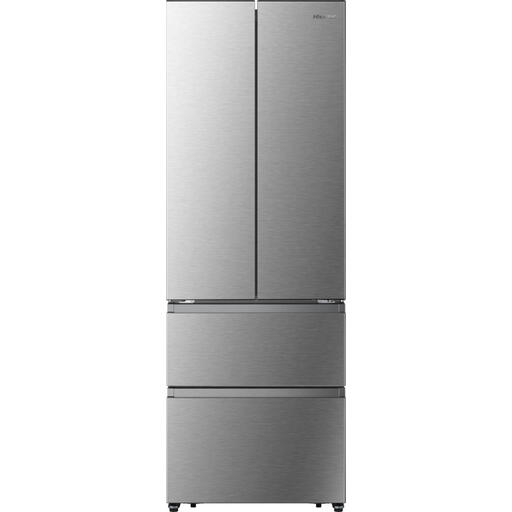 Image unavailable
Worth considering if you’re looking for plenty of fridge and freezer space and want to compare annual consumption with your storage needs.
The product details state 295 kWh/year, 336 l of fridge space and 149 l of freezer space. The model has an E energy class, Total No Frost and an inverter compressor.
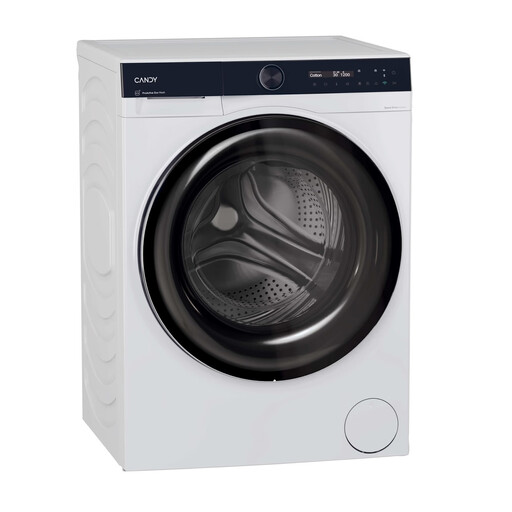 Image unavailable
Worth considering if your usual loads call for a large capacity and the reference programme suits the way you do your laundry.
The product details state 44 kWh/100 eco 40-60 cycles, 45 l of water per cycle and a duration of 3 h 35. The model has an A energy class and a maximum spin speed of 1 400 rpm.
 Image unavailable
Worth considering if you need separate freezer space and have room for it.
The product details state a capacity of 291 l and consumption of 226 kWh/year. This convertible appliance works either as a fridge or a freezer, but not both at the same time.
 Image unavailable
Worth considering if you’re looking for a more compact freezer to suit the space available.
The product details state a capacity of 95 l and consumption of 165 kWh/year, with a 4-star freezer rating. You can select either fridge or freezer mode.
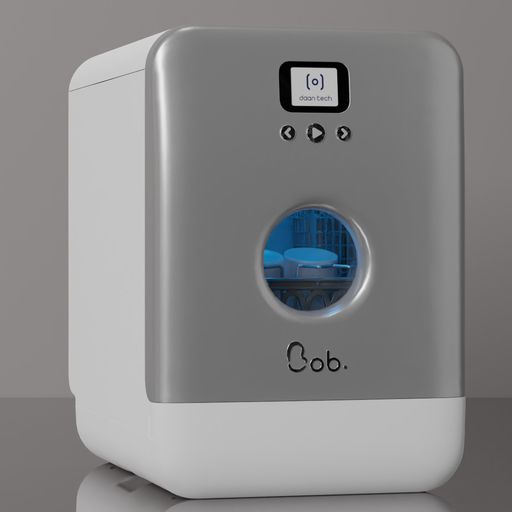 Image unavailable
Worth considering if you have only a few dishes to wash and want a compact model that sits on your worktop.
The product details state 0,39 kWh and 2,9 l of water per cycle, and dimensions of 49 × 34 × 49 cm.
No, because the figures cover different periods: refrigeration is measured in kWh/year, washing in kWh/100 reference cycles, and ovens in kWh/cycle for a particular mode. To estimate the annual cost, adjust the cycle figures to reflect how often you use the appliance and compare appliances with a suitable function.
For refrigeration, multiply the kWh/year figure by your price in €/kWh. For washing, multiply the kWh/100 cycles figure by the number of cycles you run each year, divide by 100, then apply your tariff. For an oven, use the kWh/cycle figure for the mode you use, the number of times you cook using that mode and your tariff. These calculations don’t automatically include water, standing charges or other programmes.
Not necessarily. The result depends on factors such as the energy consumption and capacity of the model you choose, as well as your usage habits. Compare kWh figures on a suitable basis, then estimate the cost using your tariff and how often you use the appliance before making a decision.
For the relevant front-loading and top-loading washing machines, the durability index replaced the repairability index on 8 April 2025, according to the French Ministry of the Economy. For the relevant dishwashers, check the repairability index. These indices don’t measure electricity consumption.
The relevant categories include fridges, freezers, washing machines, dishwashers and ovens. The scale varies by category, and the DGCCRF states that labels and product information sheets must be written in French. For goods sold to a consumer by a professional trader, the French Ministry of the Economy states that the legal guarantee of conformity is mandatory and separate from a commercial guarantee.