Active people on the go
If you take a savoury snack with you for after exercise, check the protein content for the amount you plan to eat, as well as the allergens listed on the packet. Choosing a snack does not, on its own, replace a balanced diet.


If protein content is your main priority when choosing a savoury post-workout snack, compare the values on the packets rather than relying on the recipe name. Lentil crisps offer an alternative for an aperitif, while classic crisps may simply satisfy a craving for flavour and something to share. Neither category alone tells you how much protein you’ll get in the portion you eat.
If you take a savoury snack with you for after exercise, check the protein content for the amount you plan to eat, as well as the allergens listed on the packet. Choosing a snack does not, on its own, replace a balanced diet.
A recipe made with lentil flour might appeal to you for an aperitif. However, its ingredients alone don’t show that it contains as much protein as a product marketed as high in protein.
If flavour and sharing come first, keep these priorities separate from the nutritional information. A claim that crisps are oven-baked doesn’t, on its own, tell you how much protein they contain.
Start with your main priority, then compare the specific packets. For the relevant pre-packed foods, the DGCCRF states that nutritional information per 100 g can be used to compare protein, fat, sugars and salt.
Worth considering: if the protein content for the portion you’ll eat is your main priority.
Check: this marketing claim doesn’t mean you can skip checking the salt, ingredients and allergens.
Worth considering: for an aperitif made with lentil flour, rather than on the assumption that it’s high in protein.
Check: the proportion of lentils doesn’t tell you how many grams of protein the product contains.
Worth considering: if you’re mainly choosing a flavour to enjoy during your summer holiday.
Check: a claim about cooking method or fat content doesn’t tell you how much protein the crisps contain.
| What matters to you | What to check | Who is it for? |
|---|---|---|
| Protein content | Compare the protein per 100 g, then work out how much that means for the amount you plan to eat. Check the salt content too. | After exercise, I want to know what my snack actually provides, rather than relying on the word ‘protein’. Around 50% of consumers put this verifiable amount at the top of their list. |
| Ingredients and allergens | Read the ingredients list and allergen information on the exact packet, especially if you’ll be sharing the crisps. | When sharing an aperitif with a group, I need to choose a recipe that’s suitable for the people eating it. This is the priority for around 30% of consumers. |
| Flavour and aperitifs | Choose a recipe that appeals to you, without assuming that a cooking-method or texture claim tells you how much protein it contains. | On holiday, I’m mainly looking for crisps to share and don’t want to confuse a promise of great flavour with nutritional information. Around 20% of consumers prioritise this use. |
Vico says its Fine Herbs lentil crisps contain 36% lentil flour. That proportion doesn’t tell you how much protein is in the finished crisps.
Check the protein per 100 g on the packet before choosing them for this reason.
Information about cooking method or fat relates to a different aspect of the product. For example, Lay’s presents its Oven Baked Original crisps in terms of their fat content.
Compare the protein, fat and salt separately for the product you’re considering.
Vico’s Fine Herbs recipe states that it may contain milk, peanuts, soya and gluten. Don’t assume another flavour has the same ingredients as the packet you’re buying.
Check its ingredients and allergen information before sharing.
You can’t directly compare different pack sizes using the values per packet alone.
Start with the values per 100 g, then consider how much you plan to eat.
These examples show different product positions. Always check the exact product and flavour before comparing their nutritional information.
GymBeam France sells savoury snacks marketed as high in protein.
According to Vico, its Fine Herbs lentil crisps contain 36% lentil flour and have a Nutri-Score of B.
The range includes Oven Baked Original crisps.
The Flame Grilled Steak variety lists specific nutritional values for this particular recipe.
These bagged buckwheat crisps could be included in a comparison of savoury holiday snacks. Their name alone doesn’t mean they should be classed as high-protein crisps. If protein is your main priority, check the nutritional information on the packet.
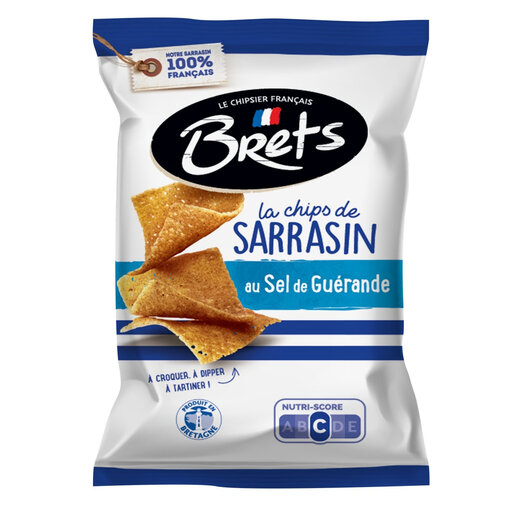 Image unavailable
Worth considering for a holiday aperitif if you’re looking for a buckwheat recipe. The packet contains 120 g. To see whether it suits your protein needs, check the nutritional values and how much you plan to eat. Read the allergen information before sharing it too.
First compare the protein per 100 g on the packets, then work out how much that means for the portion you’ll eat. The DGCCRF notes that the nutrition declaration for relevant pre-packed foods also lists energy, fat, sugars and salt, among other things.
No. The presence of lentil flour alone doesn’t tell you how much protein the finished product contains. Vico says its Fine Herbs variety contains 36% lentil flour. Check the grams of protein in its nutrition table to compare it.
Read the ingredients and allergen information on the packet you’ll be sharing. For example, Vico’s Fine Herbs variety states that it may contain milk, peanuts, soya and gluten. Check the exact flavour rather than relying on another recipe from the same brand.
No. The words ‘oven-baked’ don’t tell you how much protein the crisps contain. If you’re choosing a snack based on protein, check the value per 100 g and work out how much that means for the amount you plan to eat.