Holidaymakers strictly limiting sugar
For a break or a journey, you’re looking for a sugar content covered by the ‘sugar-free’ claim. Check the ingredients too, particularly for polyols, and think about how much you plan to take with you.


For holiday breaks and journeys, choose the claim that matches your priorities: ‘sugar-free’ if you’re looking for a strict threshold, ‘no added sugar’ if you want to avoid sweetening ingredients being added, or a reduced-sugar recipe if its ingredients better suit your preferences. Then compare the nutritional information per 100 g and check the ingredients, allergens and, where relevant, any warnings about polyols. In France, the DGCCRF explains that Nutri-Score is voluntary and does not replace reading the label.
For a break or a journey, you’re looking for a sugar content covered by the ‘sugar-free’ claim. Check the ingredients too, particularly for polyols, and think about how much you plan to take with you.
You may prefer a biscuit labelled ‘no added sugar’ for an occasional snack. This claim doesn’t rule out naturally occurring sugars, so it’s still worth checking the ‘sugars’ line on the label.
You could consider a recipe described as reduced in sugar and made without sweeteners, while bearing in mind that it may still contain sugar. Compare the ingredients and nutritional values of the product you choose.
When choosing biscuits for a holiday, start with the priority that will really guide your choice: sugar content, the overall nutritional profile or the ingredients to consider while travelling.
| What matters to you | What to check | Who it matters to |
|---|---|---|
| The sugar claim | The exact claim and the amount of sugar per 100 g. Under EU rules published by EUR-Lex, ‘sugar-free’ means no more than 0.5 g of sugars per 100 g. | For holiday breaks, I want to know whether the biscuit meets a strict threshold or simply avoids added sugar. Around 42% of consumers make this distinction their priority. |
| The nutritional profile | For comparable types of biscuit, check energy, sugars, fat, saturated fat and salt per 100 g, as well as fibre where listed. | A claim about sugar isn’t enough for me to choose biscuits for breakfast or a break. Around 33% of consumers say the overall nutritional information matters most. |
| Ingredients for travelling | The ingredients, any allergens highlighted and, if the recipe contains polyols, any warning about excessive consumption. | Before a long journey, I’d like to know whether the recipe contains polyols and check for any allergens that affect me. Around 25% of consumers put ingredients first. |
A reduced-sugar claim compares a recipe with a reference product; it doesn’t mean the biscuit meets the threshold for a ‘sugar-free’ claim. For example, Auchan describes its Less Sugar range in comparison with the average dry biscuits on the market.
Look for the exact claim on the pack, then compare the sugar content per 100 g.
The ‘sugars’ line doesn’t tell you about the other nutritional values. The nutrition declaration also lets you check energy, fat, saturated fat and salt, among other things.
Compare values per 100 g across similar types of biscuit, rather than relying only on the front of the pack.
Some recipes use polyols such as maltitols. Under EU rules published by EUR-Lex, a warning about the possible laxative effects of excessive consumption is required when the recipe contains more than 10% added polyols.
Read the ingredients and any warning on the pack before taking these biscuits on a long journey.
In France, the DGCCRF says Nutri-Score is voluntary, unlike the nutrition declaration, which is required for most pre-packed foods.
Use Nutri-Score if it appears on the pack, then check the nutritional information to compare the biscuits you’re interested in.
In France, Gerblé offers biscuits labelled ‘sugar-free’ or ‘no added sugar’.
The Auchan range includes chocolate and orange biscuits, available in 130 g packs.
Biscuits labelled ‘no added sugar’ from Gullón feature in the French range listed by Auchan.
These two biscuits suit different searches for holiday breaks: one is labelled ‘no added sugar’, while the other is best chosen by checking its ingredients and sugar content on the pack.
 Image unavailable
Worth considering if your priority is the ‘no added sugar’ claim for holiday breaks. The pack is listed as 425 g. This claim doesn’t mean ‘sugar-free’, so remember to check the sugar content per 100 g on the label.
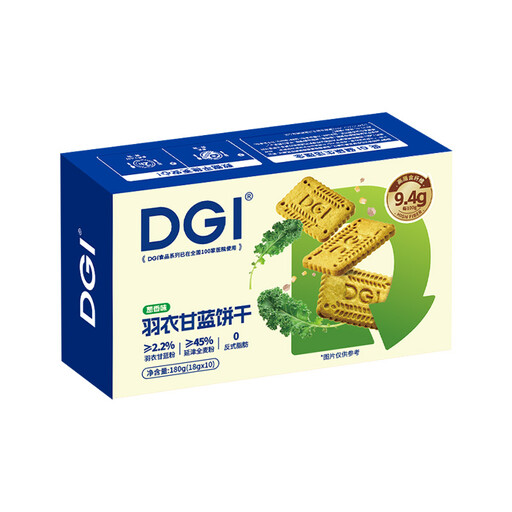 Image unavailable
For a snack to take with you, check whether the sugar content per 100 g fits your goal. The pack is listed as 180 g. Before setting off, also read the ingredients list and any warnings about polyols.
No. The DGCCRF explains that displaying Nutri-Score is voluntary, while a nutrition declaration is required for most pre-packed foods. If it appears on a pack, Nutri-Score adds to the nutritional information; its absence alone doesn’t mean the labelling is non-compliant.
Under EU rules published by EUR-Lex, biscuits labelled ‘sugar-free’ must contain no more than 0.5 g of sugars per 100 g. ‘No added sugar’ means no sugars or foods used for their sweetening properties have been added, but naturally occurring sugars may still be present. Check the ‘sugars’ line to see the amount declared.
Some recipes contain polyols, such as maltitols. Under EU rules published by EUR-Lex, foods containing more than 10% added polyols must carry a warning about the possible laxative effects of excessive consumption. Check the ingredients and any warning on the pack, particularly before a long journey.
The ‘sugar-free’ claim describes the sugar content, not the make-up of a complete breakfast. Santé publique France recommends limiting foods that are high in fat, sugar or salt, as well as ultra-processed foods. Think about biscuits as part of your overall meals rather than judging breakfast by one claim alone.
Read the ingredients list, any allergens highlighted and any ‘may contain traces’ statements on the pack of the exact product. Don’t assume the information applies to another biscuit, even if it’s from the same range.