You’re replacing a built-in hob
Before comparing features, check your available energy supply, connection requirements and worktop cut-out dimensions. If you’re considering gas, have the compatibility of your existing installation checked too.


First, rule out any hobs that are incompatible with your available energy supply, connection or kitchen worktop cut-out. Then compare induction, ceramic and gas hobs based on your cookware, the size of the cooking zones and how much maintenance you want to do. For gas, check the fuel type and make sure the installation is safe before you buy.
The right technology depends as much on the kitchen where your hob will be installed as on the dishes you like to cook.
Before comparing features, check your available energy supply, connection requirements and worktop cut-out dimensions. If you’re considering gas, have the compatibility of your existing installation checked too.
A griddle, fish kettle or several saucepans mean you’ll need to look at the size and layout of the cooking zones. Some models have an extendable or combinable zone, which may be useful; the number of zones alone isn’t enough to make a decision.
Check your saucepans before choosing induction: their bases must be magnetic. Also read the care instructions for the specific surface you’re planning to buy, as they vary by finish.
Start by checking compatibility with your home. Once you’ve identified the options that will work, compare the cooking zone layout, indicative energy use and any practical limitations.
Consider it: if your connection, worktop cut-out and cookware are suitable for the model you’ve chosen.
Bear in mind: your cookware bases must be magnetic; also check the minimum and maximum pan sizes accepted by each zone.
Consider it: if you want a glass-topped electric hob without needing magnetic cookware, as you do with induction.
Bear in mind: you’ll still need to check the circuit, power rating and dimensions of the model.
Consider it: only if the gas type, appliance and existing installation are compatible.
Bear in mind: a qualified professional must assess the connection and the safety requirements that apply in France for your home.
“Electric hob” can refer to a ceramic hob, among other types. The product name alone doesn’t tell you which technology it uses, so check the model before comparing its features.
| Criteria | What to check | Consumers concerned |
|---|---|---|
| Energy supply and installation | Check that your available energy supply, connection and worktop cut-out meet the model’s requirements. For gas, have the fuel type and installation confirmed. | If I’m replacing a hob, I want to make sure it can be connected and fitted into my kitchen, without assuming the existing installation is suitable; around 36% of consumers would put compatibility first. |
| Size and layout of cooking zones | Check the diameter and spacing of the zones, and whether there’s a combinable zone if you need one. | To cook with a griddle or several saucepans, I need zones that can accommodate their size; this would be the top priority for around 29% of consumers. |
| Electricity use | Use energy consumption figures as a guide, taking the technology and how often you cook into account. Don’t assume they predict the consumption of a particular model. | If I use an electric hob often, I want to take its energy use into account when choosing; around 21% of consumers would make this their top criterion. |
| Cookware and care | For induction, test the base of your saucepans with a magnet. Read the cleaning instructions for the surface you choose. | I’d prefer to keep my saucepans and choose a surface that suits my cleaning routine; around 14% of consumers would put this need first. |
Two 60 cm hobs may need different cut-outs and connections. For example, Electrolux’s product information for the LIT60333CK specifies a 560 × 490 mm cut-out, a power rating of 7 200 W and a 220-240/400 V2N supply. These figures don’t apply to other models.
Measure the opening in your worktop and check the electrical circuit and the manual against the hob you’re considering before you order.
You may need extra work to adapt the worktop or power supply.
Cookware with a non-magnetic base won’t work with induction. The minimum accepted size may also vary from one cooking zone to another.
Test the bases of your saucepans with a magnet, then check the manual for the sizes accepted by the model.
You may need to replace cookware that isn’t compatible.
In France, the ministry responsible for ecology warns that gas appliances and equipment carry risks and are subject to technical and safety regulations. Relevant appliances must carry the CE marking required under the applicable framework. The presence of a gas supply alone doesn’t confirm that a hob or its connection is suitable.
Ask a qualified professional to confirm the type of gas available, the condition of the installation and the requirements for the appliance you’re considering.
Checking or adapting the installation may add to the cost of replacing your hob.
For 409 cycles a year, the ADEME gives figures of 200 kWh/year for ceramic hobs and 115 kWh/year for induction hobs, among the new appliances it assessed. These figures don’t predict how much energy your kitchen will use.
Use them to compare the technologies, then factor in your own habits and installation requirements before making a choice.
These ranges and models are examples that can help you identify which features to compare. A feature available on one hob won’t necessarily be available on other models from the same brand.
Bosch offers induction hobs as well as electric ceramic hobs, including the PKK61SBB8F.
Electrolux induction hob product information gives details including the cooking zones, power rating and built-in dimensions.
Whirlpool offers induction, ceramic and gas hobs, giving you a choice of different configurations to compare.
These induction and ceramic hobs let you compare electric options for a new kitchen or to replace an existing hob. Before choosing, check the cut-out, connection and cookware against the details for the specific model.
 Image unavailable
If you use several saucepans, compare their size with the layout of the four zones. The product title lists touch controls, a Boost function, a timer and a residual heat indicator.
Check the cut-out and connection requirements in the manual, as well as the magnetic compatibility and size of your cookware.
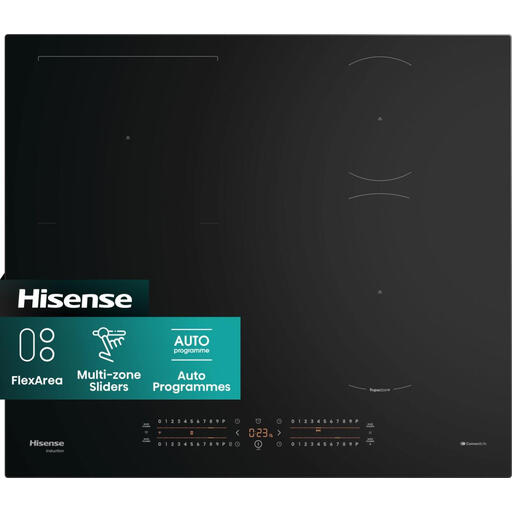 Image unavailable
If you cook with a griddle or a large pan, check the HI6432BSCWF product information to see whether the layout and size of the zones suit the way you cook.
Also compare the installation dimensions and connection requirements with your kitchen; induction requires cookware with a magnetic base.
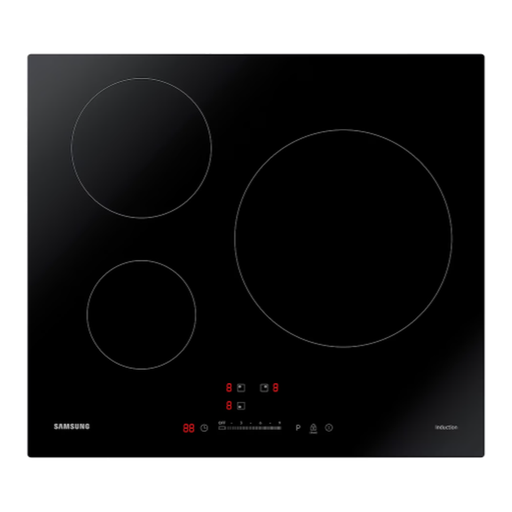 Image unavailable
If three cooking zones suit the way you cook, compare their dimensions with those of your saucepans. The product title gives a power rating of 7 200 W.
Before replacing a hob, check the model’s electrical requirements and built-in dimensions against your installation; you’ll also need cookware with magnetic bases.
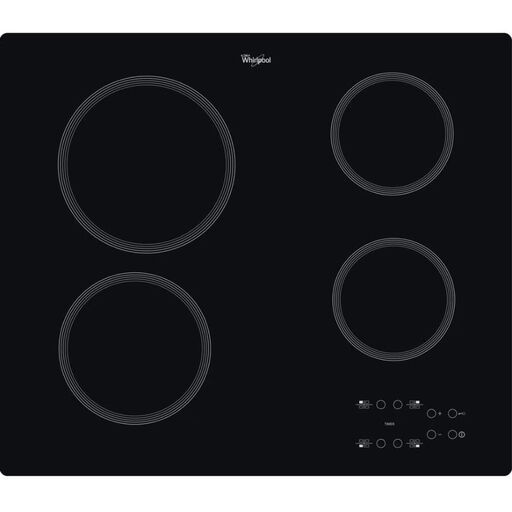 Image unavailable
If you want to keep cookware that isn’t suitable for induction, this ceramic hob is an electric option to consider. Compare the size of its four zones with your cookware.
Check the cut-out and connection requirements in the manual before replacing an existing hob.
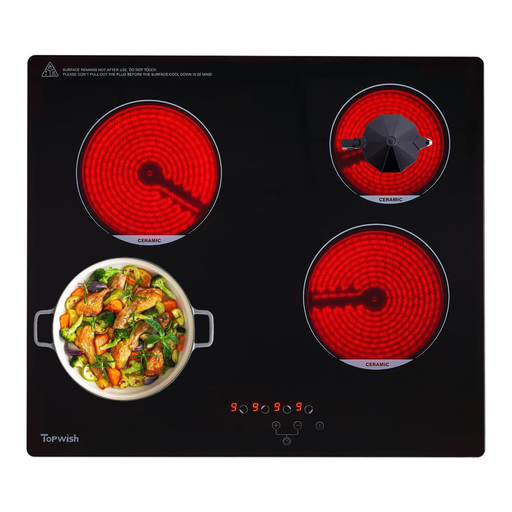 Image unavailable
If your saucepans aren’t suitable for induction, compare this electric ceramic hob with your cooking needs. The product title lists four zones, touch controls and a residual heat indicator.
Check the model documentation to confirm its rated power and zone configuration before checking the connection and worktop cut-out in your kitchen.
Yes, as long as their bases are suitable for induction: a magnet should stick to them. Electrolux also recommends checking the shape of the base and the pan diameters accepted by the cooking zones on your chosen model.
Check that your installation meets the new hob’s cut-out, power and voltage requirements. Promotelec describes a dedicated circuit for cooking appliances; ask a professional to confirm that your existing connection and the model’s instructions are compatible, rather than relying on the apparent width.
No: it doesn’t confirm that the appliance is suitable for the type of gas available or that the planned connection meets the requirements. In France, the ministry responsible for ecology highlights the technical and safety regulations for gas appliances and equipment, as well as the CE marking required for relevant appliances. Have a qualified professional assess your installation.
No: follow the instructions for the specific finish. Electrolux’s advice for SaphirMatt and SaphirMatt SE surfaces, including promptly removing sugar or melted plastic, shouldn’t automatically be applied to all glass surfaces.
The ADEME figures don’t guarantee this result in every kitchen. For 409 cycles a year, they give figures of 115 kWh/year for induction and 200 kWh/year for ceramic hobs among the new appliances assessed; actual energy use depends on the appliance and how you use it.