If you cook regularly at home, first check the available space, the cut-out dimensions and the connection requirements specified in the appliance manual. For hobs, induction requires compatible cookware, unlike ceramic hobs. For ovens, the choice between built-in and freestanding depends mainly on the available space, the size of your dishes and where you plan to put the appliance.
Who are these options for?
Anyone fitting out a kitchen used every day
If you often prepare full meals, a hob and an oven could be your main appliances. Before choosing their features, check the cabinet dimensions, clearance requirements and connection details against the instructions for each built-in appliance.
Anyone who mainly cooks with pans and saucepans
If hob cooking is a big part of your meals, compare the cooking zones with the cookware you use. For induction, UFC-Que Choisir points out that saucepans and frying pans need to be suitable for this technology.
Anyone with a small kitchen or no suitable built-in space
A freestanding oven could be a good choice if you need an independent appliance. However, check that you have room for it on your worktop, follow the clearance requirements in the manual and make sure its cavity is large enough for your dishes.
What should you check before buying?
A hob and an oven have complementary functions. First, compare each appliance with the meals you usually prepare, then rule out any models that aren’t suitable for your installation or available space. For a built-in hob, check the cooking zones and cookware compatibility in particular. For an oven, start with the dishes you use and the space available.
| What matters |
What to check |
Consumers concerned |
| Installation |
For a built-in appliance, compare the recess, clearance requirements and connection details with the diagram for the exact model. |
I don’t want to choose an appliance that won’t fit in my cabinet or connect at the intended location. Around 36% of consumers prioritise this compatibility. |
| Everyday cooking |
Compare the number and size of the cooking zones with the cookware you use. For an oven, consider its capacity and the cooking modes you need. |
When I prepare several parts of a meal, I need cooking zones and capacity to suit my dishes. Everyday cooking comes first for around 29% of consumers. |
| Cookware and energy use |
Check that your cookware is suitable for induction. For ovens covered by the energy label, compare capacity and energy use per cycle like for like. |
I’d like to keep my saucepans if they’re suitable and check the oven’s energy use before deciding. These considerations are a priority for around 21% of consumers. |
| Available space |
For a freestanding oven, measure the space and your dishes, then check the dimensions, clearance requirements and plug type in the manual. |
Without a built-in recess, I’m looking for an oven that fits the space available and can accommodate the dishes I usually use. Around 14% of consumers put this need for space first. |
Mistakes to avoid
-
Relying only on the width of a built-in appliance’s front
A front that looks like it will fit doesn’t guarantee that the recess, ventilation clearances or connection will be suitable. The manual for the model sets out the dimensions and requirements you need to follow.
Measure the recess in every direction and compare it with the installation diagram before ordering.
You may need to adapt the cabinet or electrical installation if the space isn’t suitable.
-
Choosing induction without checking your saucepans
According to UFC-Que Choisir, an induction hob needs suitable saucepans and frying pans. Cookware with an incompatible base won’t heat up on this type of hob.
Make a list of the cookware you want to keep before comparing induction and ceramic hobs.
You’ll need to replace any incompatible cookware if you switch to induction.
-
Comparing ovens by energy rating alone
Capacity and energy use per cycle also matter when comparing ovens designed for similar needs. The European Commission also states that hobs are not subject to an energy labelling requirement.
For ovens covered by the label, compare the per-cycle figures at a similar capacity. For hobs, look at the cooking zone specifications and how you plan to use them.
-
Assuming a mini oven will fit all your usual dishes
The stated capacity alone won’t tell you whether your dishes will fit inside the cavity or how many things you’ll be able to cook at once.
Measure your dishes and check the internal dimensions and number of shelf positions, if these are listed for the model you’re considering.
Brands to consider by appliance type
Bosch
A brand to consider for built-in induction hobs, particularly if the layout of the cooking zones matters for your cookware.
- Bosch features FlexInduction on its PIX631HC1H hob for use with larger cookware. Check the cooking zones available on the model you’re interested in.
- As with any built-in hob, check the dimensions and connection instructions against your kitchen before buying.
Electrolux
A brand to compare for built-in ovens and ceramic hobs when installation dimensions influence your choice.
- Electrolux’s product information for the EOF3C40TH oven gives built-in dimensions of 590 × 560 × 550 mm, which can help you check a recess intended for this model.
- A compact model designed for a 45 cm recess may not offer the same capacity as a standard oven, so compare these models separately.
Brandt
A brand to consider when comparing built-in ovens and their cooking or cleaning functions.
- Check the features listed for the specific model you’re interested in, rather than assuming they’re available on every Brandt oven.
- The features you want don’t remove the need to check the dimensions and installation requirements in the manual.
Severin
A brand to consider for freestanding ovens when you don’t have a built-in recess.
- Severin lists a capacity of 60 L and power of 2 200 W for its TO 2073 model. These figures apply to this model.
- Before choosing a freestanding oven, check the available space, required clearances and plug type in the product information and manual.
Freestanding ovens available on Joybuy
These four models are for anyone choosing a freestanding oven without a built-in recess. They don’t replace comparing hobs for cooking with saucepans and frying pans, or checking that an oven has the capacity and space you need for your meals.
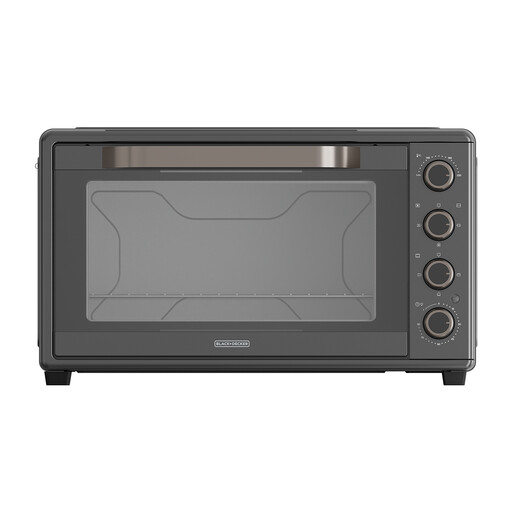 Image unavailable
Black+Decker BXOV6000E mini oven, 2000 W
Worth considering if you’re looking for a freestanding oven rather than a built-in model. Its stated power is 2000 W, but this alone doesn’t tell you how much energy it uses per cycle. Before choosing where to put it, check the dimensions, clearances and plug requirements in the manual.
View on Joybuy
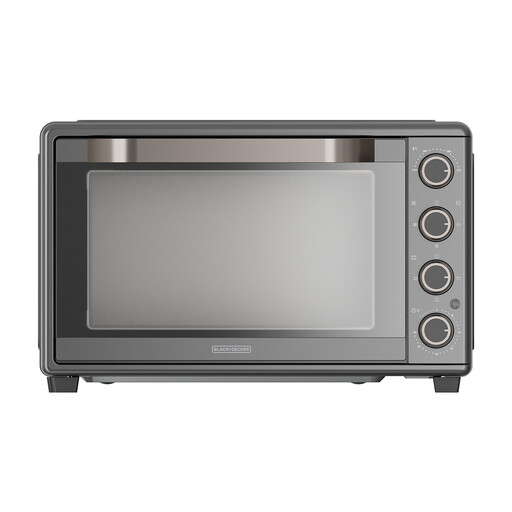 Image unavailable
Black+Decker BXOV4500E mini oven, 2000 W
Another model to consider if you need a freestanding oven without a built-in recess. Its stated power is 2000 W, but this figure doesn’t show its energy use per cycle. Compare the cavity size with your dishes and check the installation and connection requirements in the manual.
View on Joybuy
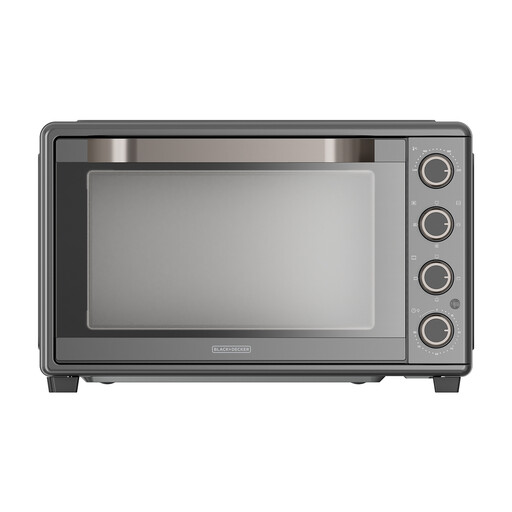 Image unavailable
Black+Decker BXOV3000E mini oven, 1500 W
Worth considering if you want a freestanding oven without having to adapt a cabinet to fit it. Its stated power is 1500 W. Check separately which dish sizes it can accommodate and what the installation requirements are; don’t use the power rating to estimate energy use per cycle.
View on Joybuy
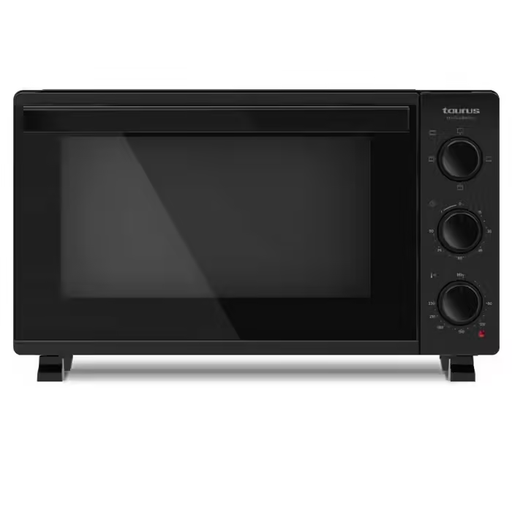 Image unavailable
Black Taurus Horizon23 freestanding oven, 23 L
Worth considering if you want to cook in an oven without a built-in recess. Its stated capacity is 23 L. Check that your usual dishes will fit, then compare the intended location with the clearance and plug requirements in the manual.
View on Joybuy
Frequently asked questions
Should I measure the cabinet before buying a built-in oven or hob?
Yes. The usable dimensions, clearances and connection requirements must match the instructions for the exact model. Electrolux says in its pre-installation guide that connections must be made to compliant installations. Also check whether the cabinet needs adapting.
Can I keep my saucepans if I choose induction?
Yes, as long as they’re suitable for induction. UFC-Que Choisir says this technology requires compatible saucepans and frying pans, so check the cookware you use before choosing your hob.
Can I use the energy label to compare hobs?
No. The European Commission says there’s no energy labelling requirement for hobs. When comparing ovens covered by the label, look at capacity and energy use per cycle, comparing models with similar capacities. For a hob, focus on the features and uses that matter to you.
What should I check to choose an easy-to-use ceramic hob?
Check that the number and size of the cooking zones suit your cookware, and see whether the model has residual heat indicators. The surface may stay hot after cooking, so check the manual for the right way to clean and care for it.


