For everyday meals, start by considering the dishes you prepare, how many portions you need and the space available. A hob and an oven are suited to different types of cooking, while a microwave or worktop appliance may be a better fit for more specific uses. To keep electricity use down, compare figures measured under similar conditions rather than relying on the stated power alone. Before choosing a fixed appliance, also check that your electrical installation is suitable.
Who are these options for?
Households that prepare full meals every day
If you cook several dishes or portions, first check the capacity and cooking modes you need before adding another appliance. Hobs were among the most commonly owned household appliances in France in 2023, according to an ADEME and EDF R&D study. An additional appliance may therefore be more useful than a new one that does the same job.
People who cook small portions in limited space
If you mainly reheat, defrost or prepare one or two portions, consider the size of your dishes as well as the stated capacity. Whirlpool offers compact microwaves, but the internal dimensions and the dishes you can prepare also matter when choosing one.
People whose current electrical installation limits their options
If you’re considering a fixed hob or oven without altering your kitchen, start by getting the available connection checked. Promotelec distinguishes the dedicated circuits required for these appliances from the connection used by a worktop appliance.
Which criteria should you consider first?
Start with the meals you prepare most often: saucepans and frying pans point towards a hob, while oven dishes call for a suitable oven cavity. Reheating, defrosting and cooking in a pot require different features. Then compare the space needed, the electrical connection and energy use measured under the relevant conditions.
| Criterion |
What to check |
Consumers concerned |
| Capacity and uses |
Usable volume or number of portions; zones, shelves or cooking modes needed for your dishes. |
When I prepare several parts of a meal, I want to cook my usual quantities without having to make multiple batches. Around 36% of consumers are said to put this capacity and versatility at the top of their needs. |
| Electricity use |
Consumption measured for the cooking mode, volume and frequency of use; number of batches required. |
I want to limit the electricity used for the dishes I make regularly, without treating the maximum power rating as a measure of energy used per meal. This is said to be a priority for around 29% of consumers. |
| Space and connection |
Dimensions and clearances specified in the instructions; available circuit for a fixed hob or oven. |
In a kitchen where space or the electrical connection is a constraint, I need to know whether the appliance can be installed before choosing its capacity. Around 21% of consumers are said to prioritise compatibility with their kitchen. |
| Small portions |
Reheating or defrosting functions; size of the container that will fit inside the cavity. |
For a single portion or leftovers, I prioritise a suitable function over a large capacity I rarely use. Preparing small portions is said to come first for around 14% of consumers. |
Mistakes to avoid
-
Working out the energy used for a meal from the wattage alone
The power rating doesn’t tell you how long the appliance runs or how much it heats. ADEME’s annual benchmarks are based on different usage frequencies and, depending on the appliance, different capacities.
To compare two options, look at the cooking mode and measurement conditions, then estimate how many batches your meals would require.
-
Assuming a compact appliance can replace an oven or hob
A small cavity, pot or basket may not suit your larger dishes, several dishes cooked at once or all your preferred cooking methods.
Think of a few meals you make often and check the size of the container, the quantity you prepare and the cooking mode needed for each one.
-
Ordering a fixed appliance before checking the circuit
Promotelec states that fixed hobs and ovens require dedicated circuits. Having a free space for the appliance doesn’t mean the electrical connection is suitable.
Before buying, ask a qualified person to check the existing installation and the model’s instructions.
If the circuit isn’t suitable, work may be needed before the appliance can be installed.
-
Assuming a model-specific energy-saving claim applies to every appliance
A manufacturer’s claim about a worktop appliance depends on the model and the conditions used. It doesn’t prove that every dish will use less electricity than when cooked in an oven.
Choose based on your portions, recipes and how often you’ll use the appliance. Only compare energy-use figures when they’re based on compatible conditions.
Brands to know
Bosch
Induction hobs and built-in ovens to consider when fitting out a fixed kitchen.
- Bosch offers hobs with flexible cooking zones, which you can compare based on the size of your cookware and how you cook.
- Before choosing a fixed hob, check that you have a dedicated circuit.
Moulinex
Cookeo and Easy Fry suit different worktop uses. Choose between them based on your recipes and portion sizes.
- Moulinex lists pressure cooking, steaming and slow cooking among the functions in its Cookeo range.
- These features and the stated capacities don’t prove that cooking the same meal will use less electricity than an oven.
Whirlpool
Freestanding or built-in microwaves to compare for reheating, defrosting and the space you have available.
- Whirlpool lists capacities ranging from 13 L for some compact models to 40 L for larger models.
- Check the internal dimensions and the size of your dishes too. The stated capacity alone won’t tell you whether they’ll fit inside.
Appliances for different uses
This selection includes a portable induction hob, a microwave, a built-in oven and two worktop appliances. Their suitability depends on the dishes you usually prepare: they don’t all serve the same purpose in a kitchen.
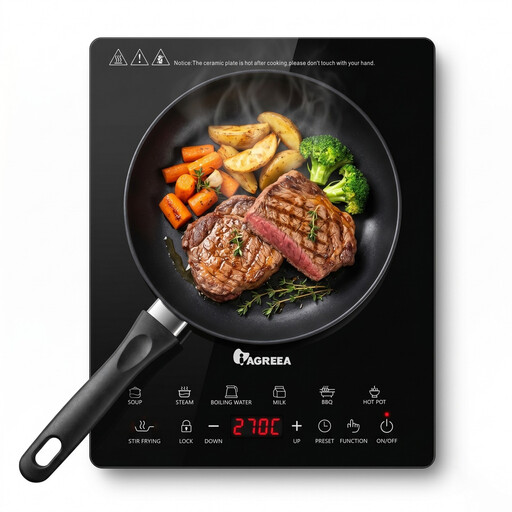 Image unavailable
IAGREEA DF200-14V10, 2,000 W portable induction hob
Cook with a saucepan or frying pan on a portable hob rather than a fixed one.
The product name lists eight power levels, a temperature range of 60 to 270 °C, seven preset functions and a 3 h timer.
Check that your cookware has a flat magnetic base and a diameter between 12 and 26 cm. The 2,000 W power rating doesn’t represent the energy used for a meal.
View on Joybuy
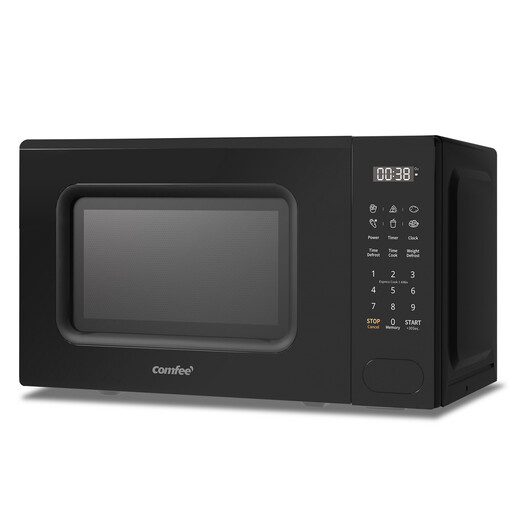 Image unavailable
COMFEE CM-E202CC(BK), 20 L microwave
Worth considering if reheating and defrosting specific portions matter more to you than oven cooking.
The model is listed as having 700 W, six preset menus, eleven power levels and a defrost function.
Check that your largest regular container will fit inside the cavity. The 700 W rating alone won’t tell you how much electricity each use will consume.
View on Joybuy
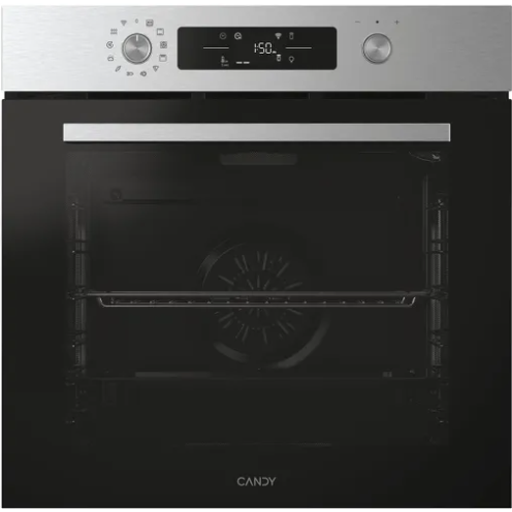 Image unavailable
Candy CA6 NP5B3HTX, 78 L built-in oven
Its large cavity is worth considering if you regularly cook oven dishes or several portions.
The model name lists a capacity of 78 L and a power rating of 2,100 W.
Before buying, check the space in your housing unit and whether the existing electrical circuit is suitable. The stated power rating doesn’t describe how much energy your recipes will use.
View on Joybuy
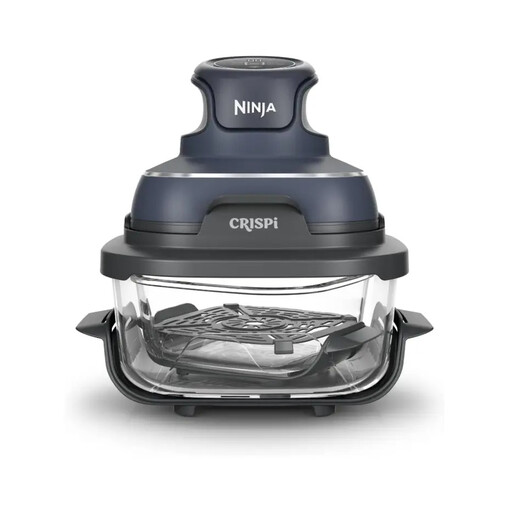 Image unavailable
NINJA FN101EUGY Crispi Air Fryer
Worth considering for worktop cooking, depending on the size of your portions and the dishes you want to prepare.
Check how much space the appliance needs around it and whether its containers will suit your usual recipes. An air fryer doesn’t automatically replace a hob or oven.
View on Joybuy
 Image unavailable
Plodon, 5 L electric hotpot with steamer basket
For pot-based cooking, including steaming and slow cooking, if this format suits the meals you make.
The product name lists a 5 L capacity, a power rating of 1,200 W and two heat settings.
Check that the pot suits your portion sizes and that the appliance will fit on your worktop. The power rating alone won’t let you compare its energy use with an oven’s.
View on Joybuy
Frequently asked questions
Can I plug a fixed hob or oven into an extension lead?
No. Promotelec states that a fixed hob or cooker must be connected to a dedicated circuit, and that an oven also requires its own dedicated circuit. Before buying, have the existing connection and the model’s instructions checked rather than planning to use an extension lead.
Does induction always use less electricity than a ceramic hob?
No. You can’t work out the result for every household from an annual benchmark. ADEME gives figures of 115 kWh per year for induction and 200 kWh per year for ceramic hobs, based on the same reference of 409 cycles per year. Your recipes, cookware and frequency of use may differ from this reference.
What microwave capacity should I choose for my portions?
Choose a cavity that fits the dishes and containers you use regularly, rather than selecting a capacity in isolation. Whirlpool lists compact models from 13 L, but you should also check the internal dimensions of the model you’re considering.
What should I do if an appliance bought from a trader doesn’t match its description?
In France, the statutory guarantee of conformity may apply if a product doesn’t match the seller’s description. The Directorate-General for Competition Policy, Consumer Affairs and Fraud Control states that this guarantee covers new, second-hand and refurbished goods sold by a trader. Keep a copy of the appliance description and contact the seller to make your claim.


